Pool models, construction conditions and care to help you plan your project.
In this guide 4
Application note: Chemical dosages, pH/chlorine targets, run times and maintenance intervals are determined by the product label, measured water values, the usage class and local requirements. Numerical examples on their own are not application instructions. Chemicals must never be mixed with one another, and electrical work, pressurized equipment and pool draining must be carried out under expert supervision. The cost ratios, rubble tonnages and durations in this article are example planning assumptions and must be verified for each project with measurements and a quotation.
Around Batumi, Kobuleti and Gonio there are reinforced concrete pools that, years after construction, suffer from cracking, joint deterioration or water loss. The cause of these problems is not always the same: ground settlement, inadequate waterproofing, a reinforcement or detailing error, a pipework leak or simply a lack of maintenance can all play a role. The right decision is made only after an engineering diagnosis has established where the water is escaping from: in some cases pipework repairs or a local repair are sufficient, in others the internal lining is renewed, and where there is structural damage a structural assessment is required. It is not true that every reinforced concrete pool leaks or must necessarily be demolished.
Where renewing the internal lining is found to be appropriate, Sermed Havuz's demolition-free 1.50 mm reinforced liner renovation aims to use the existing shell as a supporting substrate and to dress it internally with a new waterproofing layer welded in place. This largely removes the demolition and rubble items from the budget. The ratios below are an example budget comparison.
Example planning assumption: Lining the existing shell internally with a 1.50 mm reinforced liner membrane instead of breaking it out and pouring new concrete largely eliminates the cost of demolition and rubble removal, so it can be calculated at between roughly one third and one half of the budget for demolition and rebuilding (35–40% in this example). If site preparation is suitable, installation can be completed within a few working days; the duration depends on dimensions, weather, access and logistics. Any warranty given for the liner is subject to the scope, term and conditions set out in the written warranty document; it does not amount to an unconditional assurance against damage caused by hydrostatic pressure, groundwater, structural movement or earthquakes.
In most cases your old pool is an advantage: the excavation has already been done and the shell is already there. With the right diagnosis and the correct membrane application, it can be made usable again.
01. The Demolition Dead End: Tons of Rubble, Noise and Garden Damage
The main burdens that come with the option of demolishing the old pool completely:
- Removing Tons of Rubble: Breaking out a reinforced concrete shell measuring 4×8 m can produce tens of tons of steel-laden rubble (in the order of 30–35 tons under the example assumption), depending on the shell thickness and the reinforcement ratio; haulage costs are high in narrow gardens. Actual tonnage must be calculated from the measured volume.
- Damage to the Landscaping: Compressors, breakers and rubble trucks can cause serious damage to the lawn, trees and irrigation infrastructure in the garden.
- The Limits of Injection Repair: Crack injection (epoxy or polyurethane) can give a lasting result on correctly diagnosed cracks that have stopped moving; however, if active ground movement or structural causes are not addressed, renewed cracking is likely. The choice of method depends on an engineer's diagnosis.
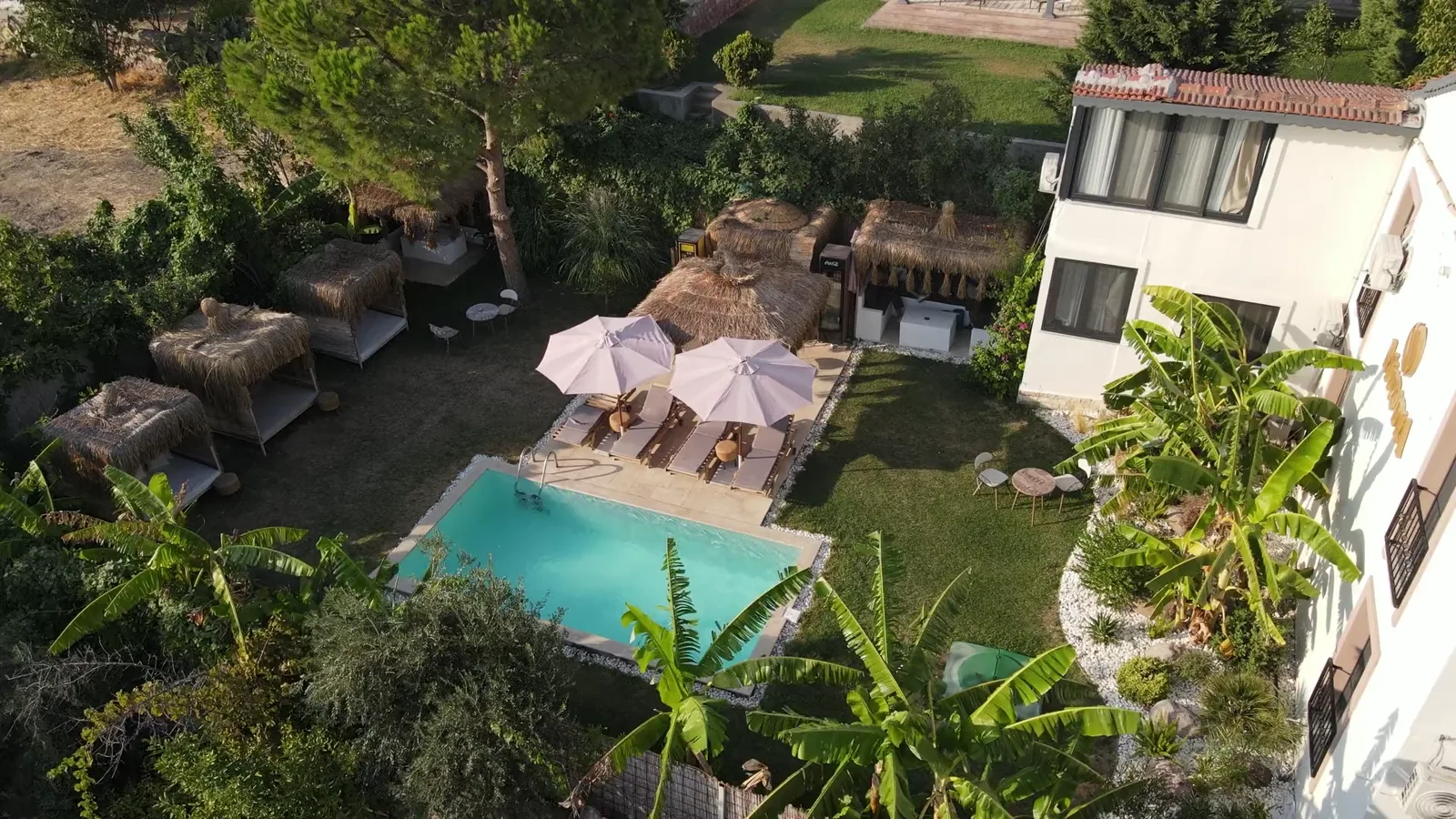 Fiplus ↗
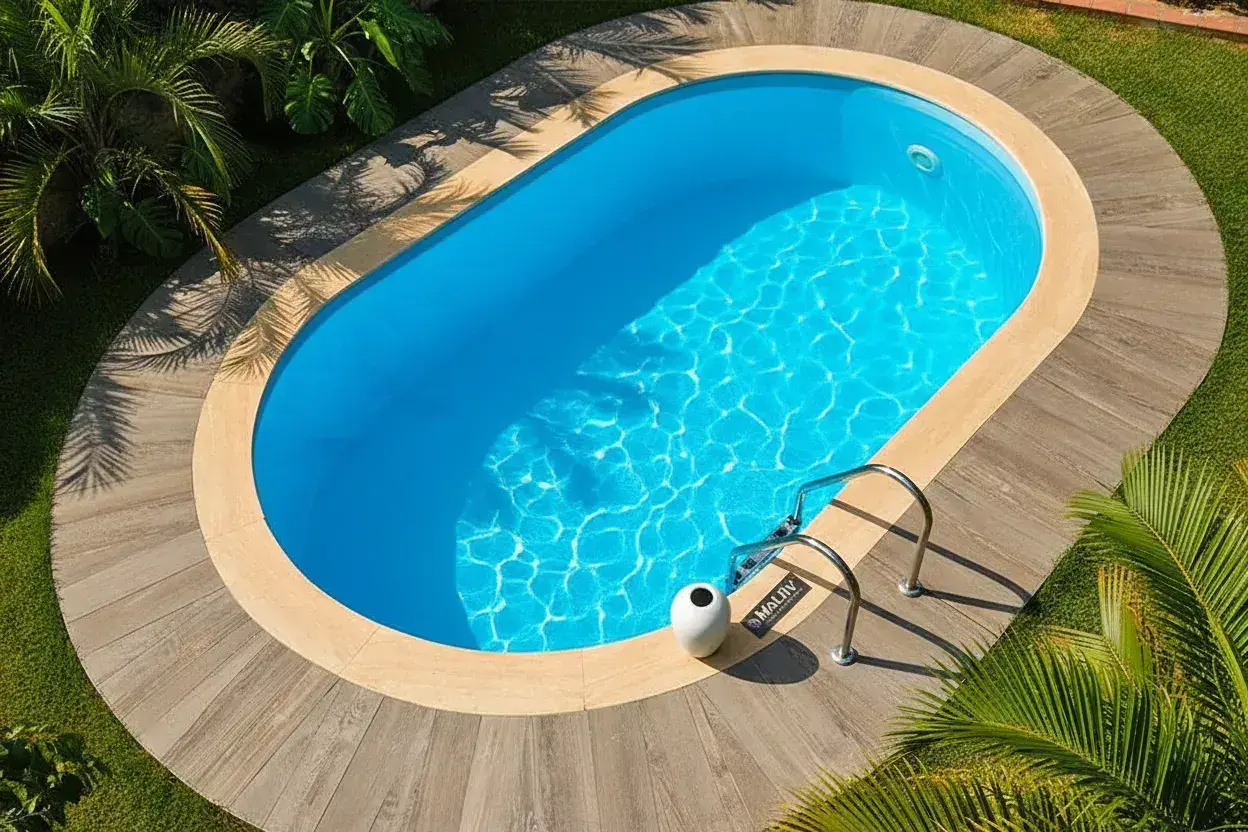 Maldiv ↗
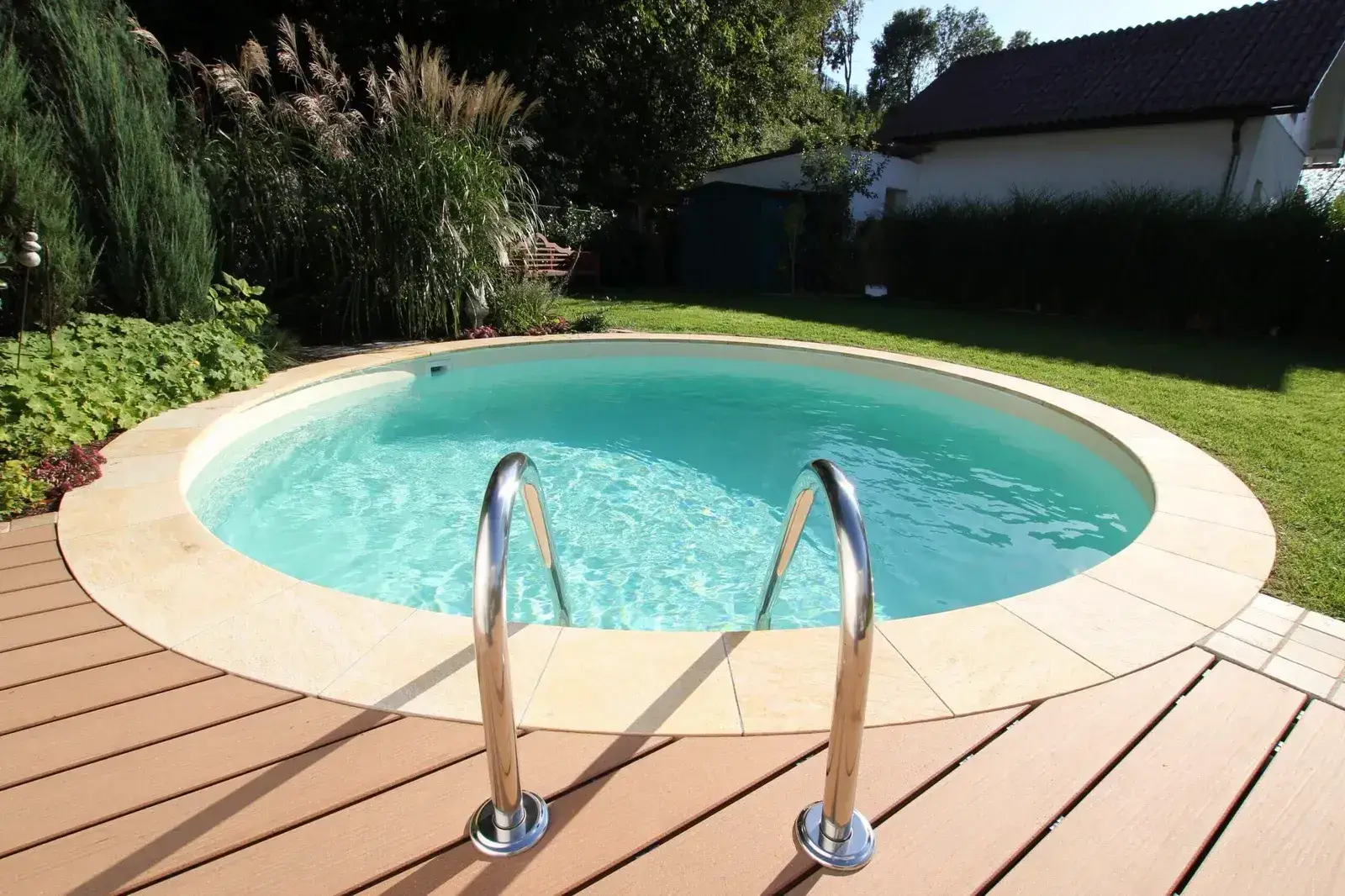 Bora ↗
02. The Sermed Demolition-Free Conversion Standard: Felt, 1.50 mm Fusion Membrane and Flange Kit
When the structural assessment is favourable, Sermed Havuz renovation teams apply the following 4-step solution on site:
- Preparation Without Breaking Out the Tiles: The surface is cleaned, loose and detached pieces are removed and defective areas are levelled; geotextile felt (300 g/m² in this example) is then laid over the sound substrate.
- 1.50 mm Reinforced Membrane Lining: A 1.50 mm reinforced (mesh-backed) membrane is laid inside the pool in place and joined with a hot-air welder, with liquid PVC applied at the details; this creates a new lining layer inside the shell that holds water in its own right. The welding temperature is set according to the machine and material instructions.
- Flanged Underwater Fittings: The existing skimmer, nozzle and light connections are renewed with double-gasket liner flange kits, bringing the points most prone to leakage under control.
- Reorganizing the Plant Room: Instead of a damp, poorly ventilated old pump pit, a compact MyBox cabinet can be positioned in the garden where this is suitable. Electrical connections are made by authorized personnel in accordance with local standards.
03. Demolish and Rebuild vs. Lining With a Liner: Cost Comparison Table
The table below is a proportional example comparison and must be verified with local price quotations.
| Renovation Item | Demolishing and Rebuilding the Old Pool | Sermed Demolition-Free 1.50 mm Liner Conversion | Expected Difference |
|---|---|---|---|
| Demolition & Rubble Haulage | High (disposal of tens of tons of rubble) | Negligible (no breaking out or concrete pouring) | Clear saving on rubble and haulage |
| Site and Labour Time | Heavy construction lasting weeks (example: 45 – 60 days) | A few working days if the site is suitable | Fast handover with the garden largely preserved |
| Total Project Cost | 100% reference (full price of a new pool) | 35% – 40% under the example assumption (lining conversion only) | A budget difference of 60% – 65% under the example assumption |
| Watertightness Assurance | In a new structure, depends on the quality of detailing and waterproofing | Liner warranty with the scope and conditions set out in the written warranty document | Watertightness depends on correct diagnosis and workmanship |
Conclusion: For a reinforced concrete pool that is losing water, the decision starts with diagnosing the source of the leak; where there is no structural problem, demolition-free liner conversion is in most cases a more economical and faster option than demolition.
Frequently asked questions
Do the old tiles have to be removed one by one?
Usually not; tiles that are firmly bonded and not hollow-sounding do not need to be removed. The felt laid over them largely conceals the joint lines and creates an even bed for the liner. Hollow, blistered or detached areas, along with areas of defective levelling, must be repaired.
Is the 1.50 mm membrane affected by the cracks underneath?
Reinforced membrane has high tensile strength and a certain elongation capacity, and it can bridge hairline cracks. No membrane, however, can accommodate unlimited movement: if there are active, growing cracks, settlement creating a difference in level, or structural movement, the cause must first be addressed and a structural assessment carried out where necessary.
Can a liner be installed if the old pool is oval or has steps?
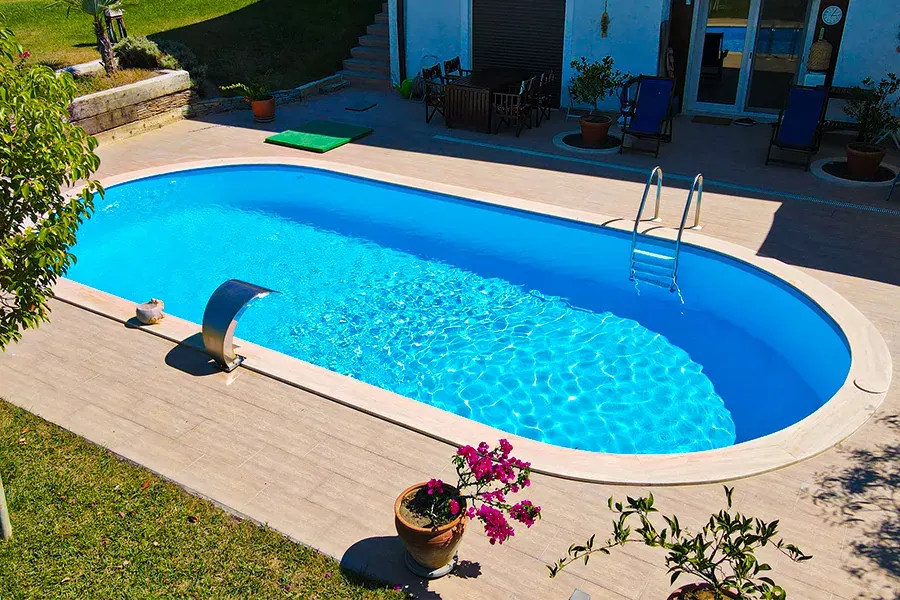
Yes. Because reinforced membrane is cut and welded in place on site, it can be adapted to steps, curves and different depths. On complex details, labour time and preparation requirements increase.
Is official municipal permission required for the renovation work?
Whether permission is required varies with local regulations and the scope of the project. Work involving new excavation, an increase in volume, structural alterations or changes to infrastructure/electrical installations may require a permit or notification. Although renewing only the internal lining is a simpler process in most places, confirmation should be obtained from the relevant local authority before work begins.