Pool models, construction conditions and care to help you plan your project.
In this guide 4
Application note: Chemical dosages, pH/chlorine targets, run times and maintenance intervals are determined by the product label, measured water values, the usage class and local requirements. Numerical examples on their own are not application instructions. Chemicals must never be mixed with one another, and electrical work, pressurized equipment and pool draining must be carried out under expert supervision. The consumption and cost figures in this article are example calculations made with the stated assumptions; they are not measured field results and not a performance guarantee.
For property owners running a villa or boutique hotel along the Batumi and Adjara coast, the biggest worry about pool heating is this: "If I heat the pool to 28°C, will I be hit with an astronomical electricity bill at the end of the month?" Older electric resistance heaters or on/off units can raise consumption noticeably. Modern pool heat pumps with Full-Inverter technology, by contrast, do not convert electrical energy directly into heat; they move heat from the outside air into the water. Manufacturer catalogue figures report roughly 5 to 6 kW of heat energy for every 1 kW of electricity (COP ≈ 5 – 6) at suitable air and water temperatures. This COP value varies with outdoor air temperature, humidity, water temperature and flow rate, and it drops noticeably at low air temperatures. When the system is supported by a bubble-type thermal night cover, the monthly heating cost of a 45 m³ pool can stay within predictable limits, as the example calculations below show. Comparisons with rental income depend on local tariffs and occupancy, so no income promise is made here.
Example planning assumption: A 15 kW Full-Inverter heat pump bringing a 45 m³ pool to a water temperature of 28°C at an ambient temperature of 10–15°C may consume roughly 12–16 kWh of electricity per day once the water temperature has stabilized. When a bubble-type thermal night cover is used, most of the heat loss caused by evaporation is reduced; monthly electricity consumption is therefore calculated as lower than that of a system meeting the same heat demand directly with an electric resistance element, by a factor equal to the COP (approximately 4–5 times lower under the example assumption). The actual result varies with climate, the discipline with which the cover is used, wind, the target temperature and the choice of unit.
Heating a pool is not about boiling the water; it is about keeping the calories you have produced inside the pool. Running a heat pump without a thermal cover is like running the air conditioning in winter with the windows of the house open.
01. The Physics of Heat Pump Operation: COP Efficiency Coefficient and Evaporation Loss
A heat pump's effect on the electricity bill is shaped by the following physical rules:
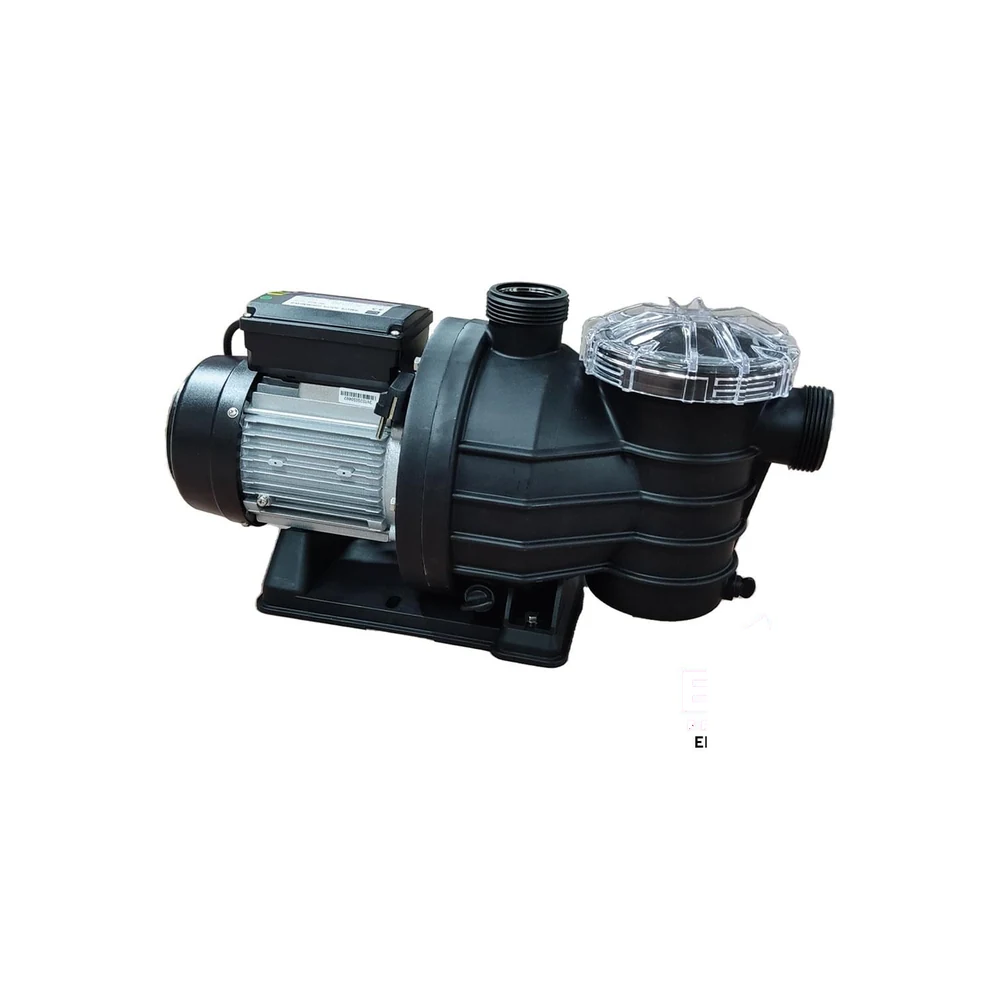
- Thermodynamic Cycle (Heat Transfer): The unit does not convert electrical energy directly into heat; electricity is used only to run the compressor and the fan. Heat energy from the outside air is compressed by means of a refrigerant gas (R32, for example) and transferred to the pool water through a titanium heat exchanger. The amount of heat that can be transferred is limited by outdoor air conditions.
- Most Heat Loss Is Evaporation: In open-surface pools, the latent heat of evaporation is generally the single largest loss item; the literature gives high percentages for open pools, but the exact share varies with wind, humidity and the water/air temperature difference. When the cover is not placed over the pool at night, the pump runs longer to make up for this loss.
- Inverter Frequency Modulation: Once the water reaches the target temperature, the inverter compressor reduces its speed and runs at partial load, consuming only the low power level needed to hold that temperature (which varies by unit, in the order of a few hundred watts for example).
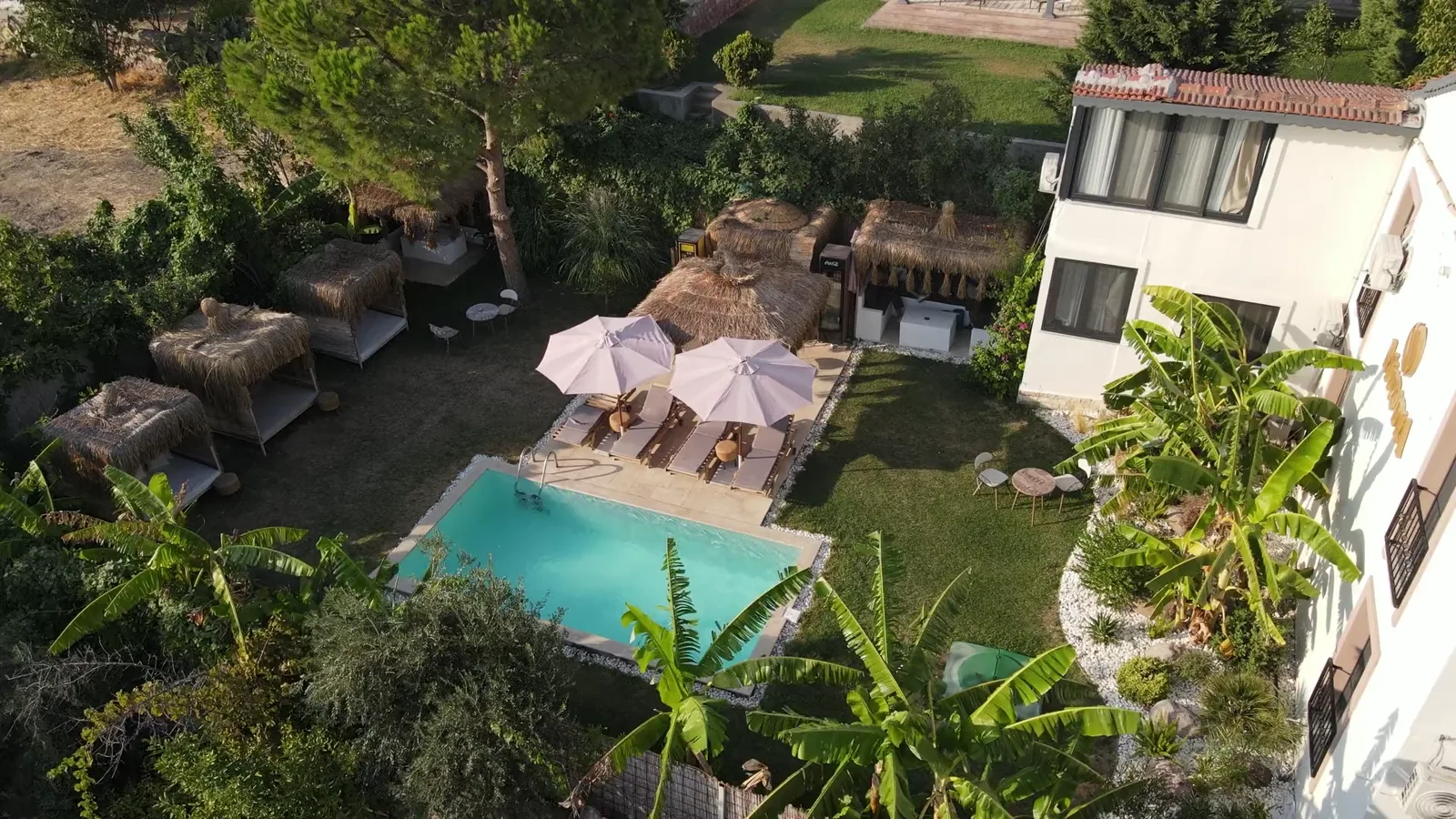 Fiplus ↗
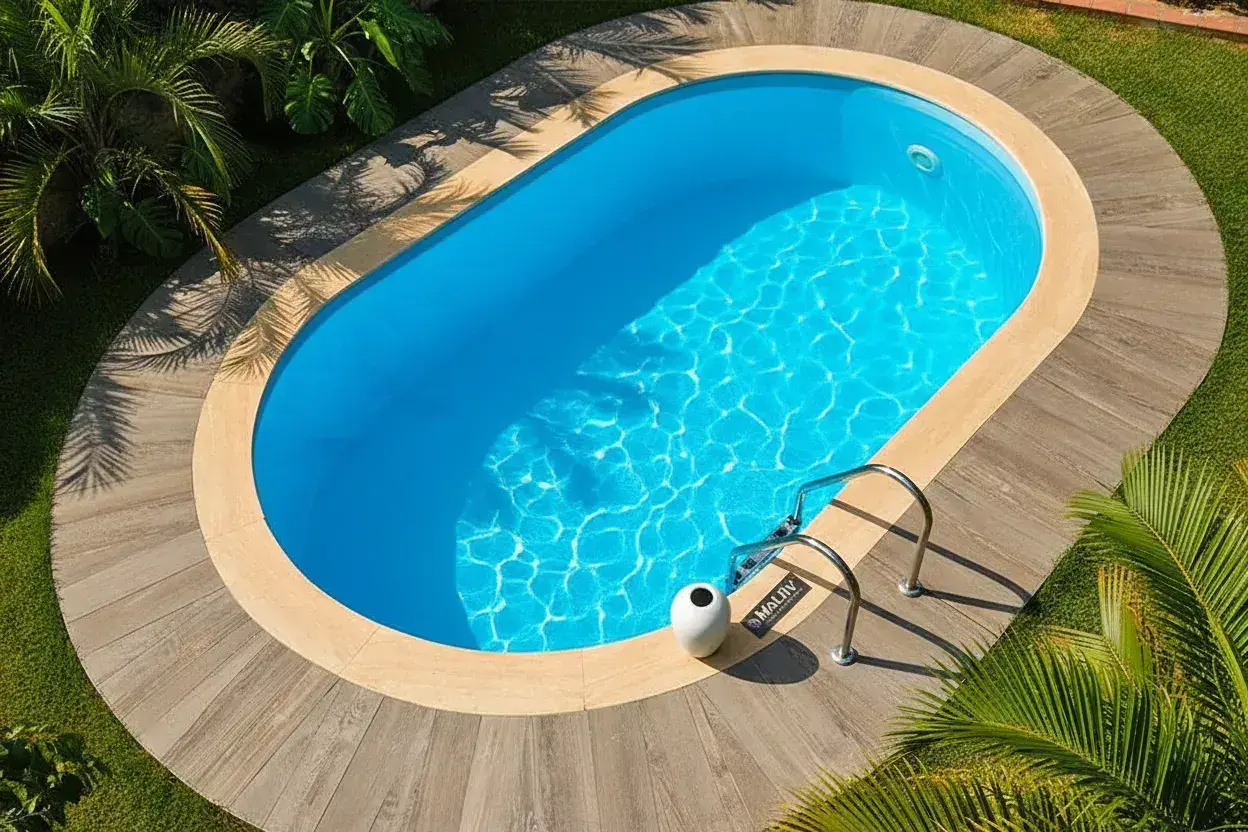 Maldiv ↗
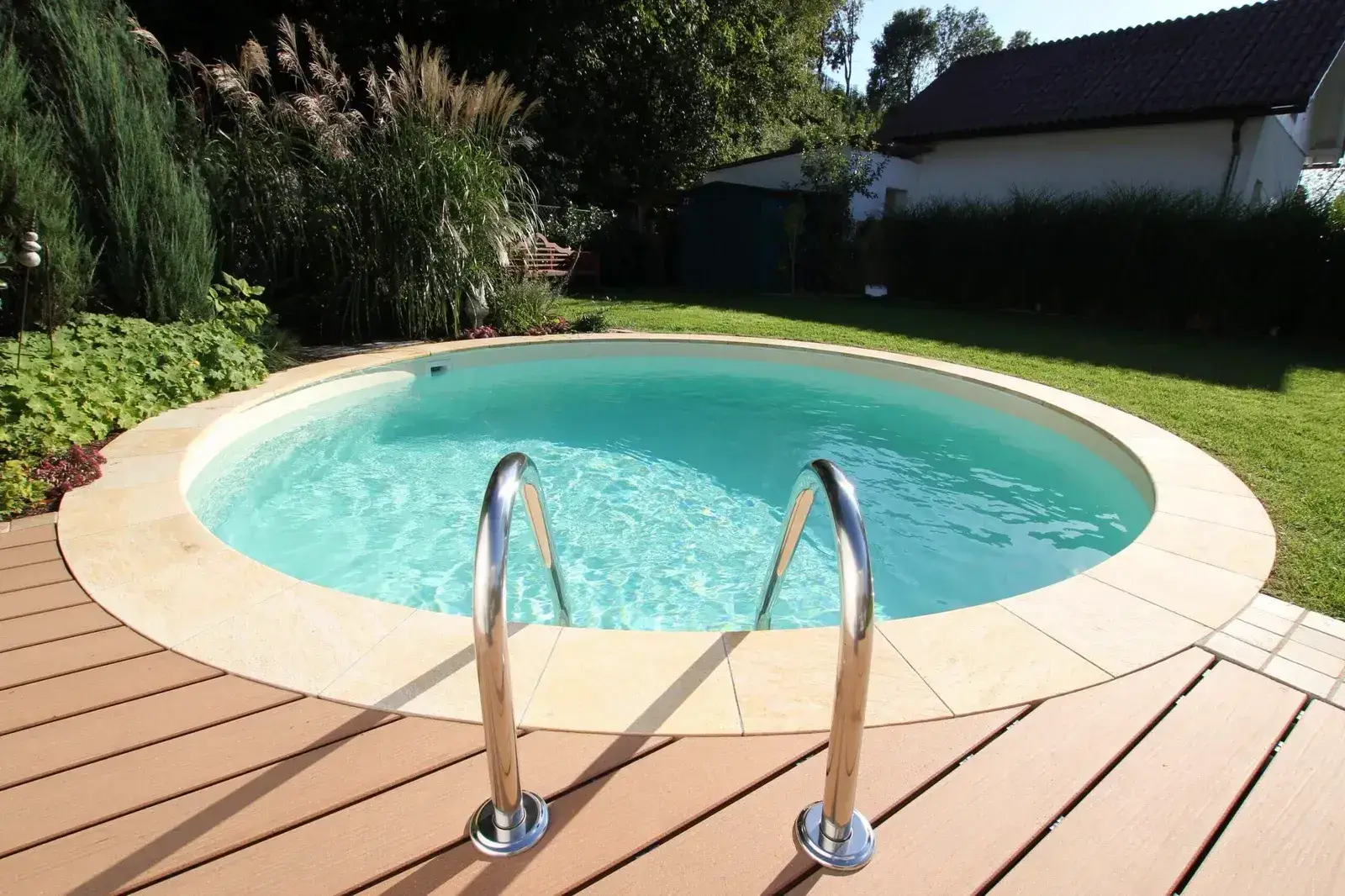 Bora ↗
02. Sermed Havuz Inverter Heating Architecture: kW Capacity Selection and By-Pass Pipework
Sermed Havuz applies the following approach on heating projects:
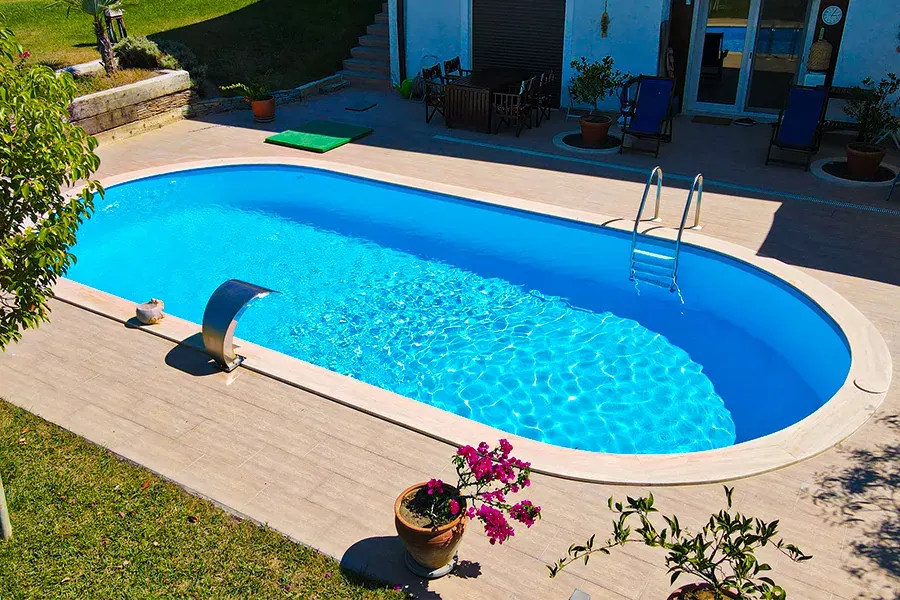
- The Right kW Output (Preliminary Sizing): For a 45 m³ pool, an example preliminary selection is a unit with a thermal capacity of 15–17 kW; the final capacity is determined by the target temperature, season length, wind, cover use and a heat loss calculation. An undersized unit causes the compressor to run constantly at full load and increases consumption.
- Titanium Heat Exchanger Durability: In systems with soft water and a salt generator, a titanium-tube heat exchanger with better corrosion resistance is preferred. This choice improves durability; no claim of zero failures or zero perforation can be made for any heat exchanger, and water chemistry must be kept within the values stated on the label.
- Three-Valve By-Pass Line: By-pass valves fitted in the plant room allow the water flow to the unit to be adjusted, so that filtration continues uninterrupted when the heat pump is taken out of circuit. The pump must be switched off while valve positions are changed, and electrical connections must be made by authorized personnel in accordance with local standards.
03. Daily and Monthly Electricity Consumption Table by Pool Volume
The values below are example planning figures prepared on the assumption that a thermal cover is used and that the system operates in mild-season conditions.
| Pool Volume and Model | Recommended Heat Pump | Daily Operation (With Thermal Cover) | Daily kWh Consumption (example) | Monthly Consumption (30 Days, example) |
|---|---|---|---|---|
| 20 – 25 m³ (Bora / Mini) | 9 kW Inverter | 5 – 6 Hours | 7 – 9 kWh | ~210 – 270 kWh |
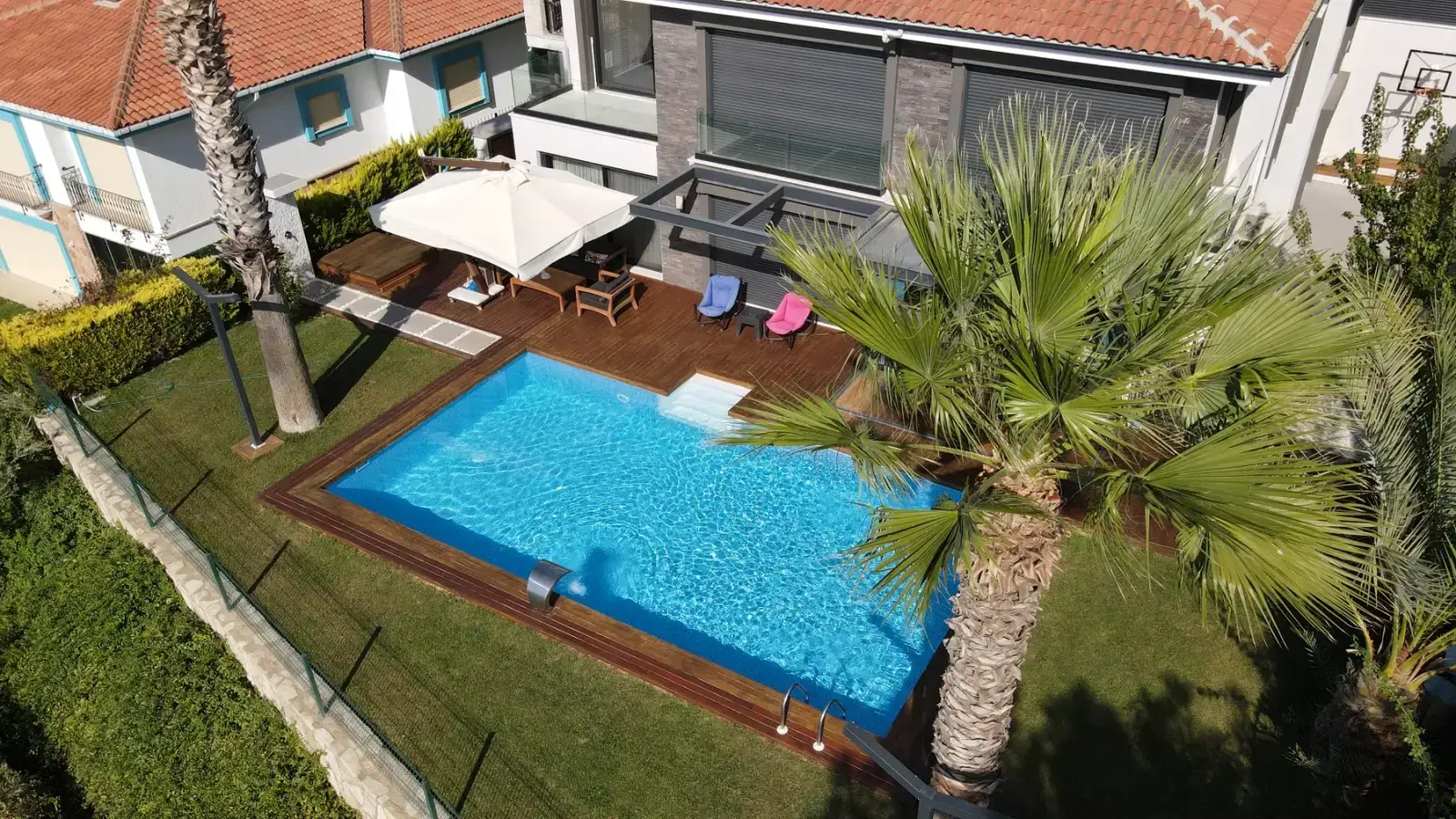
| 40 – 45 m³ (Fiplus 4×8 m) | 15 kW Inverter | 6 – 8 Hours | 12 – 16 kWh | ~360 – 480 kWh |
| 65 – 75 m³ (Fiplus 5×10 m) | 21 kW Inverter | 7 – 9 Hours | 18 – 24 kWh | ~540 – 720 kWh |
Conclusion: The combination of a Full-Inverter heat pump and a thermal cover turns heating consumption into a predictable budget item for users who want to extend the season; actual consumption varies in proportion to any deviation from the assumptions above.
Frequently asked questions
Down to what air temperature can a pool heat pump operate?
The operating range is specific to each model and is stated in the unit's technical documentation; many inverter models with an automatic defrost function can also operate at sub-zero temperatures. In all cases, efficiency falls as the air temperature drops; the highest efficiency and lowest consumption are achieved in mild weather conditions.
Can the pool be heated with solar energy (solar panels)?
Yes. A photovoltaic system installed on the roof can cover part or all of the electricity the heat pump consumes during the day. The share covered depends on the panel output, the season and how well generation and demand coincide; because of the panel investment, its maintenance and grid connection requirements, the phrase "zero cost" would not be accurate. Electrical installation and the grid connection must be carried out by authorized personnel in accordance with local regulations.
How many hours does a heat pump need to heat the water?
The initial heat-up time depends on the pool volume, the capacity of the unit, the temperature difference to be covered and the weather conditions. For a temperature rise of about 13°C in a 45 m³ pool, a period in the order of 36–48 hours can be planned under example assumptions; once the target is reached, an inverter unit runs for shorter periods each day to hold the temperature.
Should the thermal cover stay on the pool during the day as well?
During sunny daytime hours the cover can be opened so that the sun's rays heat the water naturally; keeping the cover closed from evening until morning reduces evaporation loss. A thermal cover is not a safety cover; it does not replace a physical barrier, fencing or adult supervision, and it does not eliminate the risk of drowning.