Pool models, construction conditions and care to help you plan your project.
In this guide 4
Application note: Chemical dosages, pH/chlorine targets, operating times and maintenance intervals are determined according to the product label, measured water values, the usage class and local requirements. Numerical examples are not, on their own, application instructions. Chemicals must never be mixed with one another; electrical work, pressurized equipment and pool draining operations must be carried out under expert supervision. The comparison figures in this article are indicative magnitudes intended for planning purposes rather than a substitute for an independent test report; actual results depend on the media product's own technical documentation, the flow rate and the water chemistry.
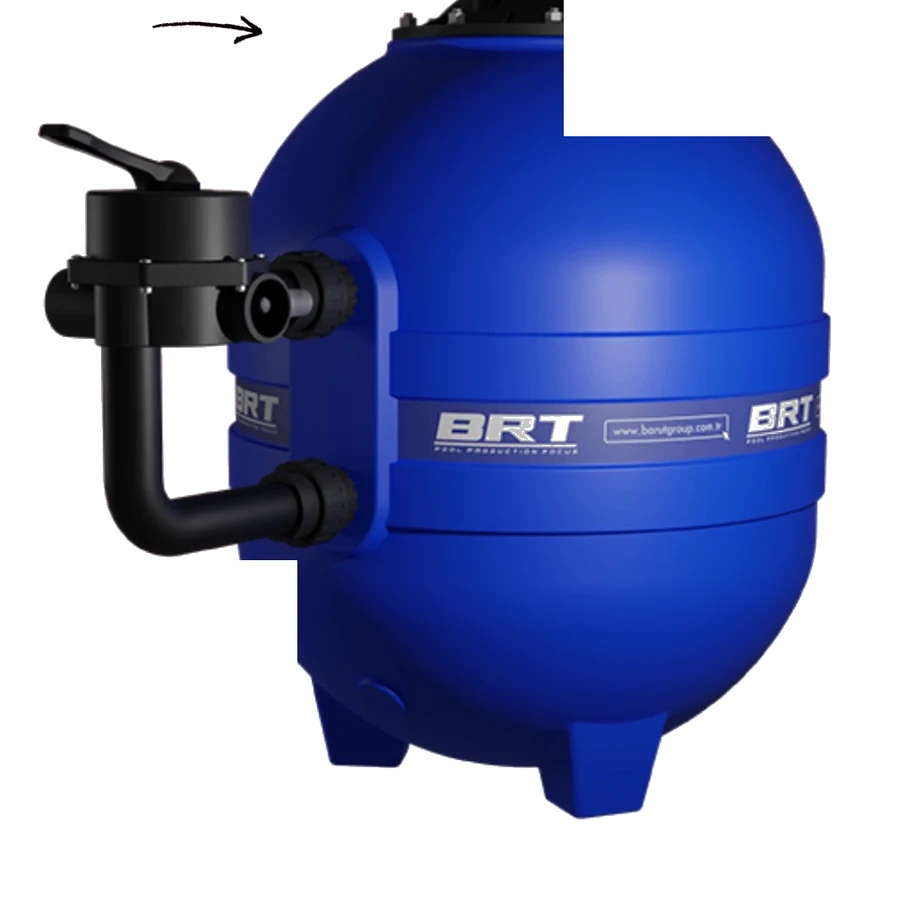
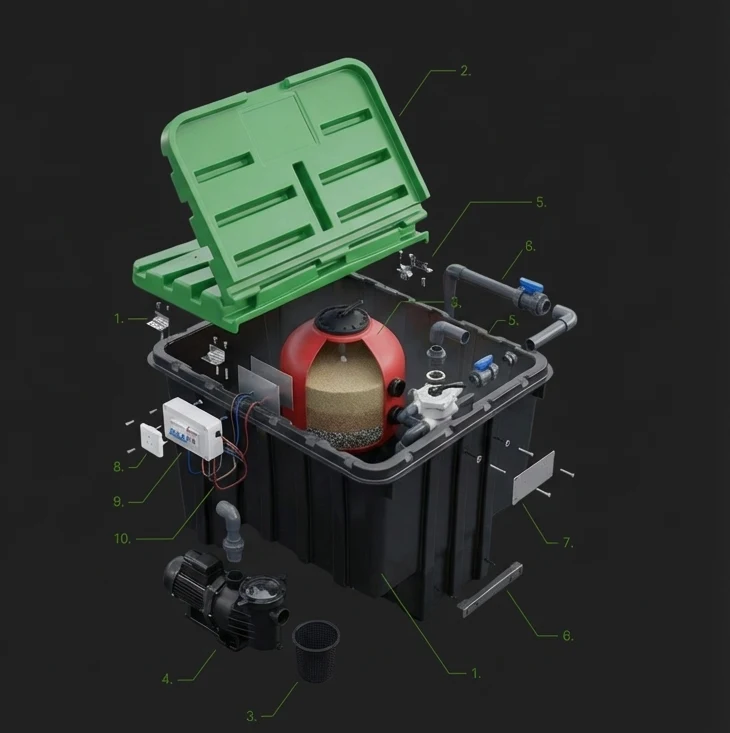
A pool's filtration quality depends not only on the power of the pump but also on the gradation and fineness of the media that strains the water inside the filter tank. Standard quartz silica sand, in use for decades, can in hot and humid climates create the conditions for a biofilm layer (biofilm) to develop inside the filter tank when maintenance intervals are stretched, allowing bacteria, algae and organic secretions to adhere. By binding the sand grains together, biofilm can lead to clumping, channelling and water returning to the pool without being adequately filtered. This process is not inevitable; its speed and severity vary with water chemistry, bathing load and maintenance discipline. Activated Filter Media (AFM - Activated Filter Media), which we offer as an option in place of standard silica sand in Sermed Pools MyBox units, stands out for a structure whose surface charge makes it harder for biofilm to take hold, for finer filtration performance than silica sand under suitable conditions, and for generally shorter backwash cycles.
The inside of a filter is dark, wet and warm; it is an environment favourable to microbiological growth. The right filter media is the material that feeds this environment as little as possible.
01. The Hidden Danger of Silica Sand: Biofilm Armour, Calcification and Chlorine Consumption
The biological clogging process that can develop in filters using quartz silica sand when maintenance is neglected:
- Biofilm (Bacterial Slime) Formation: Bacteria settle on the sand grains and can secrete a sticky polysaccharide/alginate layer that partly shields them from the disinfectant. This layer reduces the effectiveness of chlorine, and part of the free chlorine in the pool is consumed oxidizing the organic load inside the filter. The proportion of chlorine consumed varies from pool to pool and with the bathing load; no fixed percentage can be given.
- Channelling: Once the sand grains stick together and clump, water can rush through the resulting voids instead of being strained through the whole bed, and filtration efficiency drops sharply.
- A Source of Trichloramine (the "Chlorine Smell"): The organic load and biofilm accumulated in the filter can react with chlorine and contribute to the formation of chloramine/trichloramine compounds that irritate the eyes and respiratory tract.
- Periodic Sand Replacement: Removing clumped sand from the tank is laborious work. The replacement interval is set according to the manufacturer's recommendation, the water quality and the intensity of use; common practice foresees a check every few years with renewal when required.
 Fiplus ↗
 Maldiv ↗
 Bora ↗
02. AFM Activated Glass Media Technology: A Biofilm-Resistant Surface and Finer Filtration
The key features of AFM glass media, offered as an option in Sermed MyBox cabinets:
- Bio-Resistant Surface: The surface charge and activated structure of the glass granules, which undergo a special chemical and thermal treatment, make it harder for microorganisms to attach. This helps reduce the risk of biofilm; no media eliminates biofilm absolutely, and regular backwashing together with water chemistry control remains necessary.
- Finer Filtration: Where silica sand achieves filtration in the order of tens of microns in practice, with the right gradation, correct bed depth and design flow rate, AFM can be targeted to filter down to the single-digit micron range. The actual fineness achieved depends on the product's technical data and the operating conditions; it cannot be claimed that all microorganisms are retained mechanically, and it is no substitute for disinfection.
- More Efficient Backwashing: Thanks to the smooth, biofilm-resistant surface, dislodging the dirt generally takes less time, which creates potential savings in water and chemical consumption. The amount saved varies with your existing system, and no fixed percentage can be guaranteed.
- Long Service Life: Because of its resistance to clumping, a longer service life is expected compared with silica sand. The exact life depends on the manufacturer's declaration, the water chemistry and operating discipline; no open-ended performance commitment is given.
03. Silica Sand vs. Activated Glass Media (AFM) Comparison Table
The values below are indicative magnitudes for planning purposes and should be verified project by project against the media manufacturer's technical data.
| Filtration Parameter | Standard Quartz Silica Sand | Sermed Activated Green Glass Media (AFM) |
|---|---|---|
| Filtration Fineness | Typically in the order of tens of microns (fine sediment can pass through) | The single-digit micron range can be targeted with a suitable design |
| Biofilm and Bacterial Attachment | High risk (biofilm can develop if maintenance is neglected) | Markedly reduced tendency to attach (not zero) |
| Chloramine ("Chlorine Smell") Generation | Can increase as organic load accumulates | A reduction is expected to the extent that less organic load accumulates |
| Backwash Time and Water Consumption | Generally a longer cycle and higher water use | Generally a shorter cycle with potential water savings |
| Media Replacement Life | Periodic checks and renewal depending on clumping | Expectation of a longer life (subject to the manufacturer's declaration) |
Conclusion: The glass media you choose for your MyBox unit is, together with a suitable hydraulic design, a sensible option with the potential to reduce chemical requirements and improve water clarity.
Frequently asked questions
How does putting glass media in a sand filter prevent bacteria and biofilm from forming inside the filter in Batumi's humid climate?
Thanks to its surface charge and activated structure, AFM activated glass media helps make it harder for microorganisms to attach and secrete biofilm. This reduces the risk in humid, hot climates, but it is not sufficient on its own. Biofilm control requires an appropriate free chlorine level, balanced pH, adequate circulation and regular backwashing, all together.
Can glass media escape from the filter tank into the pool?
No escape is expected when the media gradation is selected to suit the slot width of the collector nozzles at the base of the filter. For that reason, media should be selected according to the nozzle slot dimensions of the existing filter tank, and the integrity of the base nozzles should be checked during filling.
Are broken bottle glass and AFM the same thing?
No. Randomly broken glass is sharp, ungraded and not bio-resistant; it must not be used as filter media. AFM is an industrial filter media produced from selected glass raw material, screened, surface-treated and graded to a specific gradation.
Does using glass media reduce how often backwashing is needed?
Generally yes; because dirt is held in the pores rather than sticking to the glass surface, it is removed more easily during backwashing and the cycle can be shorter. Frequency is still determined by the rise in pressure gauge reading and the pool's contamination load, not fixed to a calendar.