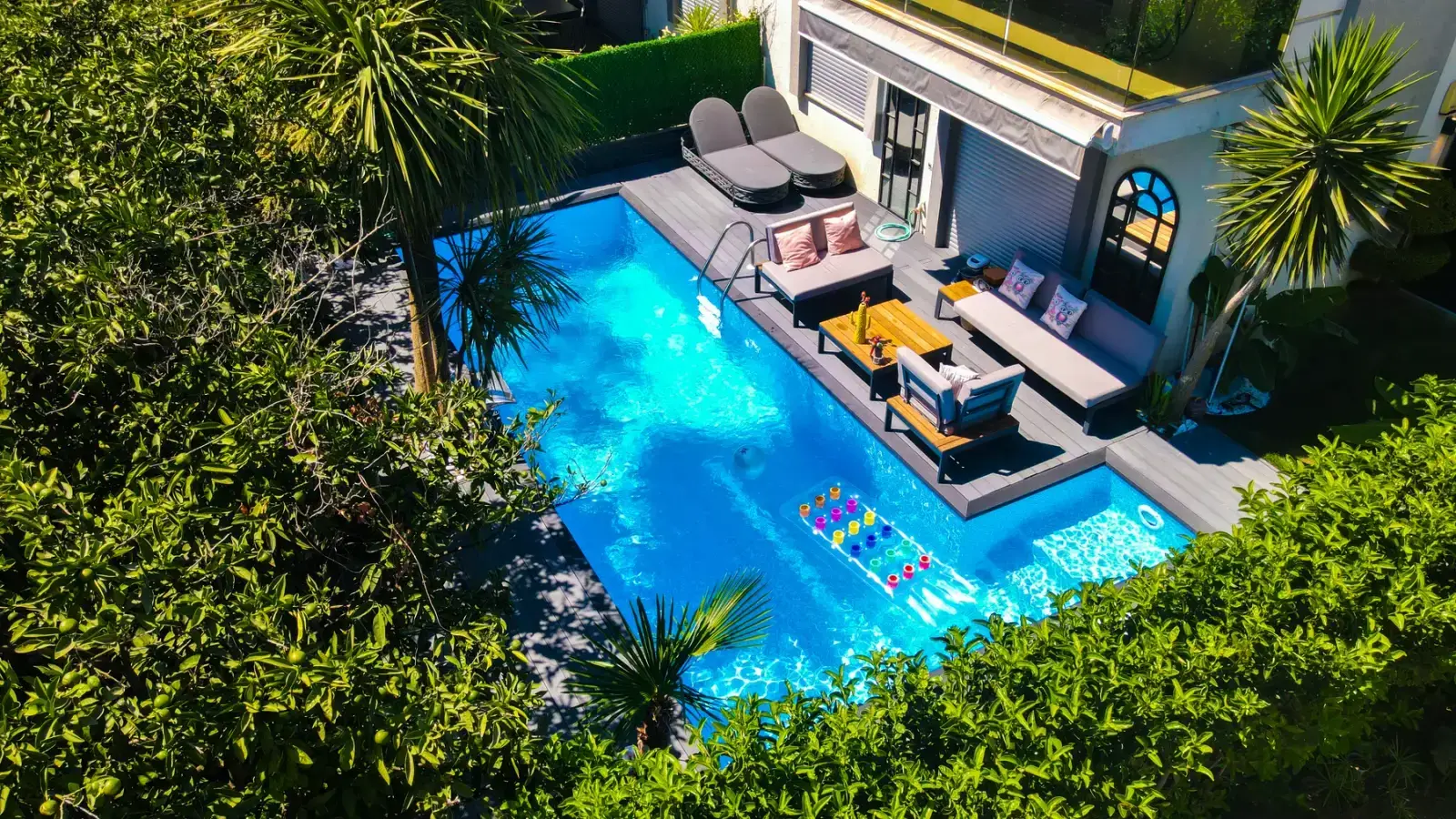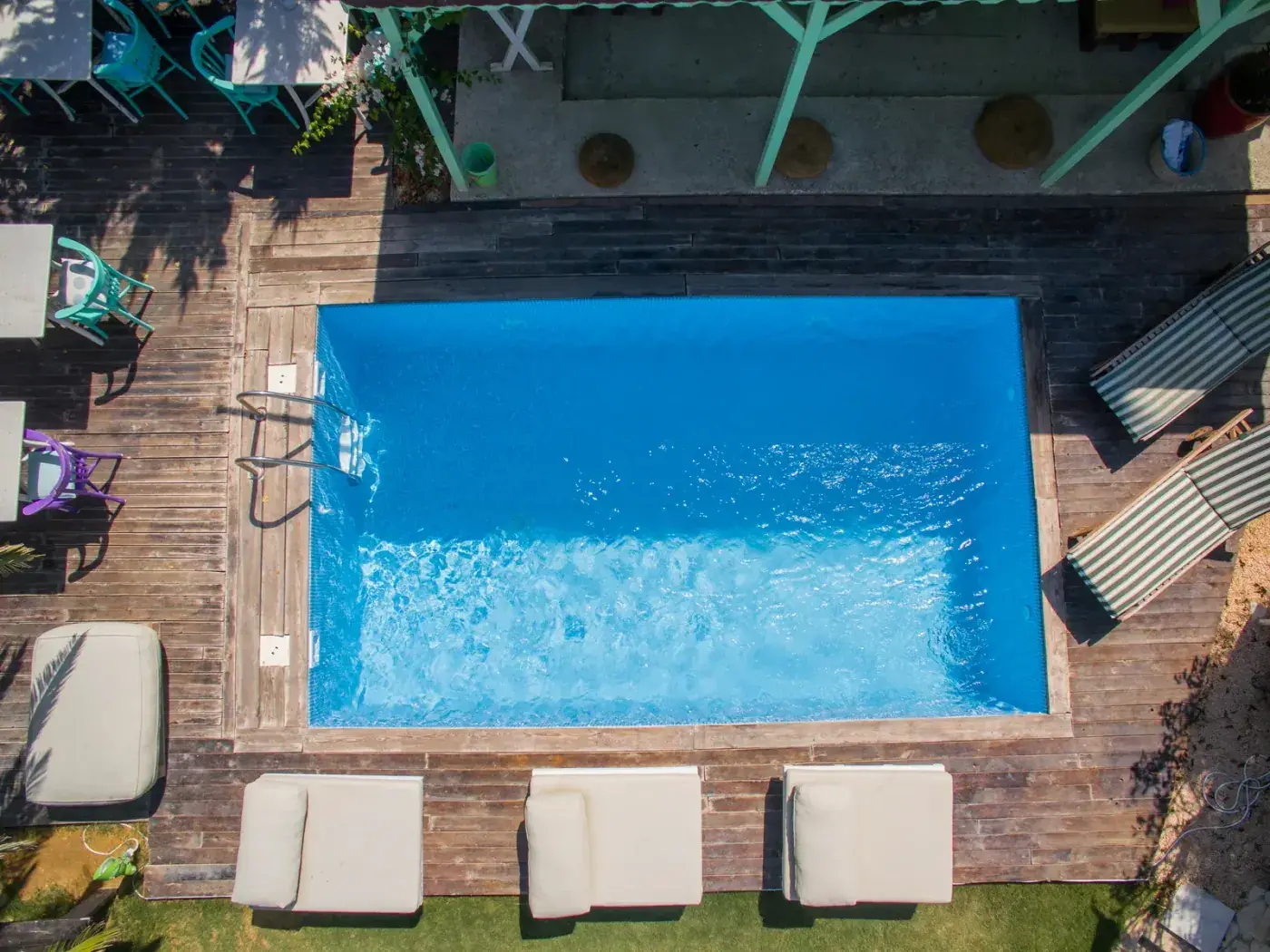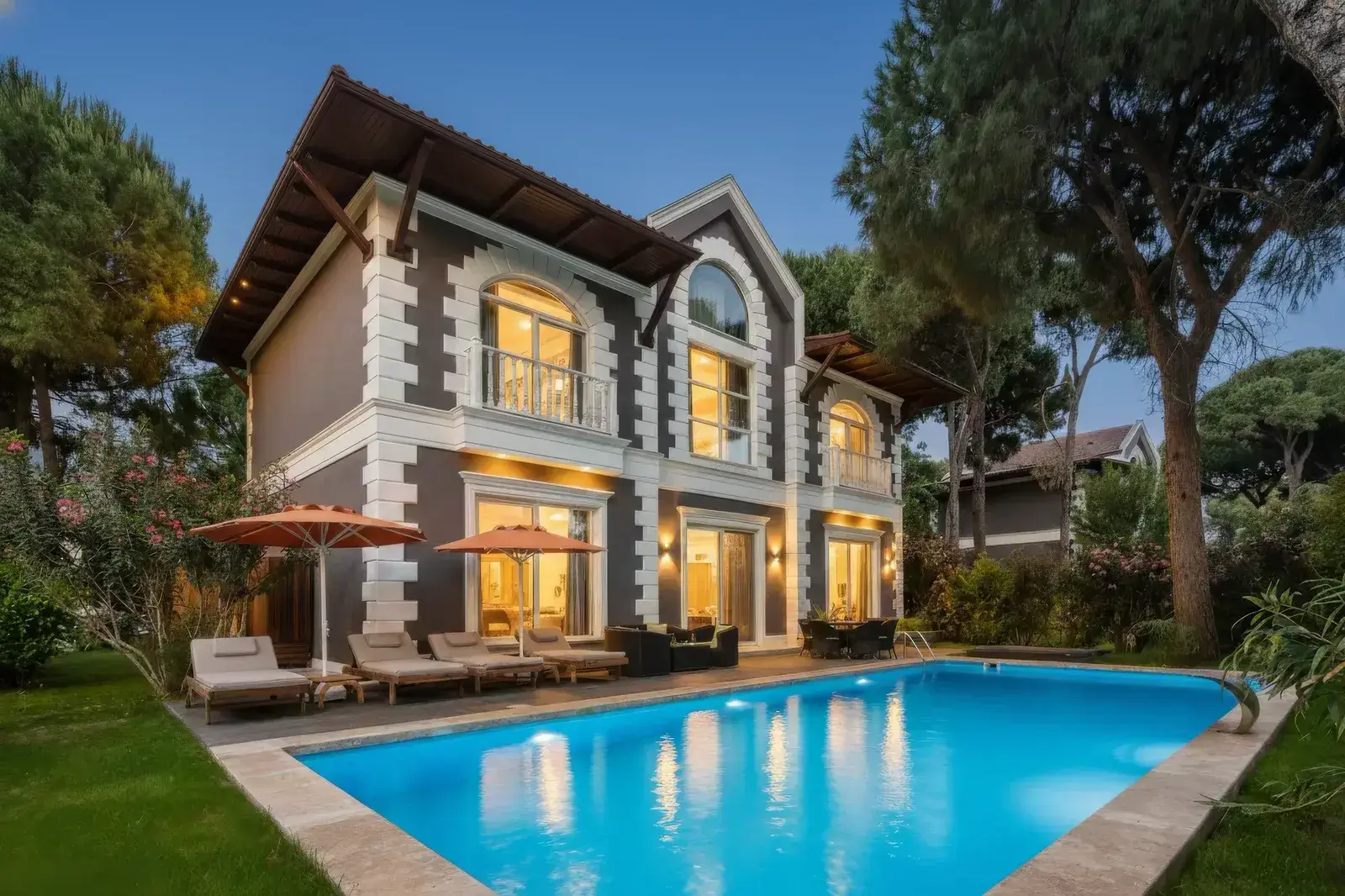
Pool models, construction conditions and care to help you plan your project.
In this guide 4
Application note: Chemical doses, pH/chlorine targets, running times and maintenance intervals are determined by the product label, the measured water values, the usage class and local requirements. Numerical examples are not, on their own, application instructions. Chemicals must never be mixed with one another; electrical work, pressurized equipment and pool draining must be carried out under expert supervision. The flow rate, power and loss figures in this article are example assumptions for planning purposes; the final selection must be verified with the project hydraulic calculation.
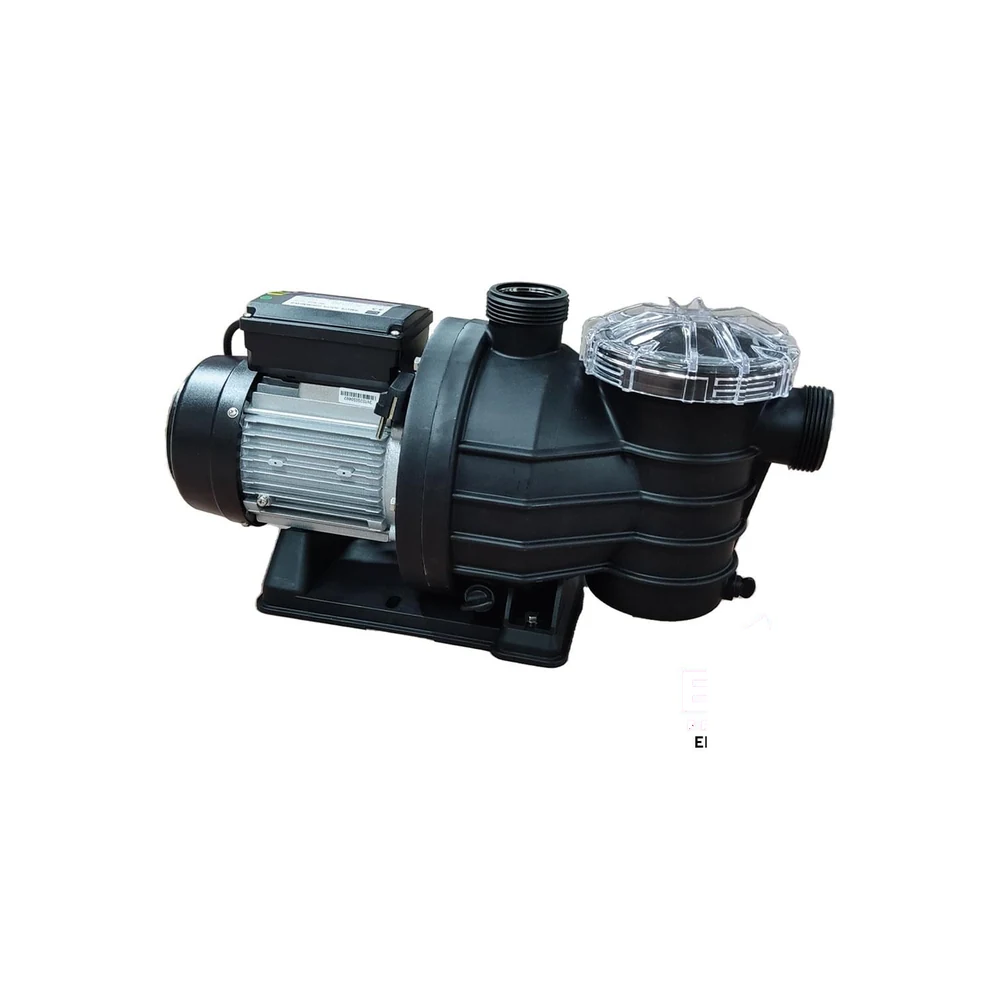
One of the most common selection mistakes in pool filtration is choosing the motor power (HP) oversized, based only on the pool volume or simply on the idea that "stronger is better". A pump that is more powerful than necessary can push water through the filter sand too quickly; in that case fine sediment cannot be retained in the filter and the water may stay cloudy. A pump with insufficient flow, on the other hand, cannot turn the water over within the required time and so creates the conditions for algae growth on the floor. The widely accepted design criterion in pool hydraulics is that the total water volume in the pool should pass through the filter once in approximately 4 hours (turnover time) and that the head requirement of the installation (manometric head loss) should be calculated correctly. In residential pools, 4 hours is a common reference; in heavily used and commercial pools, shorter turnover times and local requirements apply.
A pump's suitability is measured not by the horsepower on its label but by the net hourly flow rate it produces against the pipe friction resistance of the system.
01. The Two Extremes of Incorrect Pump Selection: Excessive Flow Velocity (Sand Carryover) vs. Insufficient Circulation
Typical mistakes in pool pump selection are the following:
- Exceeding the Filtration Velocity of the Filter: When a pump that delivers more than the rated capacity is connected to a small-diameter filter tank, the water passes through the sand bed at a very high velocity. Fine sediment cannot be retained in the sand and may return to the pool; the water does not reach the desired clarity. The maximum filtration velocity and flow rate stated by the manufacturer for the tank must not be exceeded.
- Algae Growth Due to Insufficient Flow: If a pump with a flow rate of 8 m³/hour is installed on a 60 m³ pool, a full turnover of the water takes about 7.5 hours; in hot, sunny conditions this period markedly increases the risk of microbial growth and algae.
- Neglecting Pipe Friction Losses: The further the plant room is from the pool, the greater the pipe and elbow losses become; these losses shift the pump's operating point and reduce the net flow rate. The loss figure must be calculated from pipe diameter, length, number of elbows and equipment resistance, and not simply estimated.
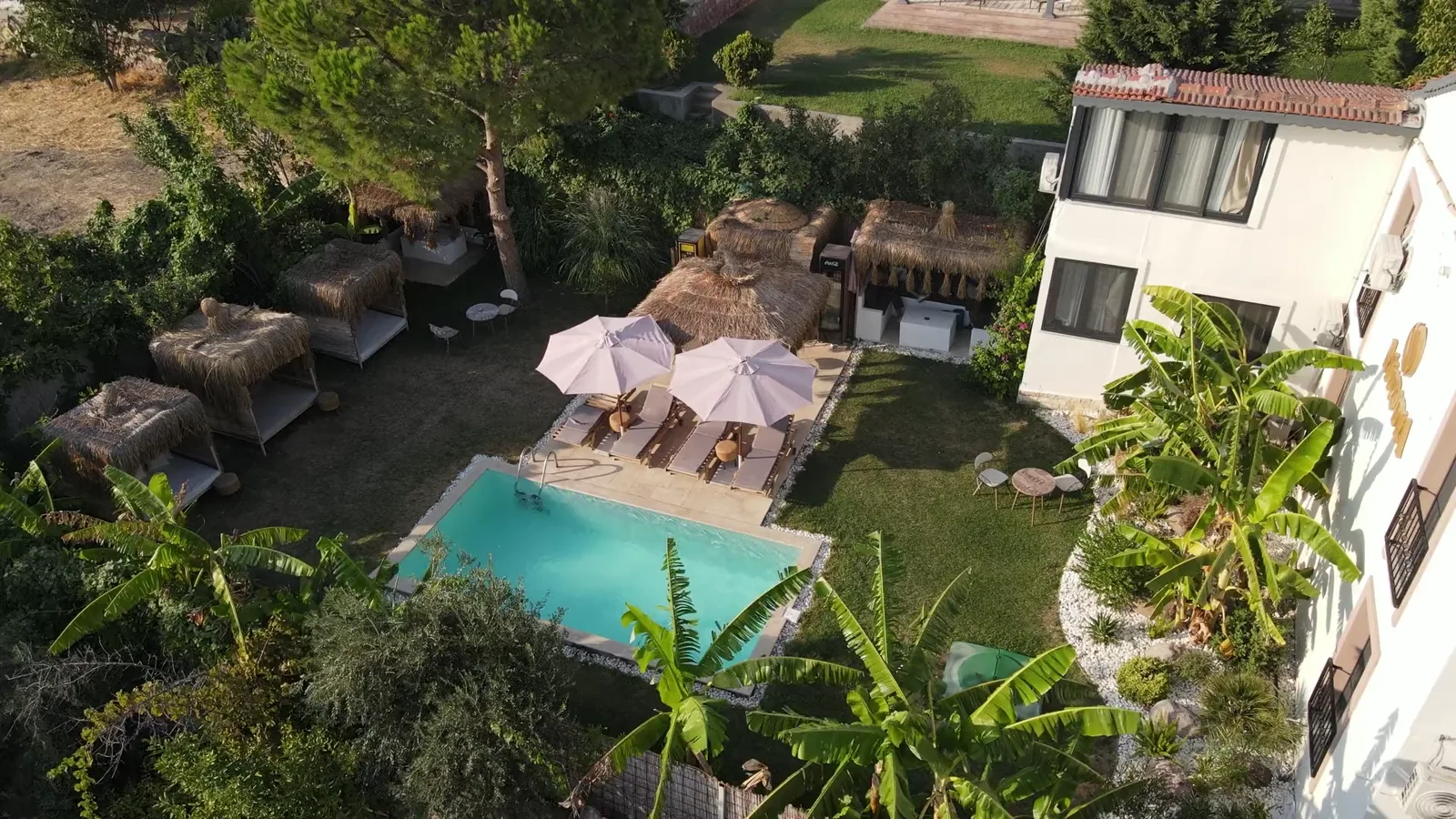 Fiplus ↗
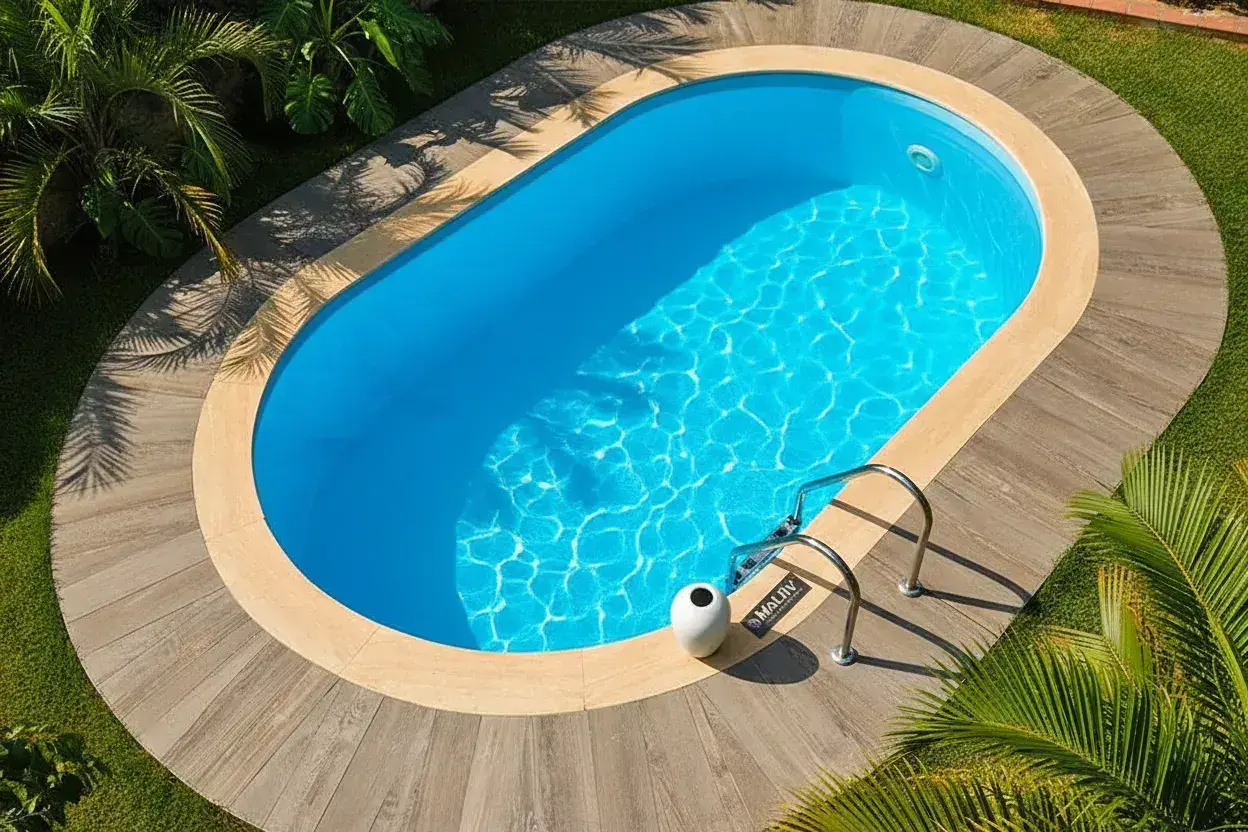 Maldiv ↗
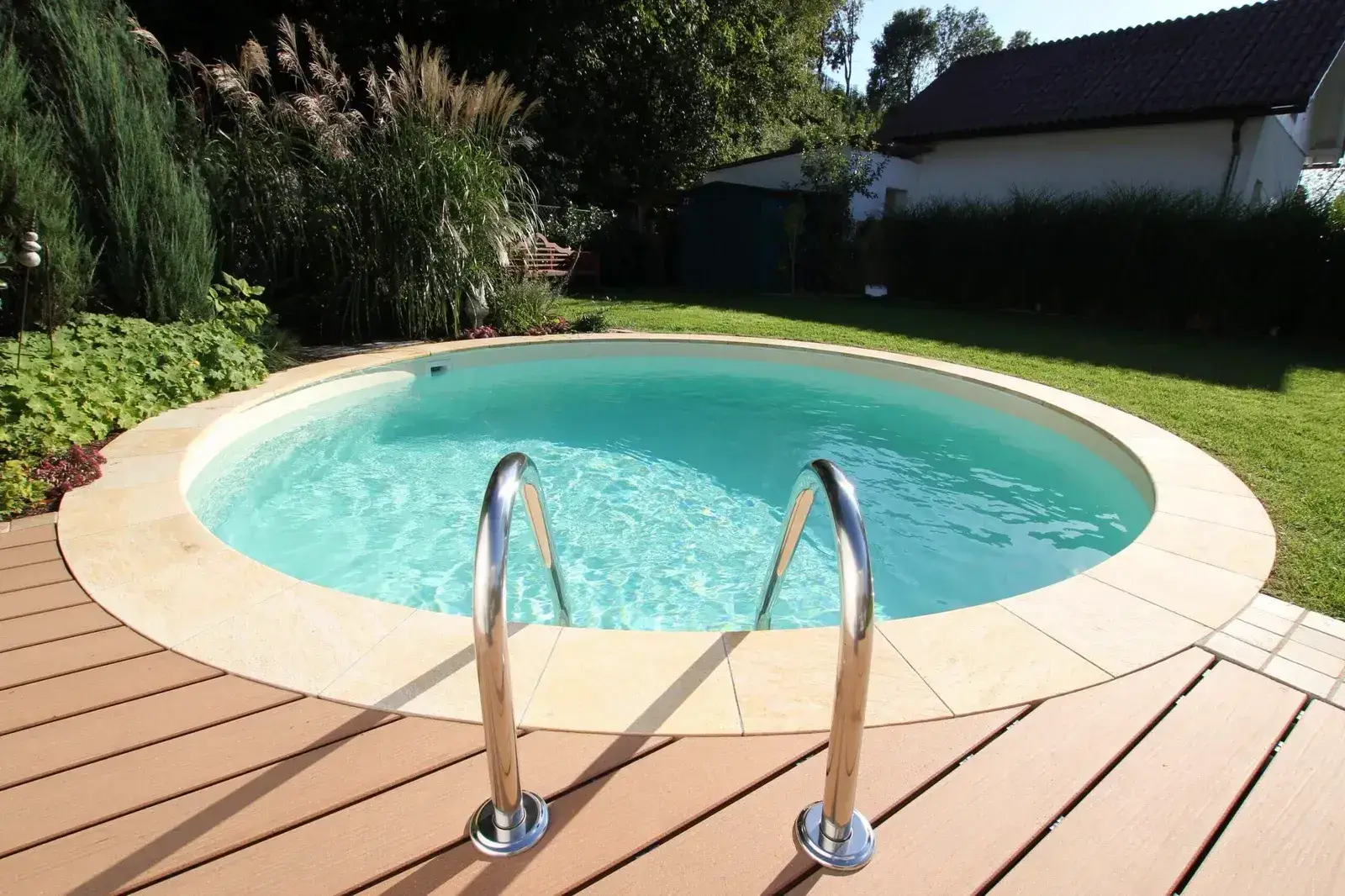 Bora ↗
02. The Pump Flow Rate Formula: Volume, Turnover Time and Manometric Head Loss (Hm)
The basic relationship used for pump flow rate is as follows:
Required Pump Flow Rate (m³/hour) = [Pool Volume (m³) / Turnover Time (hours)] × Safety Factor
In the example below, the turnover time is assumed to be 4 hours and the safety factor 1.15; the factor varies according to project conditions.
- Example Calculation: For a villa pool measuring 4×8 m with a depth of 1.50 m (approximately 48 m³ of water):
(48 / 4) × 1.15 ≈ 13.8 m³/hour. - Manometric Head: If the installation losses are assumed, as an example, to be 10 metres of water column (Hm = 10 m), a model is selected that delivers approximately 13 to 15 m³/hour against this resistance on its pump curve. This typically corresponds to the 0.75 HP to 1.0 HP class; the exact selection must be read from the manufacturer's pump curve.
- Matching the Filter Diameter: A filter diameter is needed that can filter the selected flow rate without exceeding the maximum filtration velocity stated for the tank. For the example flow rate above, a Ø600 mm class tank is a common match.
03. Table Matching Pump Power and Filter Diameter to Pool Volumes
The table below is an example planning table based on the assumption of a 4-hour turnover time; the values are not a firm product commitment.
| Pool Water Volume | Flow Rate for 4-Hour Turnover | Example Pump Power (HP) | Matching Filter Diameter (Ø) | Target Filtration Velocity |
|---|---|---|---|---|
| 15 – 25 m³ (Bora / Mini) | 5 – 7 m³/hour | 0.33 – 0.50 HP | Ø450 mm Tank | Below the manufacturer's limit |
| 35 – 45 m³ (4×8 m Fiplus) | 11 – 13 m³/hour | 0.75 – 1.00 HP | Ø600 mm Tank | Below the manufacturer's limit |
| 55 – 70 m³ (5×10 m Fiplus) | 15 – 18 m³/hour | 1.50 HP | Ø750 mm Tank | Lower velocity, finer filtration |
| 90 – 120 m³ (Hotel / Commercial) | 25 – 30 m³/hour | 2.00 – 2.50 HP | Ø900 mm Tank | Heavy duty; turnover time is shortened |
Conclusion: The pump and the filter tank are a pair that must be selected together. A correct flow rate calculation helps both to keep electricity consumption under control and to maintain water clarity.
Frequently asked questions
For a 40 m³ or 60 m³ pool, how many HP of motor power and what hourly flow rate in m³ should be selected?
With a 4-hour turnover assumption, a 40 m³ pool requires a flow rate of approximately 11 to 13 m³/hour; this is usually met by a 0.75 HP class pump and a Ø600 mm filter. For a 60 m³ pool the requirement is approximately 16 to 18 m³/hour, which matches a 1.50 HP class pump and a Ø750 mm tank. The exact model is determined by comparing the calculated head loss of the installation with the pump curve.
How many hours a day should the pump run?
Running time is determined by water temperature, intensity of use, contamination load and local requirements. In hot summer conditions, a common practice is to run the pump long enough for the water to turn over at least twice a day; in a system with a 4-hour turnover time this corresponds to approximately 8 hours. The running time can be increased based on measured water values.
Will the pump work if it is installed above the pool water level?
Self-priming pool pumps can draw water within the suction lift limit stated by the manufacturer; this limit varies by model and must be confirmed from the product documentation. The suction line must be watertight, a check valve must be used where necessary, and the pump must be filled with water at first start-up in accordance with the manufacturer's instructions.
How often should the pump strainer basket be cleaned?
The cleaning interval depends on the contamination load. During periods when leaf and hair accumulation is heavy, a common practice is to check and rinse it at least once a week. Before the basket is opened, the pump must be electrically switched off and the system pressure released.