Pool models, construction conditions and care to help you plan your project.
In this guide 4
Application note: Chemical doses, pH/chlorine targets, running times and maintenance intervals are determined by the product label, the measured water values, the usage class and local requirements. Numerical examples are not, on their own, application instructions. Chemicals must never be mixed with one another; electrical work, pressurized equipment and pool draining must be carried out under expert supervision.
The most common chemical misconception among pool owners who complain that the water stays cloudy or that algae form even though they have added chlorine is the belief that chlorine added without measuring the pH will solve the problem on its own. In water chemistry, free chlorine is distributed between two forms depending on the pH value. At a pH of around 7.2, roughly two thirds of the free chlorine is present in the strong disinfectant form, whereas when the pH rises to 8.0 this proportion falls markedly and most of the chlorine shifts to the much weaker form. In other words, adding chlorine while the pH is high means obtaining far less disinfection effect from the same dose. For this reason, keeping the water's pH in the range of 7.2 to 7.6 is regarded as the first rule of disinfection. The target range may be narrowed according to the disinfectant used, the water hardness and local requirements.
Chlorine is the active substance that performs disinfection; pH is the background condition that determines how much of that active substance will be present in the active form.
01. Hypochlorous Acid (HOCl) vs. Hypochlorite Ion (OCl⁻): How pH Reduces Chlorine Effectiveness
When chlorine is added to water, an equilibrium is established between two forms:
- Hypochlorous Acid (HOCl - Strong Disinfectant): This is the active form that acts rapidly on microorganisms; it is dominant in a low-pH environment.
- Hypochlorite Ion (OCl⁻ - Weak Form): Its disinfection effectiveness is many times lower than that of HOCl; in the literature this difference is generally described as a difference of a large order of magnitude. This form becomes dominant in a high-pH environment.
- The pH 8.0 Situation: When the pool water pH rises to 8.0, most of the free chlorine shifts to the weakly acting OCl⁻ form; even if the measured free chlorine value appears adequate, in practice the disinfection effect is reduced and the risk of algae growth increases.
- The Danger of Low pH: When the pH falls below 7.0, the proportion of the active form rises but the water becomes excessively acidic; this can lead to eye and skin irritation, wear of lining materials and corrosion of metal fittings.
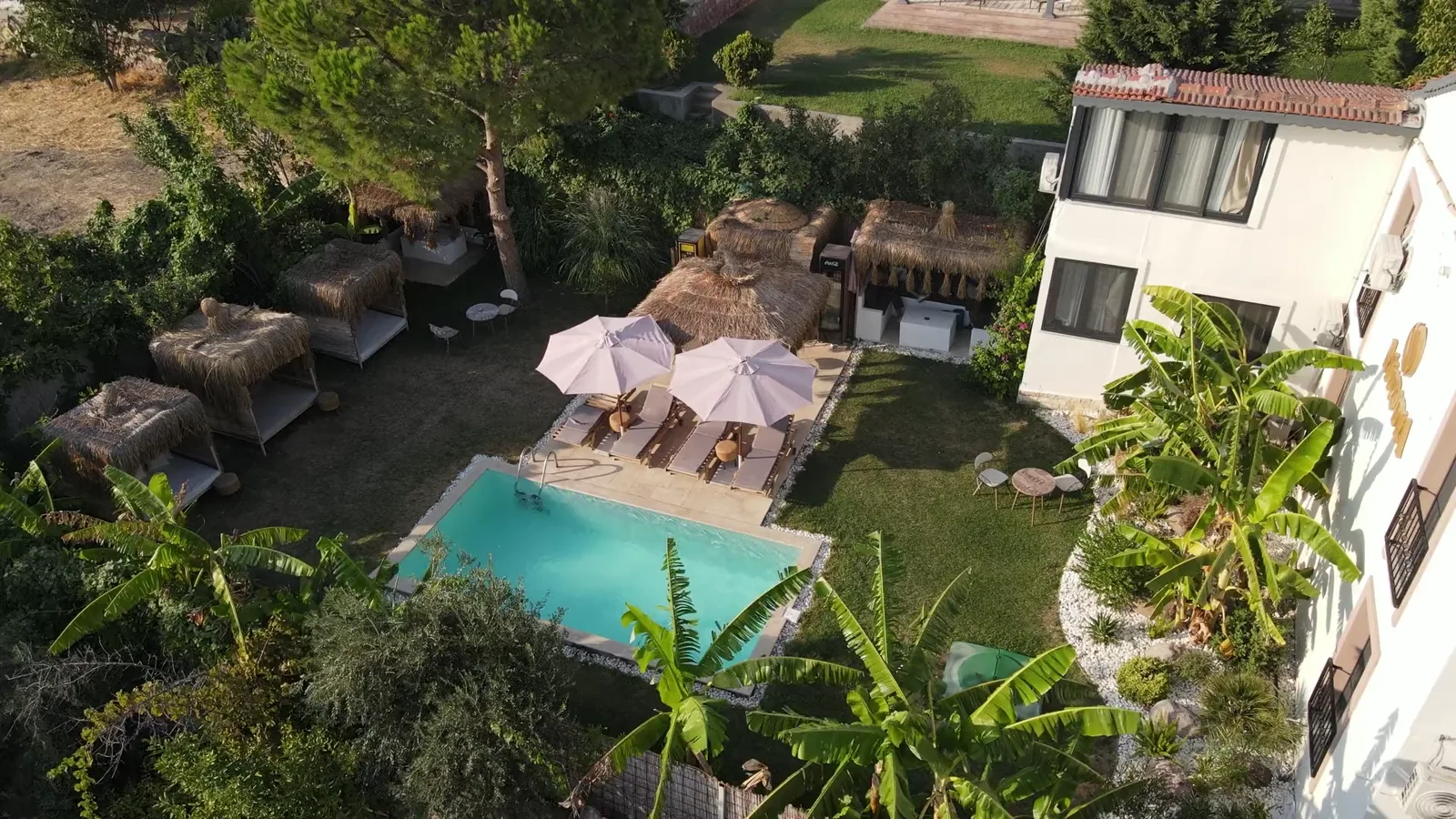 Fiplus ↗
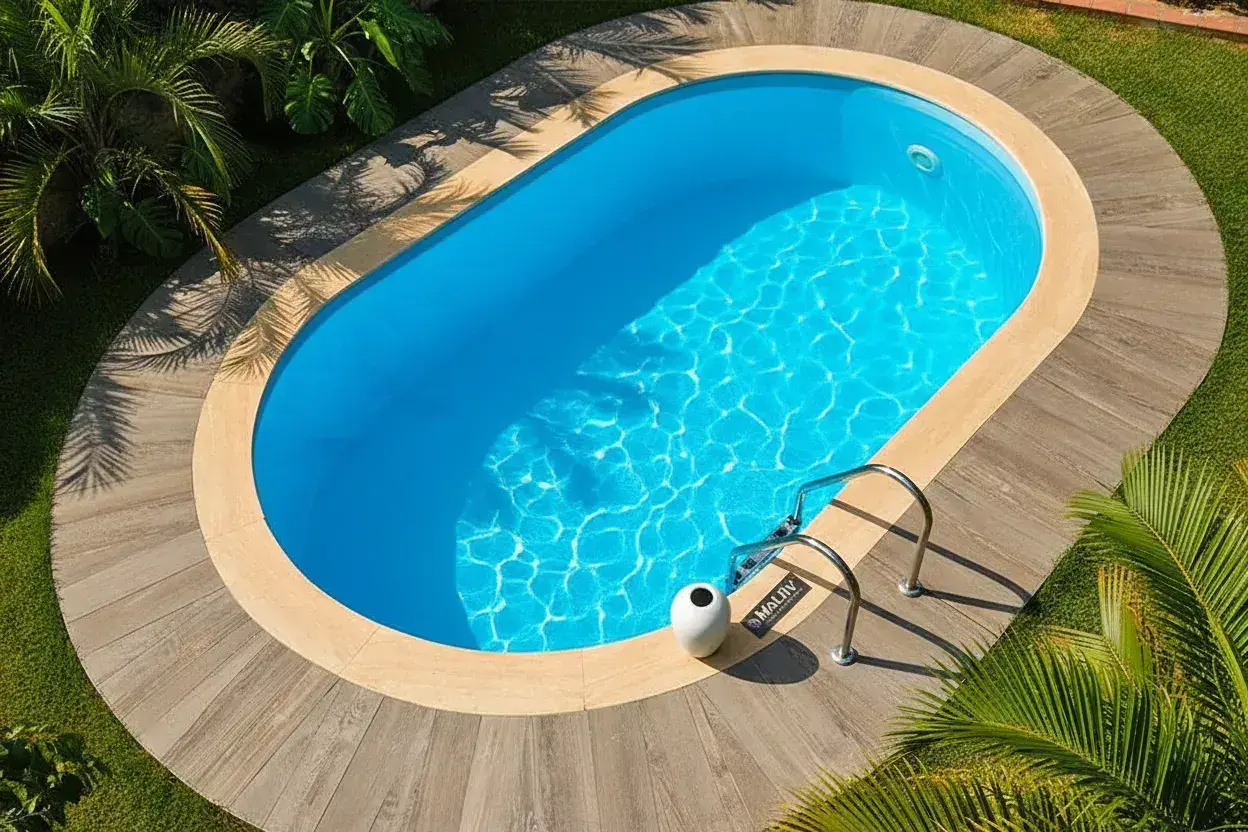 Maldiv ↗
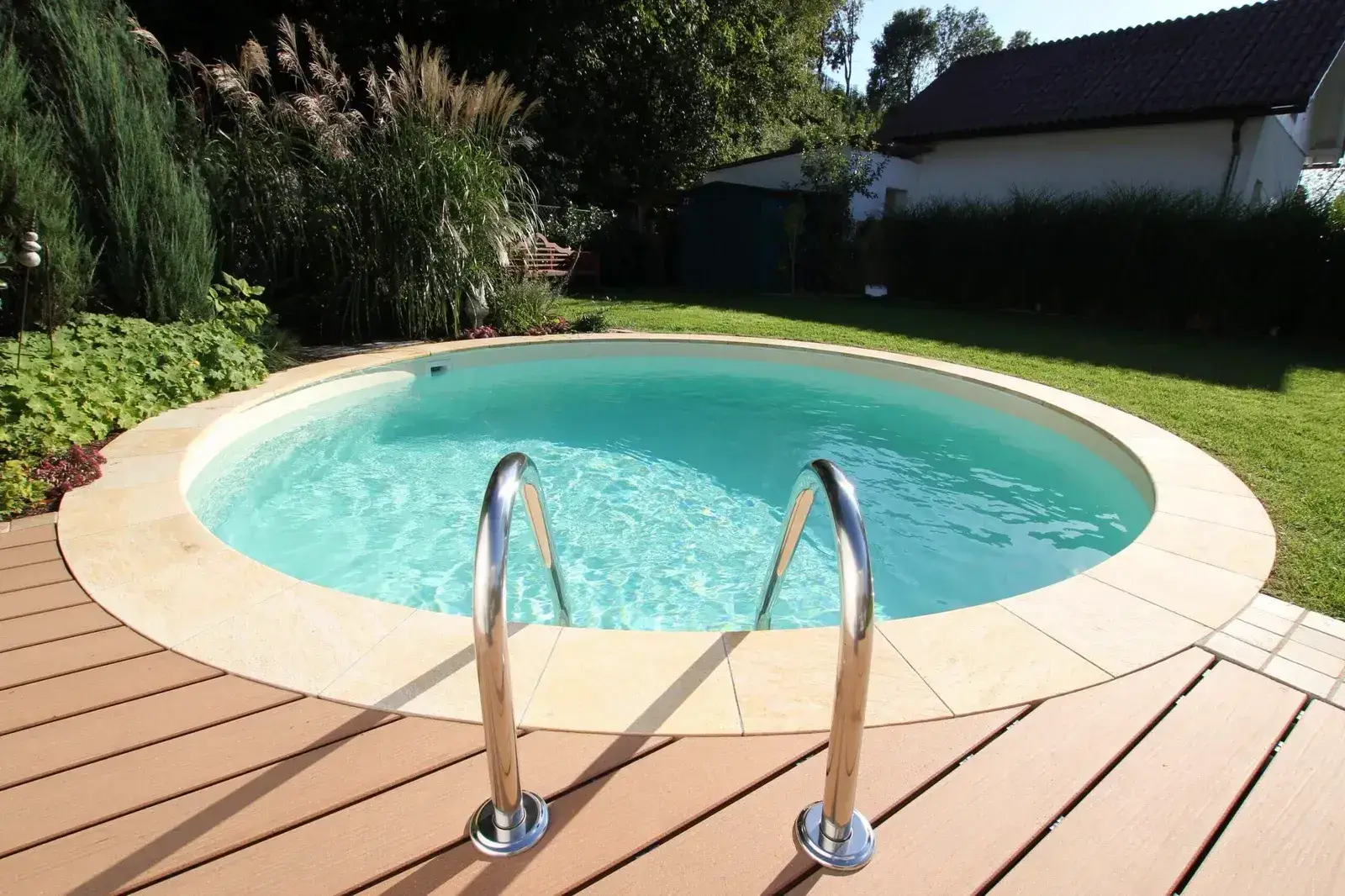 Bora ↗
02. The Ideal pH Range (7.2 – 7.6): Biological Compatibility and Scale Balance
The range of 7.2 to 7.6 is preferred because it provides three balances at the same time:
- Biological Comfort: The pH value of the human eye and mucous membranes is considered to be close to this range. When the water is kept within this band, eye and skin irritation during long swims is markedly reduced. Comfort depends not only on pH but also on chlorine compounds and the overall water balance.
- High Chlorine Efficiency: In this range, more than half of the free chlorine remains in the strong HOCl form, so more effective disinfection is achieved with a lower dose.
- Scale and Precipitation Balance: Keeping the pH away from the upper limit reduces the risk of calcium carbonate precipitation and scale formation. This risk also depends on calcium hardness, alkalinity and water temperature.
03. Table of Active Chlorine Effectiveness Ratios by pH Value
The ratios below are approximate literature values for the HOCl/OCl⁻ equilibrium in clean water at room temperature. Actual ratios vary with water temperature, ionic strength and the presence of cyanuric acid.
| Measured pH Value | Active Chlorine (HOCl) Ratio | Passive Chlorine (OCl⁻) Ratio | Disinfection Power of Chlorine | Condition of the Pool |
|---|---|---|---|---|
| 6.8 | approximately 85% | approximately 15% | High | Acidic water; risk of eye irritation and corrosion |
| 7.2 | approximately 65% (Ideal) | approximately 35% | High and effective | Balanced and clear water |
| 7.4 (Recommended mid value) | approximately 55% (Ideal) | approximately 45% | Balance of comfort and effectiveness | Water comfortable for eyes and skin |
| 7.6 | approximately 45% (Acceptable) | approximately 55% | Balanced | Recommended upper limit |
| 7.8 | approximately 30% | approximately 70% | Reduced | Chlorine effectiveness falls, tendency to scaling increases |
| 8.0 | approximately 20% | approximately 80% | Markedly low | Risk of algae growth persists even if chlorine is added |
Conclusion: The first step before starting pool maintenance is always to bring the pH into the 7.2 to 7.6 band. If the pH is not correct, the efficiency of the chlorine added drops.
Frequently asked questions
How can we prevent the chlorine we add from losing a significant part of its disinfection power when the pH level rises above 7.8?
Before adding chlorine, the pH should be measured with a reliable test kit or photometer. If necessary, a pH reducer (sodium bisulfate or dilute acid) is applied in accordance with the instructions on the product label. Once the pH has come down into the target range, chlorine is added. Chemicals are never mixed with one another; each is dosed separately and diluted in water by the method stated on its label.
How does the pool pH change when it rains?
Rainwater is generally softer and slightly more acidic in character than pool water; heavy rainfall can pull the pH and alkalinity down and can also upset the water balance because of the dust and organic load it carries. The effect varies with the amount of rainfall and the regional water chemistry. For this reason, pH and alkalinity should be measured after rainfall and corrections made according to the results.
Why is an automatic pH control unit recommended?
An automatic dosing system integrated into the control panel measures the water continuously and, when the value moves outside the set point, doses small amounts of correction chemical; this provides a more stable pH curve than manual intervention. Automatic systems require calibration, probe maintenance and regular manual verification; periodic checks are essential for cases of drift and malfunction.
If there is an odour in the pool water, is the cause an excess of chlorine?
Generally no. A sharp "chlorine smell" usually comes not from an excess of free chlorine but from the combined chlorine compounds (chloramines) formed when chlorine combines with sweat, urine and organic matter. In this situation, free and total chlorine are measured and the difference is evaluated; the pH is brought into the target range and a shock chlorination or oxidation treatment is applied in accordance with the product instructions. After treatment, the pool is closed to use until the free chlorine falls to a safe level.