Pool models, construction conditions and care to help you plan your project.
In this guide 4
Calculation note: All price, savings rate, energy consumption, rental income and payback period values in this article are hypothetical planning examples constructed to explain a method; they are not current Georgian prices, verified operating results, manufacturer declarations or income guarantees. A real budget must be calculated from local quotations, current tariffs, actual usage and a written scope of work. Timelines depend on site preparation, weather, permits and logistics.
The most common misconception when investing in a pool is to see the cost as nothing more than the purchase and installation invoice. The concept that applies in genuine financial analysis is Total Cost of Ownership (TCO). TCO is calculated by adding, on top of the initial investment, the electricity, water chemicals, periodic maintenance, surface/grout renewal and water refill expenses that will be incurred over 5 years. The surface type, equipment selection and maintenance discipline directly affect these items: in ceramic-tiled reinforced concrete pools, grout and filler renewal appears as a separate heading in the operating budget, while old fixed-speed pumps draw more electricity than variable-speed models. That said, there is no general rule that every reinforced concrete pool leaks or that no panel pool needs maintenance; the outcome is determined by the design, the quality of the installation and the way the pool is operated. The approach targeted by Sermed Havuz is to bring the 5-year operating expense down through a variable-speed (inverter) pump, a smooth liner surface and efficient filter media; the difference you achieve depends on a calculation made with your own tariffs.
The smart investor is not simply the one who buys cheaply, but the one who can forecast and manage operating expenses. A low TCO is one of the most important indicators that your pool can be used for years without causing problems.
01. The Hidden Side of the Iceberg: Annual Pool Operating Items and the Energy Load
The main expense items that make up the total cost of a pool over 5 years:
- Electricity Consumption (kWh): Consumption varies with pump power, hydraulic resistance and daily running hours. An example planning calculation: a pump drawing 1.1 kW running 8 hours a day consumes roughly 1.1 × 8 × 30 = 264 kWh per month. Redo this multiplication using your own pump's nameplate power and actual running hours.
- Chemical Consumption: The cost of chlorine, pH regulator, flocculant and algaecide varies with water volume, temperature, intensity of use and surface roughness. Doses are always set from the product label and the measured water values; chemicals are never mixed with one another and are applied separately and diluted.
- Water Refill and Evaporation Loss: Backwashing and summer evaporation create an annual top-up requirement. The quantity depends on the pool surface area, climate and backwash frequency; the actual figure should be monitored from meter readings.
- Periodic Grout and Waterproofing Repair: On surfaces that include ceramic tiles and grout, renewing the grout filler is a periodic maintenance item. The timing and scope of renewal vary with installation quality, water chemistry and conditions of use; it would not be correct to give a fixed number of years.
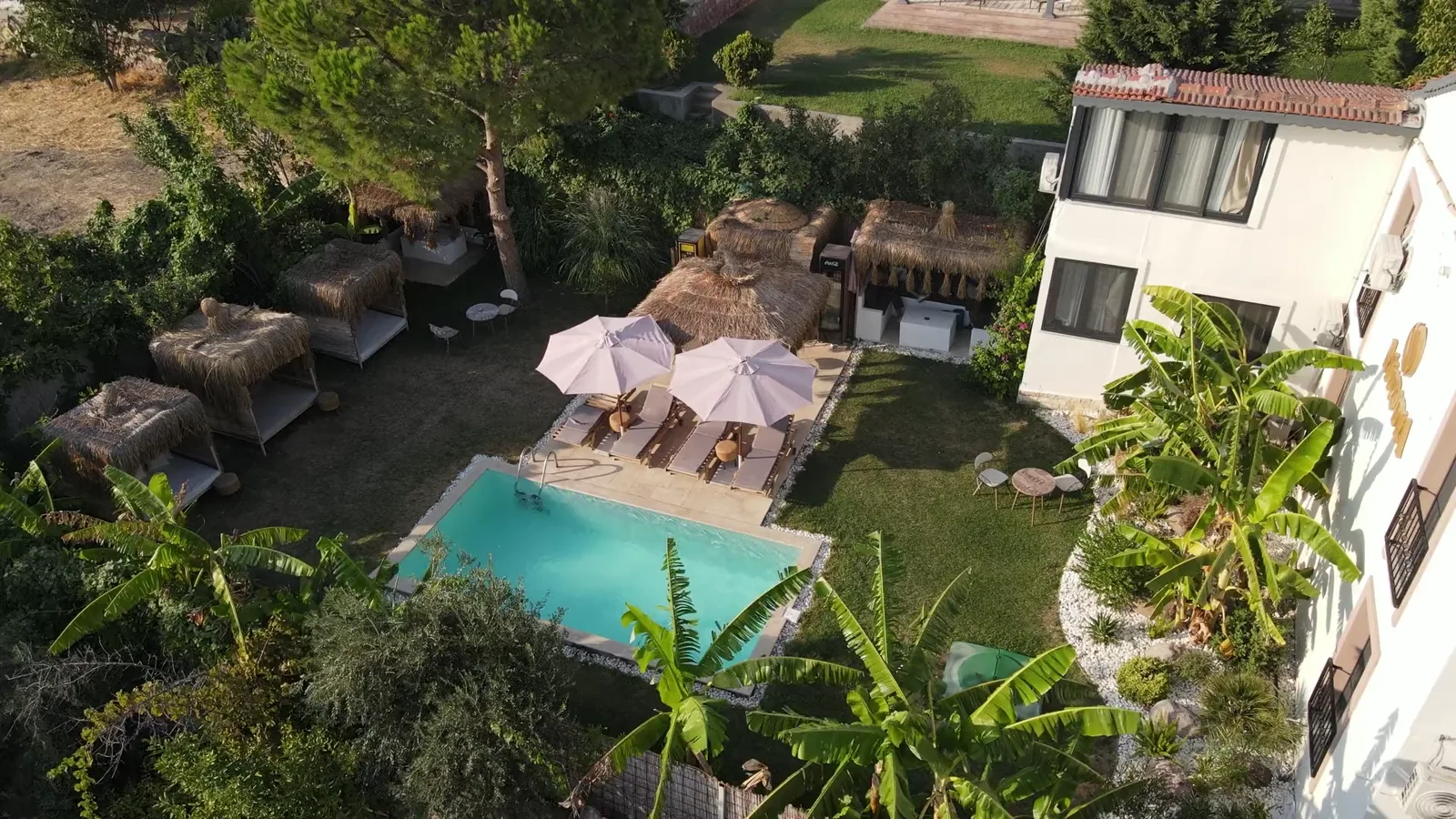 Fiplus ↗
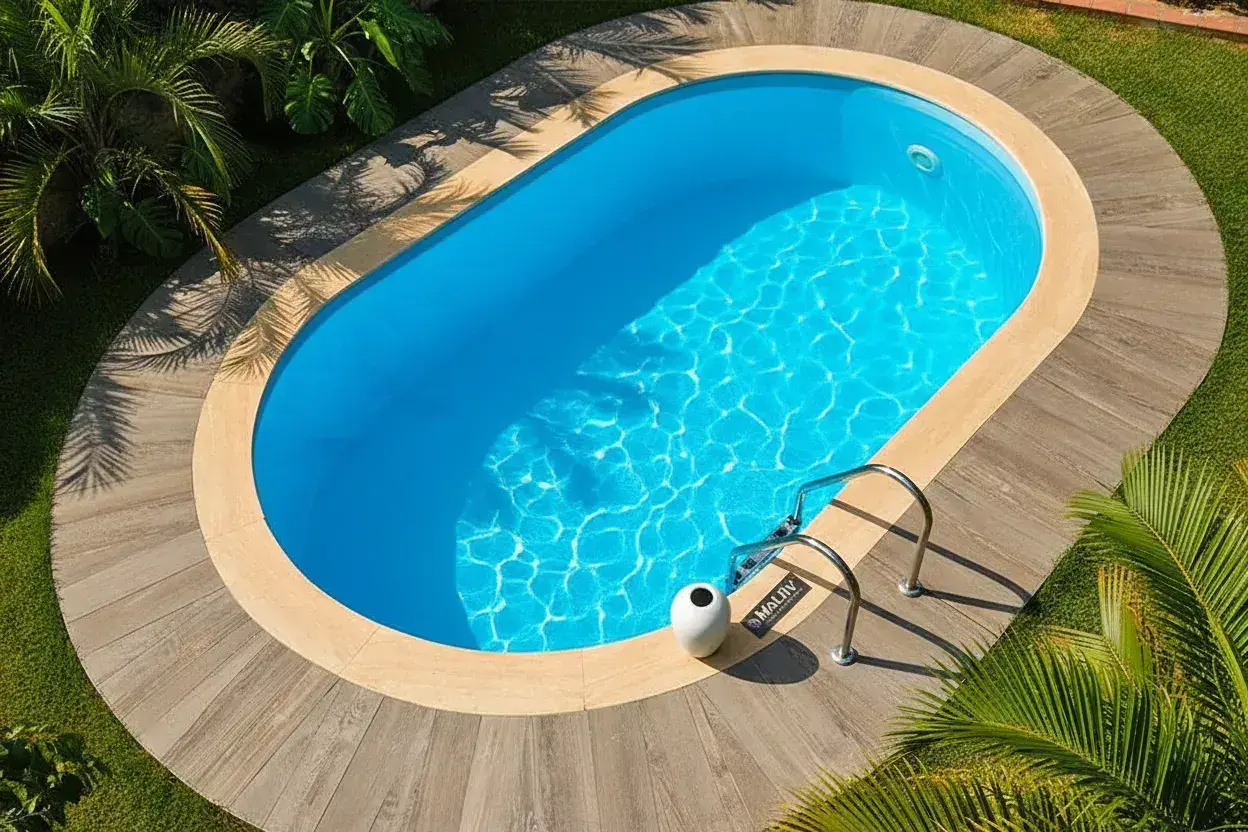 Maldiv ↗
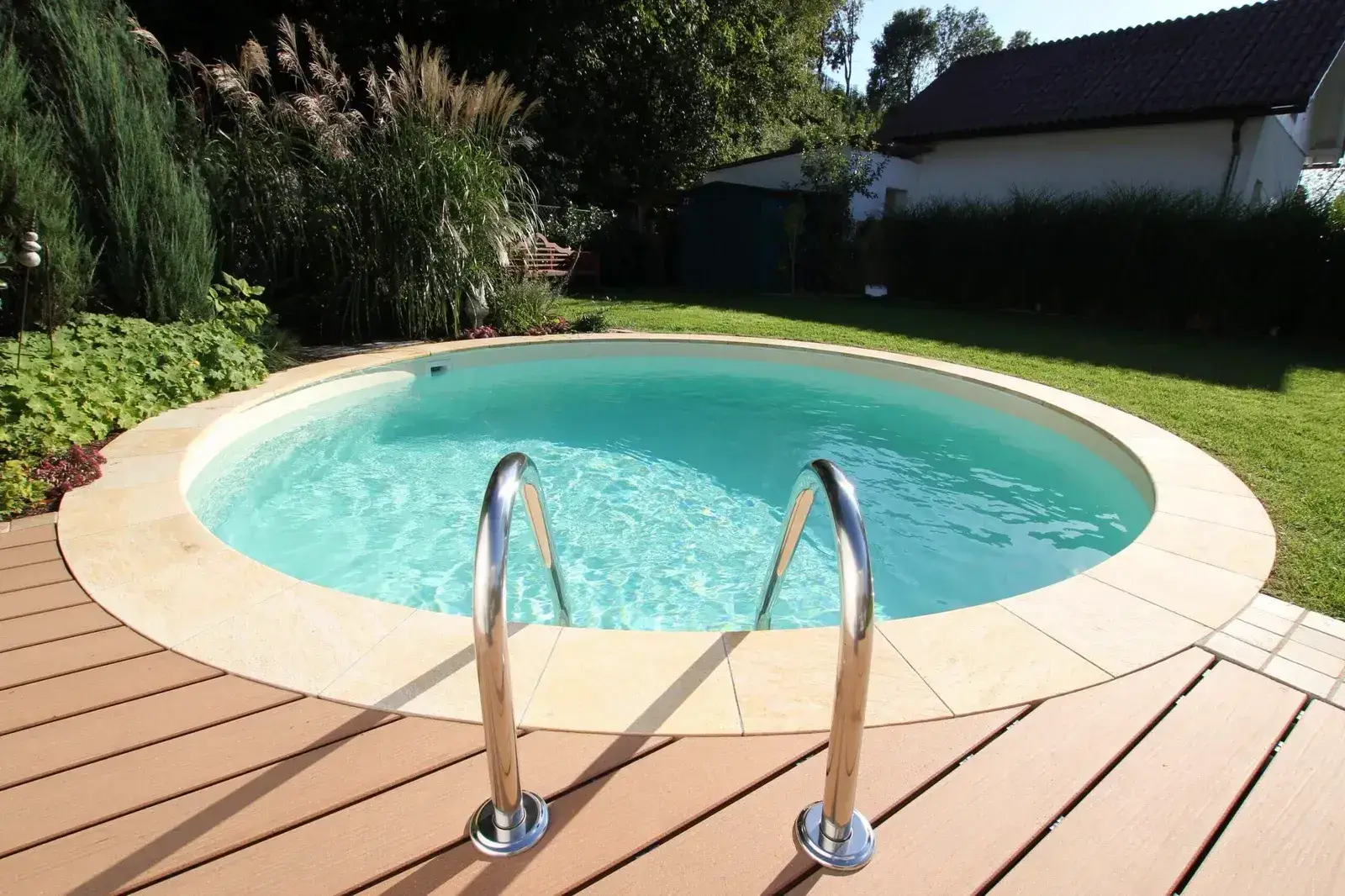 Bora ↗
02. The Sermed Havuz TCO Savings Formula: Inverter Pump, Grout-Free Liner and MyBox
The engineering solutions used in Sermed Havuz systems to reduce TCO:
- Variable-Speed Inverter Pump: By running the pump longer at a lower speed, the same daily turnover volume can be achieved with less energy. The gain depends on the chosen speed profile and the hydraulics of the installation; the exact ratio can only be verified by metered measurement.
- Non-Porous Liner Surface: On a smooth, non-porous liner surface, dirt adhesion and the need for brushing are reduced, which can help bring chemical consumption down. Chemical expenditure is in every case determined by the measured water values.
- Elimination of the Grout Renewal Item: Since a liner-lined pool has no ceramic grout, grout filler renewal does not appear in the operating budget; on the other hand, the liner's own service life, repair of mechanical damage and waterline maintenance must be planned for.
- Low Backwash with Glass Media (AFM): With active glass media, the aim is to reduce backwash water consumption compared with quartz sand; the actual difference varies with filter size, dirt load and operating settings. Backwashing and changes to the valve position must be carried out after the pump has been stopped.
03. 5-Year TCO Comparison Table: Reinforced Concrete vs. Sermed Fiplus
The table below gives no absolute figures; it is an example framework showing which items the comparison should be built on. The percentage ranges are hypothetical planning values.
| Cost Component (5-Year Cumulative) | Classic Reinforced Concrete Pool (4×8 m) | Sermed Fiplus Panel Pool (4×8 m) | 5-Year Net Saving (hypothetical) |
|---|---|---|---|
| Electricity Consumption (kWh × Tariff) | May be higher with a fixed-speed motor | Targeted lower with a variable-speed inverter | Depends on the speed profile; must be verified by measurement |
| Chemical Budget | Cleaning load may increase on grout and porous surfaces | Smooth liner surface | Depends on the measured water values |
| Grout & Waterproofing Maintenance | A periodic grout renewal item exists | No grout item; liner maintenance is planned | A difference equal to the grout renewal budget |
| Water and Backwash Consumption | Standard quartz sand backwashes | Target of less backwash water with AFM glass media | A possible reduction in the water bill |
| 5-Year Total TCO Score | Operating costs include more headings | Fewer maintenance headings targeted | The difference is calculated with local tariffs and usage |
Conclusion: The decision should be made by looking not only at the purchase price but at the sum of the 5-year operating items. The Sermed Fiplus panel pool is an engineering choice aimed at simplifying the maintenance headings; the final TCO comparison must be made with your own tariff and usage data.
Frequently asked questions
What is the formula for a villa's average annual pool operating expense, including chemicals, electricity, water refill and periodic servicing?
Annual Expense = (Daily Pump kWh × Operating Days × Electricity Tariff) + (Seasonal Chemical Package) + (Refilled Water Volume m³ × Water Tariff) + (Periodic Service/Winterizing). You need to fill in each variable in the formula with your own bills and your pump's nameplate power; only in this way does the difference between systems come out correctly. No fixed ratio or guaranteed savings percentage can be given.
Does an inverter pump really save electricity?
In centrifugal pumps, according to the affinity laws, when the speed falls the flow rate decreases roughly linearly while shaft power decreases roughly in proportion to the cube of the speed. For this reason, running at a low speed for a longer period can deliver the same daily turnover volume with less energy. The gain achieved depends on the resistance of the installation, the speed selected and the running time, and should be verified with an energy meter.
How long does glass media filter sand last?
Quartz sand is a material that has to be replaced over time because of channelling and limescale build-up, while active glass media manufacturers report a longer service life. Since the actual life depends on water hardness, chemical balance and backwashing discipline, this should not be read as a guarantee of a specific number of years; it should be assessed by monitoring the filter pressure differential.
How does a pool cover reduce TCO?
A thermal cover closes off the water surface and reduces evaporation and heat loss, so the water top-up, heating and volatile chemical loss items can fall. The gain depends on the climate, usage and how long the cover is kept closed. A thermal cover is not a safety element; it does not replace a physical barrier and supervision.