Pool models, construction conditions and care to help you plan your project.
In this guide 4
Calculation note: The prices, savings rates, energy consumption figures, rental income and payback periods in this article are hypothetical planning examples; they are not current Georgian prices, verified operating results or income guarantees. A real budget must be calculated using local quotations, tariffs, usage patterns and a written scope of work. Timelines depend on site preparation, weather, permits and logistics. Statements about insurance are general information; the scope of cover is determined solely by the written terms of your own policy.
When holiday villages, boutique hotels and seasonal rental villas that operate only during the summer months along the Batumi and Adjara coast close at the end of the season, the swimming pool in the garden is left unsupervised for a long period. The absence of staff on site in winter sets the stage for problems such as pipes being damaged during freezing events, unprotected equipment being harmed during power cuts, or the pool filling with mud and organic debris during storms. In addition, many commercial property insurance policies may exclude frost-related plumbing damage where maintenance and winterizing obligations have not been met; for this reason it is important to read the maintenance and winterizing conditions in your policy in writing. Sermed Havuz's end-of-season winterizing protocol aims to protect the property until spring and to make it easier to document that maintenance obligations have been fulfilled.
Closing a property is not simply a matter of switching off the electricity and locking the door; winterizing the pool system properly is the most effective way to reduce the repair costs that may emerge at the spring opening.
01. The Hidden Threats Facing Exposed Pools During Unstaffed Winter Months
Damage commonly seen in pools left unsupervised over winter:
- Freezing and Bursting Inside Pipes: Water left in the skimmer and return lines freezes and expands, which can crack PVC pipes; in spring this shows up as a water leak from beneath the ground.
- Cracking of the Filter Multiport Valve: Leaving water in the filter tank and in the valve body can lead to cracks in the body if it freezes.
- Soiling and Staining of the Liner Surface: Pools left without a protective cover accumulate leaves, dust and mud all winter; organic tannins can leave stains at the water line that are difficult to remove.
- Disputes over Insurance Cover: If an inspection after a loss finds that winter plugs were not fitted or drain plugs were not removed, compensation may be covered only partially or not at all, depending on the policy terms.
 Fiplus ↗
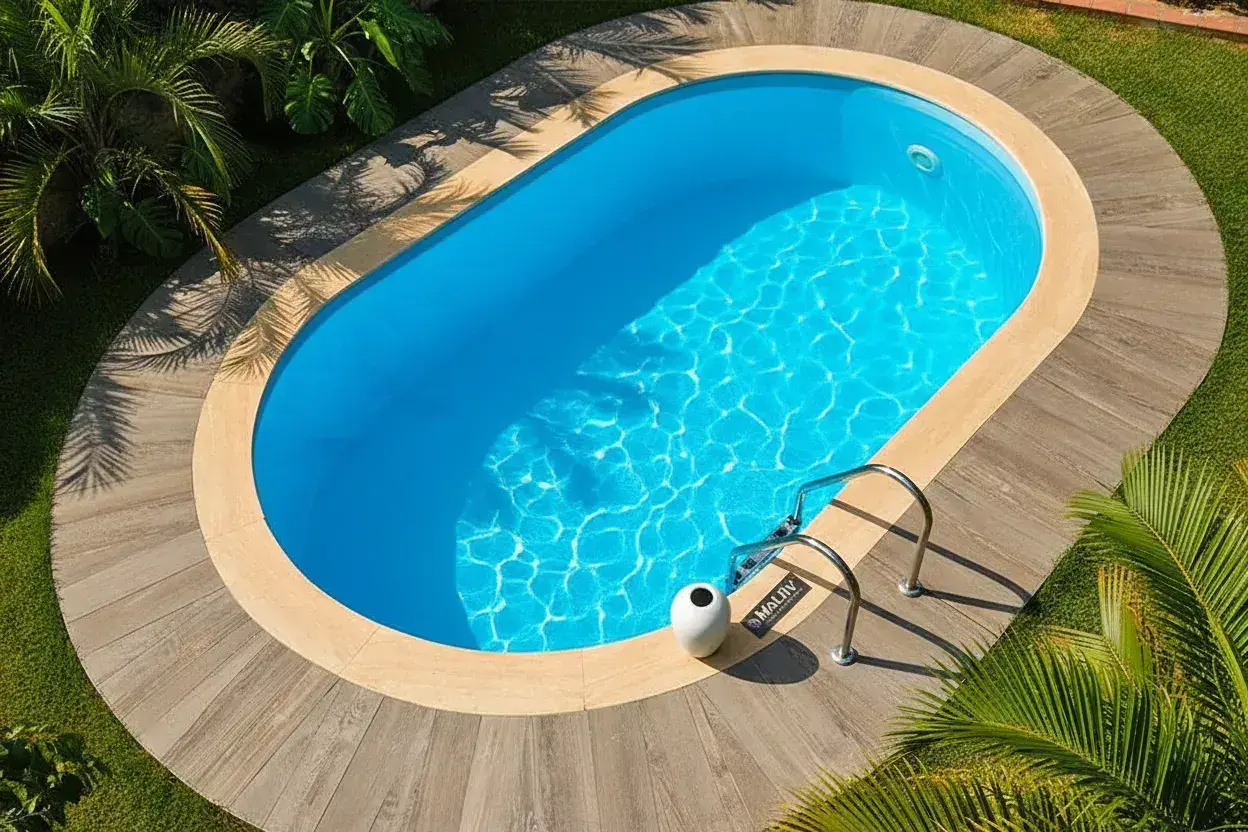 Maldiv ↗
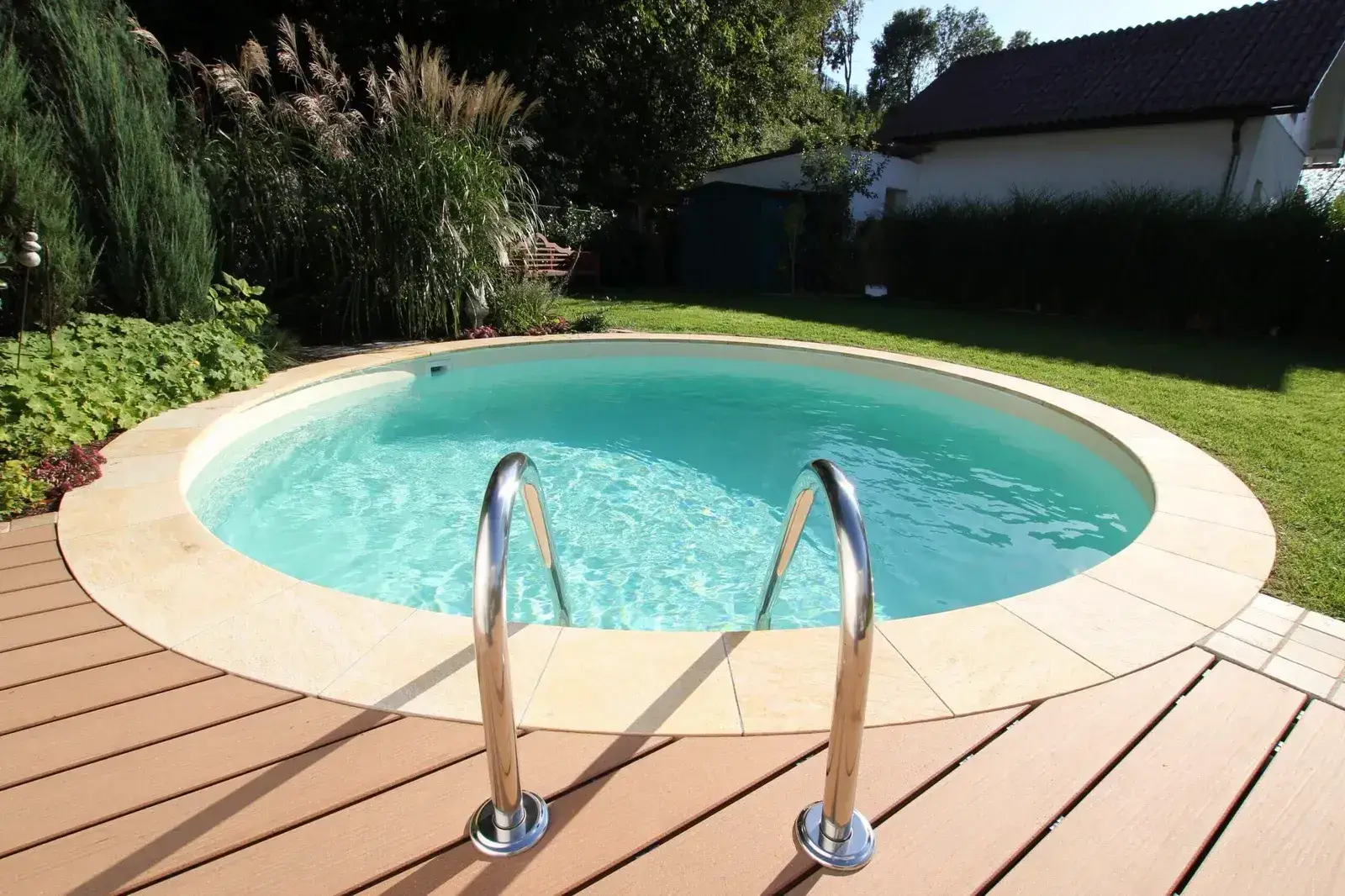 Bora ↗
02. The Sermed Havuz 5-Step Season Closing Protocol and Insurance Compliance
Sermed Havuz service teams prepare properties for winter with the following steps:
- Adjusting the Water Level: The water level is lowered below the skimmer level, leaving the bottom suction and the wall surfaces under water. The level it is lowered to is determined with regard to the pool type and liner tension. Draining the pool completely is not recommended, because when the external water pressure exceeds the internal water pressure it can cause the liner to float or lead to structural problems; even in a pool that is full of water, the liner can float if the groundwater level is high, so the drainage situation must be checked.
- Blowing Out the Lines with Air: Water in the pipes is blown out with a compressor; rubber winter plugs are fitted to the nozzles and Gizzmo-type expansion bottles are fitted inside the skimmer.
- Draining the Filter and Pump: The lower blanking plugs of the pump and filter are removed so the units are left free of water. Changes to valve positions and the removal of plugs are carried out with the pump stopped and the power disconnected; panel and electrical work should be carried out by an authorized person in line with local standards.
- Winterizing Chemicals: A winterizing product and shock chlorine are applied to the pool water to reduce algae growth over the winter. The dose is always determined by the product label and the measured water values; chemicals are never mixed together and are added separately and diluted.
- Tensioning a Safety Winter Cover: A spring-loaded mesh safety cover is tensioned with the aim of reducing leaf accumulation and limiting the risk of falling into the pool. No cover is a substitute for a physical barrier and supervision; zero drowning risk cannot be guaranteed.
03. End-of-Season Winterizing Checklist and Damage Prevention Table
| Step | Common Application Errors | Sermed Winterizing Standard | Damage and Expense Targeted for Reduction |
|---|---|---|---|
| Pipework | Water is left in the pipes | Water is blown out + rubber winter plugs fitted | Reduces the risk of frost-related pipe damage and excavation costs |
| Skimmer Throat | Left empty | A Gizzmo-type frost protection bottle is fitted | Reduces the risk of the skimmer body cracking |
| Pump and Filter | Left full of water | Power disconnected, blanking plugs removed and units drained | Reduces the risk of damage to the motor and valve body |
| Pool Surface | Left open or covered with plastic sheeting | Tensioned spring-loaded mesh safety cover | Reduces mud accumulation and helps limit the risk of falling in (not a substitute for supervision) |
| Chemical Protection | No chemicals applied, water deteriorates | Shock chlorine as per label + winterizing algaecide | Helps preserve water quality for the spring opening |
Conclusion: Proper winterizing is one of the lowest-cost steps you can take to protect your pool investment. In a correctly winterized system, the spring opening can generally be completed without additional repairs; even so, the plumbing and equipment should be checked at every opening.
Frequently asked questions
What are the winterizing steps that keep pool motors and pipes from cracking at a holiday village that is closed in winter?
The pool water should be lowered below the skimmer level, the water in the pipes should be cleared by blowing air through them, rubber winter plugs should be fitted to the nozzles and a Gizzmo-type bottle to the skimmer, and the lower plugs of the pump and filter should be opened to drain the water. All of these operations are carried out with the pump stopped and the electrical power disconnected; work on the panel should be left to an authorized person. Draining the pool completely may create a risk in terms of groundwater and the liner, so it needs to be assessed separately.
How many times should winterizing chemicals be added over the course of the winter?
Generally a single application at the dose stated on the label is made at the close of the season; because the rate of chemical consumption drops in cold water, the effect lasts longer. Even so, if the water becomes cloudy or algae growth begins during a long winter, an additional application may be needed after testing. The dose and how often it is repeated are determined by the product label and the measured water values.
Do spring-loaded winter covers tear under snow?
The porous mesh fabric lets melting snow and rainwater drain through, which prevents water from pooling on top, while the springs flex to distribute the load. On the other hand, heavy snow loads, icing or incorrect tensioning can cause damage to the cover, the anchors and the spring components; in regions where snow loads are expected, the cover and anchors should be selected according to the load situation and checked periodically.
Does the pool water need to be changed completely at the spring opening?
If winterizing was done correctly and a cover was fitted, the water generally retains much of its clarity and does not need to be replaced in full. With backwashing, shock chlorination as per the label and filtration, the water can be ready for use in a short time; how long this takes depends on the condition of the water, the temperature and the filter capacity. Testing the water microbiologically and chemically at the opening is safer than assuming a fixed period.