Pool models, construction conditions and care to help you plan your project.
In this guide 4
Application note: Chemical doses, pH/chlorine targets, run times and maintenance intervals are determined according to the product label, measured water values, the usage class and local requirements. The numerical values in this article are example assumptions for planning purposes and are not standalone application instructions. Chemicals must never be mixed with one another; the filter valve position must only be changed while the pump is off; electrical work, pressurized equipment and pool draining operations must be carried out under the supervision of a specialist familiar with local standards.
The Black Sea coastline can receive a large amount of rainfall in a short period. Exact figures regarding the rainfall regime should be verified against local meteorological data; the critical point here is that after an intense rainfall event, pool water can turn milky white and cloudy or a dull green overnight. In this situation most users panic and drain the entire pool, then refill it. However, draining a pool, especially on sites where the groundwater table may be high, can cause the external water load to exceed the internal load and lead to the liner floating or to structural strain; the decision to drain requires an engineering assessment. In practice the sensible approach is to apply the chemical and hydraulic recovery steps in sequence, without draining the water completely. The time needed for the water to clear depends on the contaminant load, the filter capacity and the water temperature; no single guaranteed duration can be given.
Heavy rain carries organic load, nitrate and acidic water into the pool, which causes free chlorine to be consumed rapidly. Recommended sequence: 1) With the pump off, set the valve to the "Waste" position and lower the excess water to the middle of the skimmer mouth, 2) Measure the pH with a test kit and adjust it to around 7.2, 3) Shock chlorinate according to the measured chlorine demand, taking the label dosage as the basis (example assumption: 150-200 g of 56% powdered chlorine per 10 m³ of water), 4) Place a clarifier cartridge in the skimmer, run the pump continuously, and backwash once clarity has been achieved.
The rain that falls from the sky is not pure water; it carries atmospheric organic dust, exhaust particles and nitrate into the pool. There is no need to panic; once the chemical balance is established on the basis of measurement, the water regains its clarity.
01. The Chemical Damage Caused by Rainwater: Acid Rain, Nitrate Load and Chlorine-Consuming Effect
The 3 main effects created by rainwater filling the pool during storms:
- A Sudden Drop or Fluctuation in pH: Rainwater is generally acidic and, depending on the region, may measure in the pH 5.0-5.5 band. If the pool's alkalinity (buffering capacity) is low, the pH balance is disrupted quickly.
- Nitrate and Phosphate Load: Pollen, soil dust and plant debris blown through the air carry nitrate and phosphate into the pool, which serve as a nutrient source for algae.
- Depletion of Free Chlorine: Chlorine reacts with organic contamination and is consumed rapidly, leaving the pool without any disinfectant reserve.
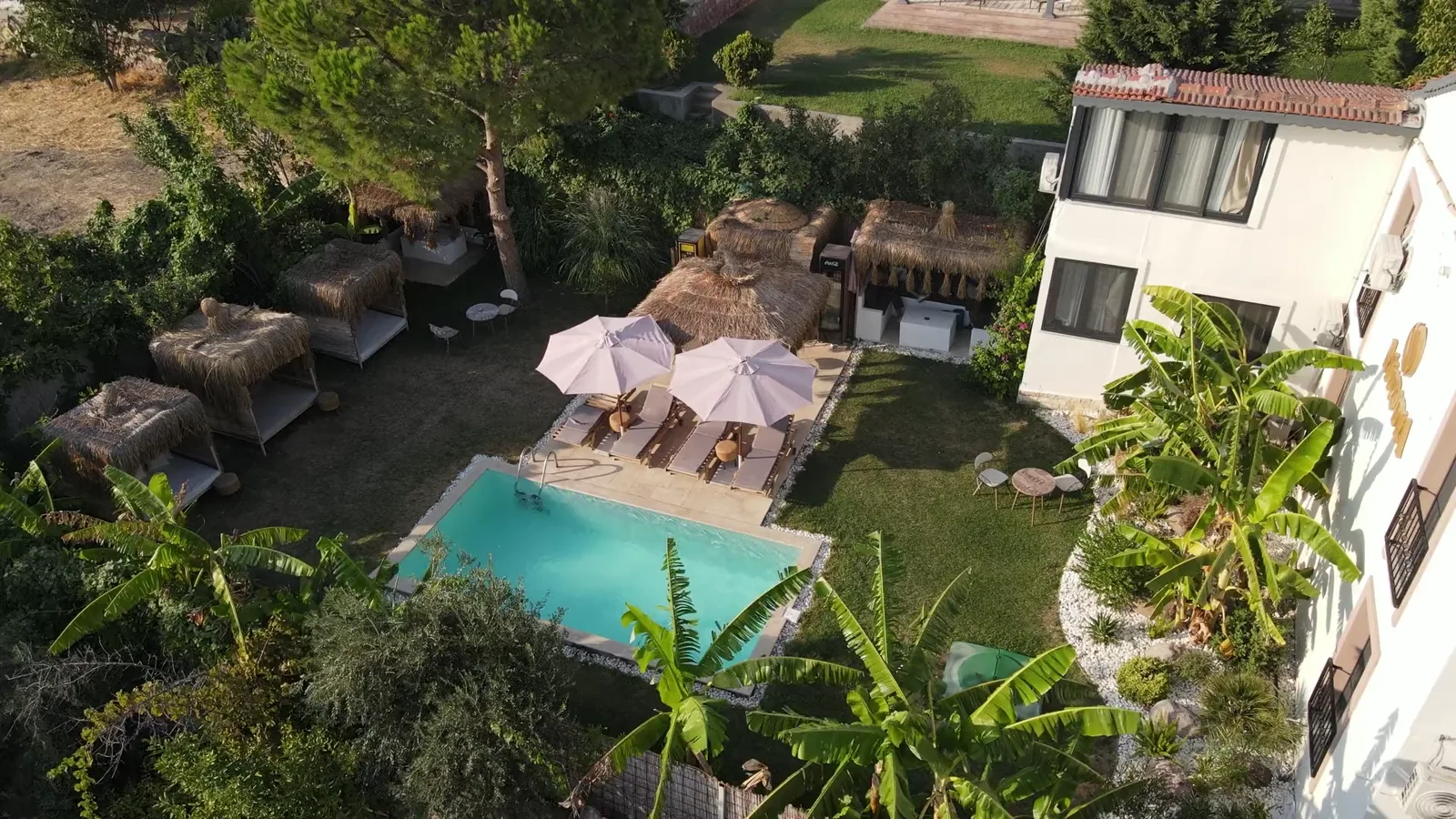 Fiplus ↗
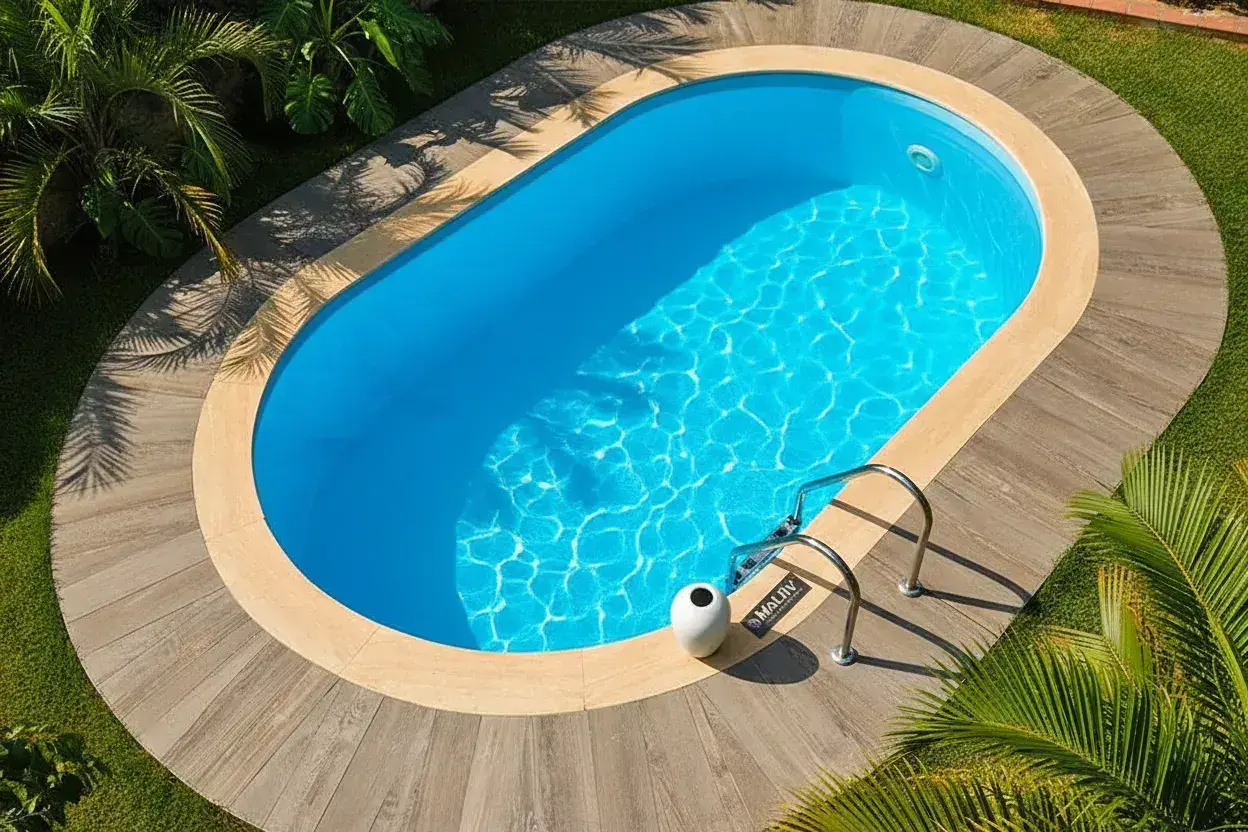 Maldiv ↗
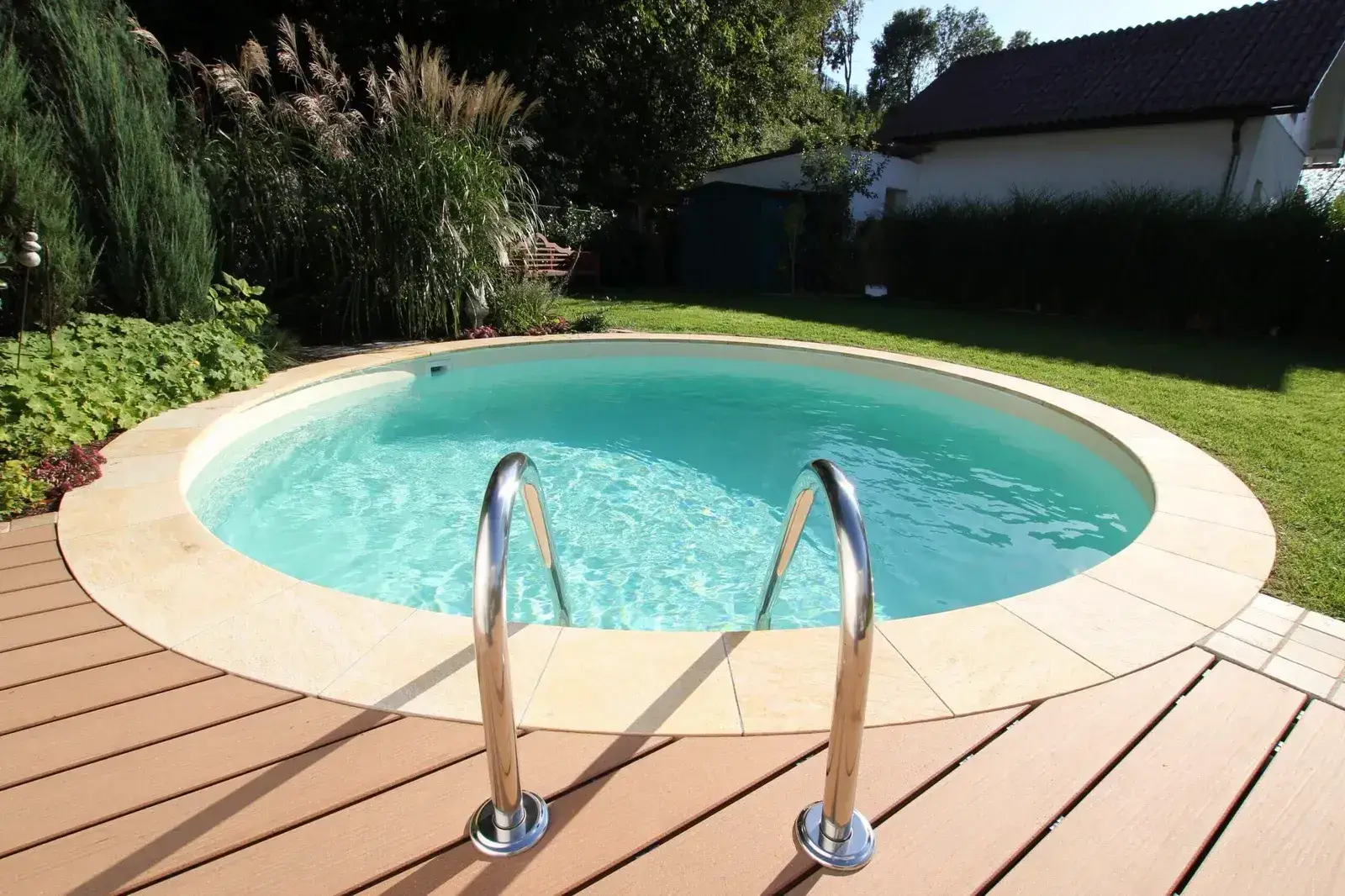 Bora ↗
02. A Four-Stage Approach to Water Recovery
The following 4 sequential steps are applied without draining the water completely:
- Step 1: Balancing the Water Level (Waste Mode):
If the overflowing water has completely covered the skimmer throat, surface suction will not work. Stop the pump, set the 6-way valve to the "WASTE" position, then restart the pump and lower the water level to the middle of the skimmer opening. - Step 2: Adjusting the pH to Around 7.2:
Measure the pH with a test kit. When the pH is high, the disinfection efficiency of the chlorine you add drops. Based on the measurement result, add pH reducer or pH increaser at the label dosage. - Step 3: High-Dose Shock Chlorination:
As an example assumption, dissolve 150-200 grams of fast-dissolving 56% granular chlorine per 10 m³ of pool water in a plastic bucket and pour it into the pool. The aim is to raise free chlorine temporarily to roughly the 10 ppm band and neutralize bacteria and algae cells. The actual dose is determined according to the measured free and combined chlorine values. - Step 4: Flocculant/Clarifier and Continuous Filtration:
Place a gel clarifier cartridge in the skimmer basket. Run the pump continuously; microscopic particles combine and are captured by the filter sand/glass. Generally after 24 hours, also monitoring the pressure increase, perform a backwash.
03. Post-Rain Intervention and Example Dosage Table
The values below are example assumptions for planning purposes; the final dose is determined by the product label and the measured water values.
| Pool Volume | Level Reduction (Waste) | Shock Chlorine (56% Granular) | Flocculant / Clarifier | Filtration Time |
|---|---|---|---|---|
| 25 m³ (Bora/Maldiv) | Down to the middle of the skimmer | 400 - 500 g | 1 Cartridge | 24 Hours Continuous |
| 45 m³ (4×8 Fiplus) | Down to the middle of the skimmer | 700 - 900 g | 1-2 Cartridges | 24 Hours Continuous |
| 70 m³ (5×10 Fiplus) | Down to the middle of the skimmer | 1,200 - 1,400 g | 2 Cartridges | 24-36 Hours Continuous |
Conclusion: Applying these steps instead of draining the water completely makes it possible, in most cases, to preserve both the existing water and the energy already spent on heating it.
Frequently asked questions
Should the pool be covered during heavy rain?
If you have a winter cover with tension springs that is suitable for storm conditions, covering the pool helps reduce the amount of garden mud washing into it; thin summer covers can tear in a storm. Under no circumstances does a cover replace a physical barrier and adult supervision; there is no solution that eliminates the risk of drowning.
When can the pool be used after shock chlorination?
No one should enter the pool until the chlorine level has been measured with a test kit and has fallen to the safe range stated on the product label and in local requirements (commonly below 3.0 ppm in practice). This period varies with the dose, the temperature and the circulation; the range most often seen is 24-48 hours.
If mud collects on the floor after rain, can a robot be used?
If there is a thick layer of mud, vacuum manually first with the valve in the "WASTE" (drain) position so that the mud is discharged directly out of the pool, and only then put the robot in. The valve position is changed only while the pump is off.
What should be done if the cloudiness does not clear within 48 hours?
The filter media may be dirty or caked; backwash it, check the condition of the media and, if necessary, replace it with glass media. If the cloudiness persists, the water chemistry (pH, alkalinity, cyanuric acid) should be reassessed with a laboratory analysis or a detailed test kit.