Pool models, construction conditions and care to help you plan your project.
In this guide 4
Application note: Chemical doses, pH/chlorine targets, run times and maintenance intervals are determined according to the product label, measured water values, the usage class and local requirements. The numerical values in this article are example assumptions for planning purposes and are not standalone application instructions. Chemicals must never be mixed with one another; the filter valve position must only be changed while the pump is off; electrical work, pressurized equipment and pool draining operations must be carried out under specialist supervision.
When the floor or walls of a pool become slippery and coated with a green layer, the first move of most pool owners is to buy litres of "algaecide" and pour it into the water. The picture a few days later is frequently the same: the pool is still green, and now it has started foaming as well. The technical reality is this: in an established algae bloom, pouring in algaecide alone is not a sufficient solution. Some products on the market can have a lethal effect on algae depending on their active ingredient and dose, but most algaecides are primarily preventive and are formulated to suppress spore development. The reliable way to clear an established colony is to apply measurement-based high-dose shock chlorination together with mechanical brushing.
Once algae has formed, pouring in algaecide alone generally produces no result and, in excessive doses, makes the water foam. Algaecide products are largely preventive agents. The path followed with established green algae is: bring the pH down to around 7.2, brush the pool walls to mix the algae into the water, carry out high-dose shock chlorination based on measurement and the product label (example target range 10-15 ppm free chlorine), and run the pump continuously until the dead algae has collected in the filter.
Installing a fire alarm after the fire has broken out does not put out the flames. Using a preventive product on its own in the middle of a crisis similarly fails to deliver the expected result.
01. The Chemical Distinction Between Algaecide (Preventive) and Algicide (Algae Killer)
Common misconceptions about algae chemicals:
- The Purpose of Algaecide: While there is still no visible algae in the pool, it suppresses the multiplication of microscopic spores carried into the water by the wind. Its primary function is preventive; on its own it is not sufficient against an established colony.
- Foaming From Overdosing: A large quantity of quaternary ammonium based algaecide poured into algae-filled water in a panic changes the surface tension of the water and creates stubborn white foam at the nozzle and skimmer outlets.
- The Protective Effect of the Algae Biofilm: Developed algae colonies wrap themselves in a slimy biofilm; this layer blocks chemical penetration. For this reason it must be broken up mechanically by brushing, followed by oxidation with hypochlorous acid (chlorine) at a sufficient concentration.
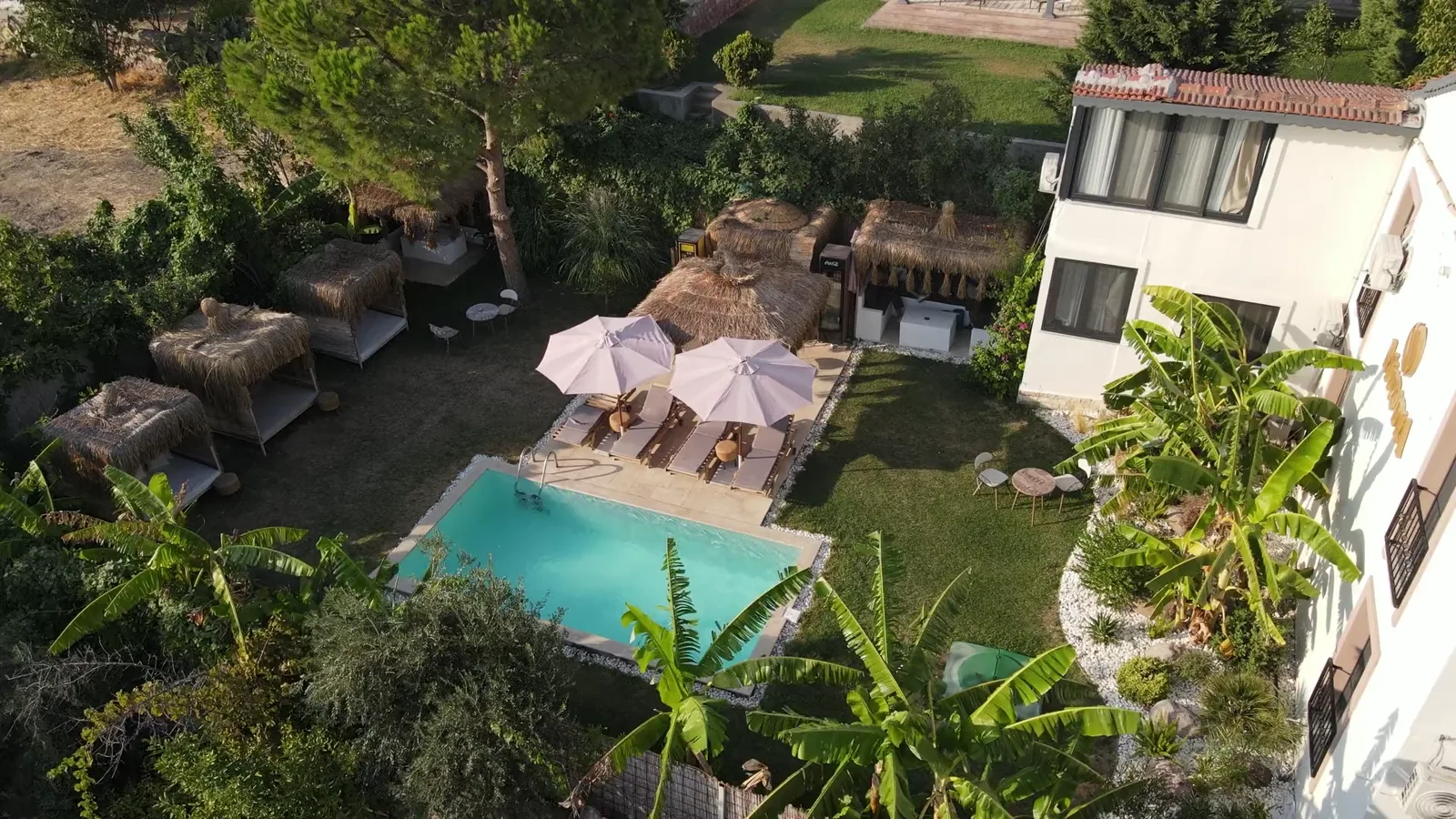 Fiplus ↗
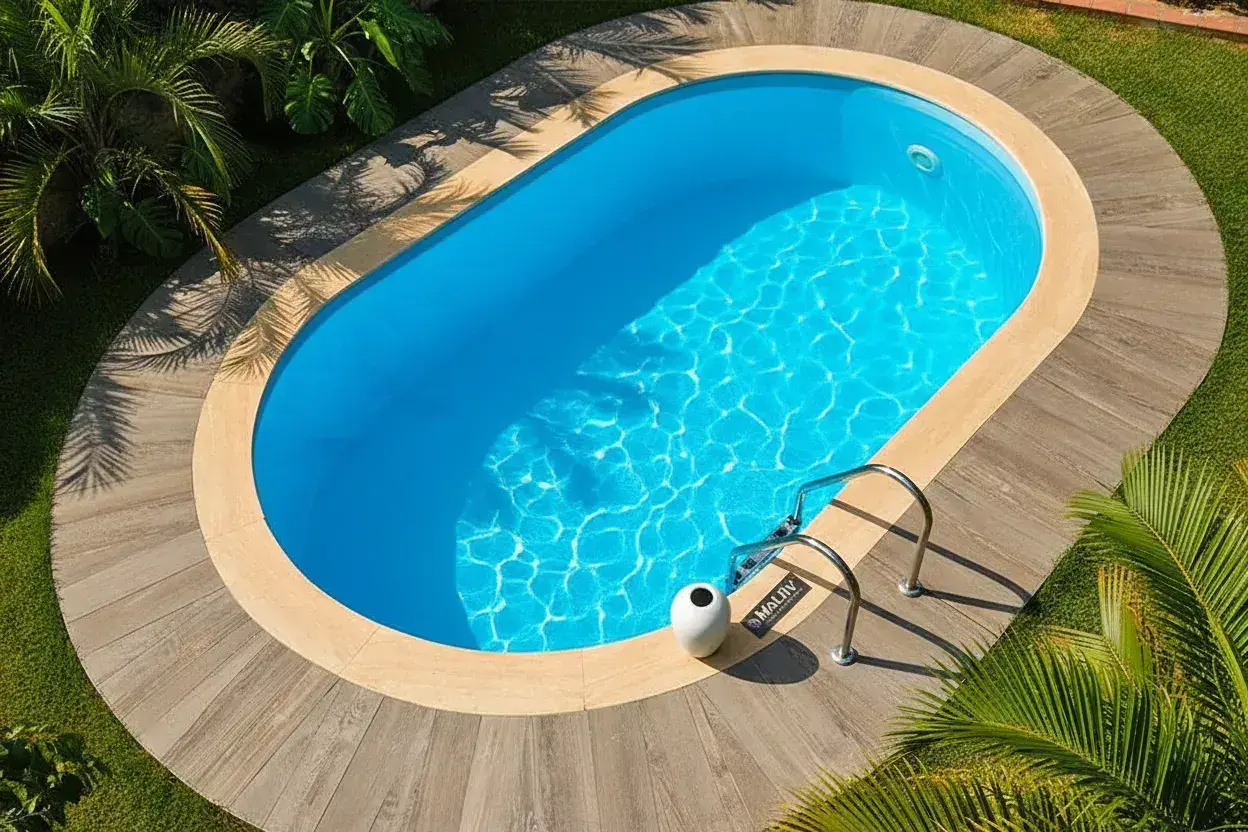 Maldiv ↗
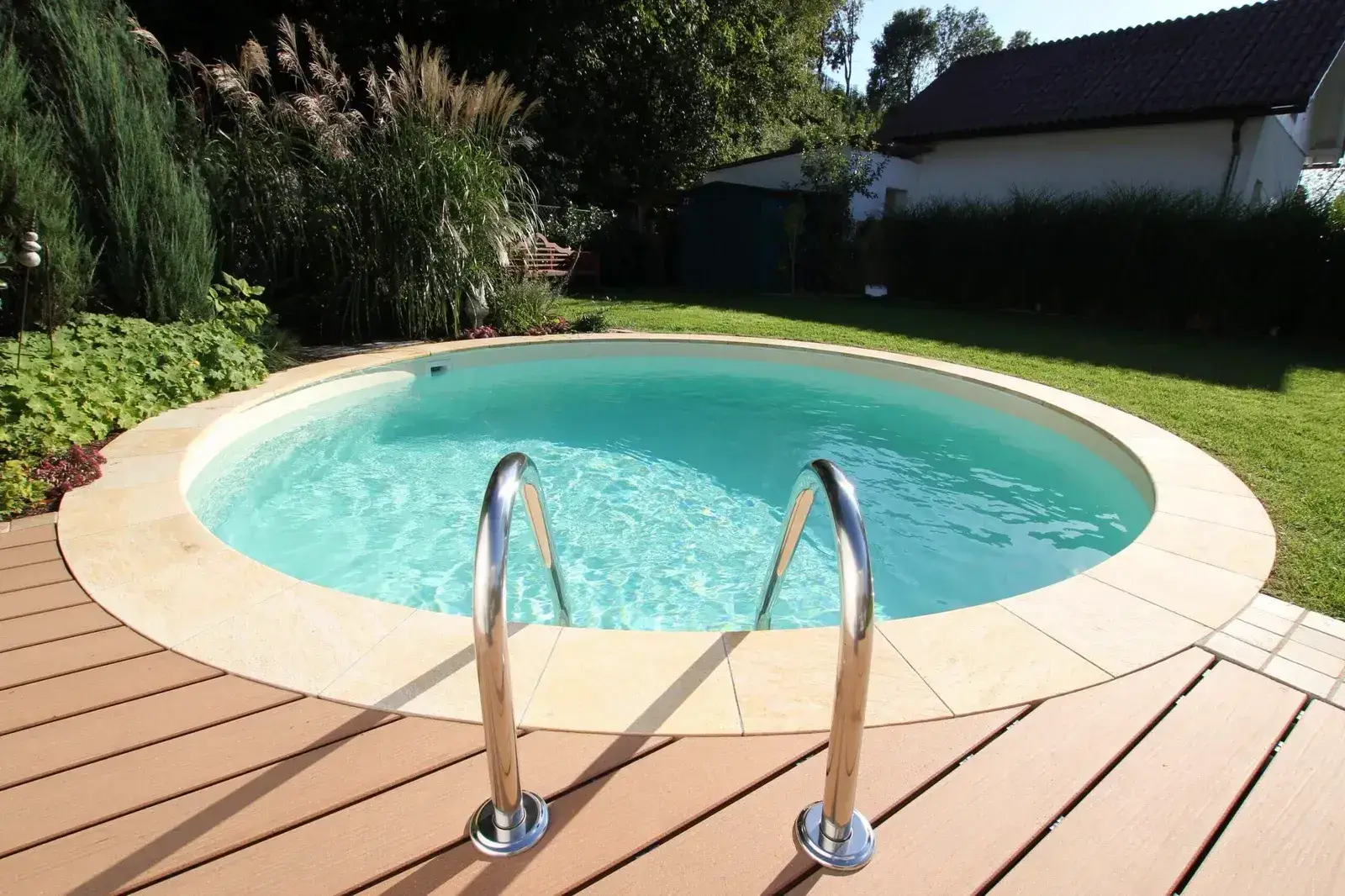 Bora ↗
02. The 5-Stage Chlorine and Brush Protocol Against Green Algae
The 5 steps that must be applied to clear a pool that has developed algae:
- Step 1: Vigorous Brushing (With a Liner-Compatible Brush):
As long as the algae remains attached to the walls, chlorine cannot penetrate it. Brush all the walls and the floor with a soft-bristled pool brush so that the algae is mixed into the free water (a wire brush is not used, as it can damage the liner). - Step 2: Lowering the pH to Around 7.2:
To increase the disinfection efficiency of the chlorine, measure the pH with a test kit and bring it down to around 7.2 with pH reducer. - Step 3: High-Dose Shock Chlorination:
Shock the pool at a level clearly above the routine chlorine dose. Example assumption: 250-300 g of 56% chlorine per 10 m³ of water. The dose is determined according to the measured free/combined chlorine and the product label. As oxidation progresses, the green water turns the greyish white colour of dead algae. - Step 4: Continuous Filtration:
Run the pump without switching it off; the dead algae collects in the filter media. 24 hours is a common starting period and is extended depending on the clarity of the water. - Step 5: Vacuuming to Waste and Backwashing:
Rather than sending the dead algae sediment that has settled on the floor to the filter, set the valve to the "WASTE" position while the pump is off and discharge it directly to the drain line. Then backwash the filter. Preventive algaecide is added only after this stage, once the water is clear.
03. Algae Types and Control Strategy Table
| Algae Type | Appearance and Symptoms | Why Does It Occur? | Correct Control Method |
|---|---|---|---|
| Green Algae | Green haze in the water, slippery floor | Chlorine depletion, high pH | Shock Chlorination + Continuous Filtration |
| Yellow (Mustard) Algae | Yellow powdery deposits on the walls | Shaded areas, chlorine-resistant structure | High-Dose Shock Chlorination + Intensive Brushing |
| Black Algae | Black specks in joints and corners | Porous surfaces, cracks and ceramic tile grout | Seen more rarely on seamless liner surfaces; once established, mechanical scraping and localized shocking are required |
Conclusion: With established algae, the decisive intervention is measurement-based shock chlorination carried out at a pH of around 7.2; algaecide, meanwhile, is used for protection after the water has been cleared.
Frequently asked questions
Why does less algae form in a liner-lined pool?
Liner coverings are smooth and, over large surfaces, seamless; the number of porous lines that algae spores can cling to, such as ceramic tile grout, is significantly lower. This structural advantage makes it harder for algae to take hold, but the covering itself does not perform any disinfection function; the water chemistry still needs regular checking.
Does shock chlorination fade the colour of the liner?
If powdered chlorine is thrown directly onto the liner, it sinks to the bottom and can cause localized bleaching and staining; the chlorine should first be dissolved in a plastic bucket and poured evenly over the pool surface while the pump is running.
How much algaecide should be added per week?
The dose is determined entirely by the product label. While the pool water is clear and balanced, the intervals given by manufacturers for weekly protection are commonly on the order of a few hundred millilitres per 100 m³ of water; figures such as the 500-750 ml given here are only an indication of the order of magnitude.
Will a pool robot clean a pool with algae?
If a robot is put into a pool with live green algae, it breaks the algae up and spreads it through the water, and its filter clogs within a short time; the robot should be run after the water has been shocked, the algae has been killed and the coarse sediment has been discharged.