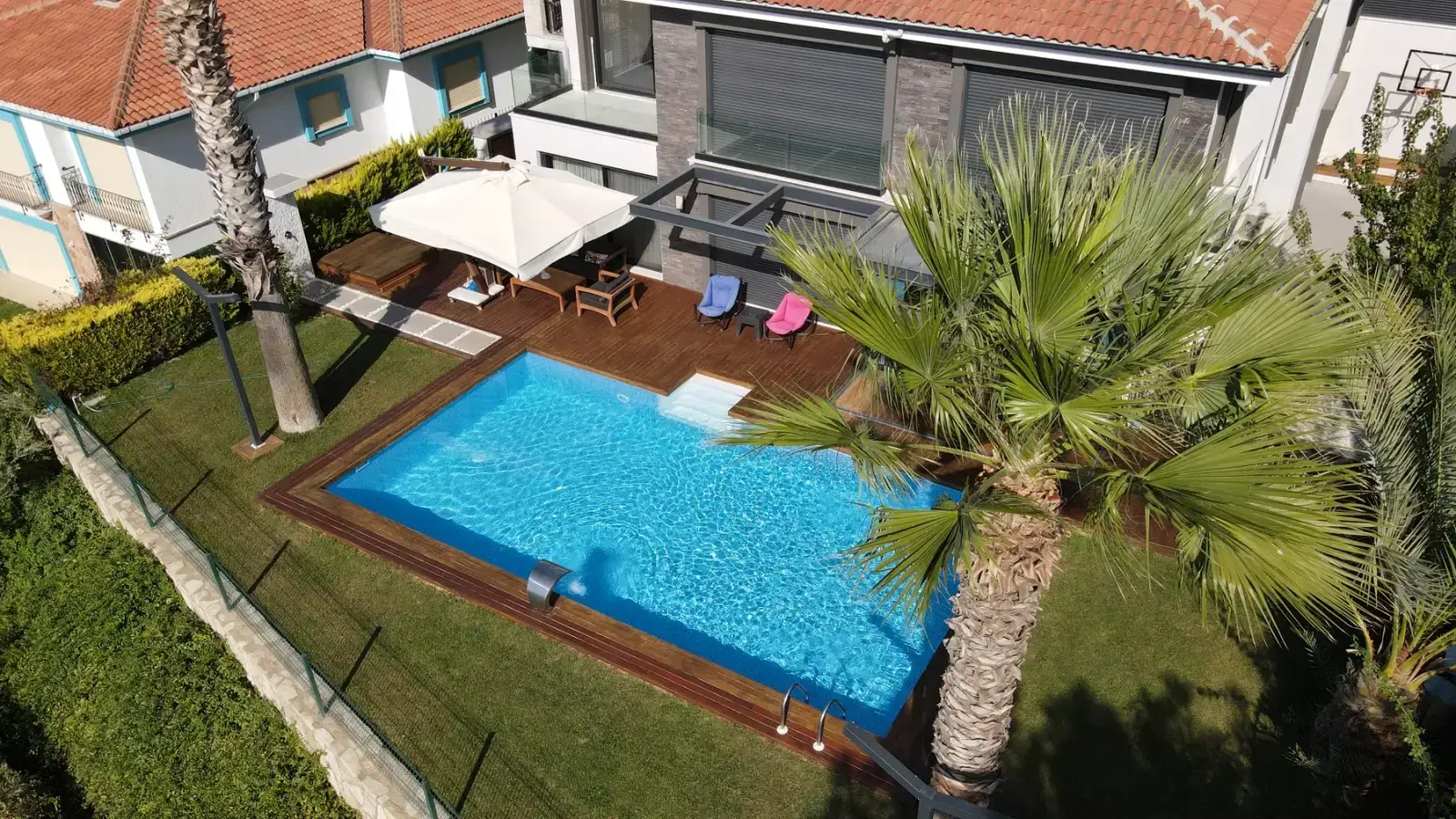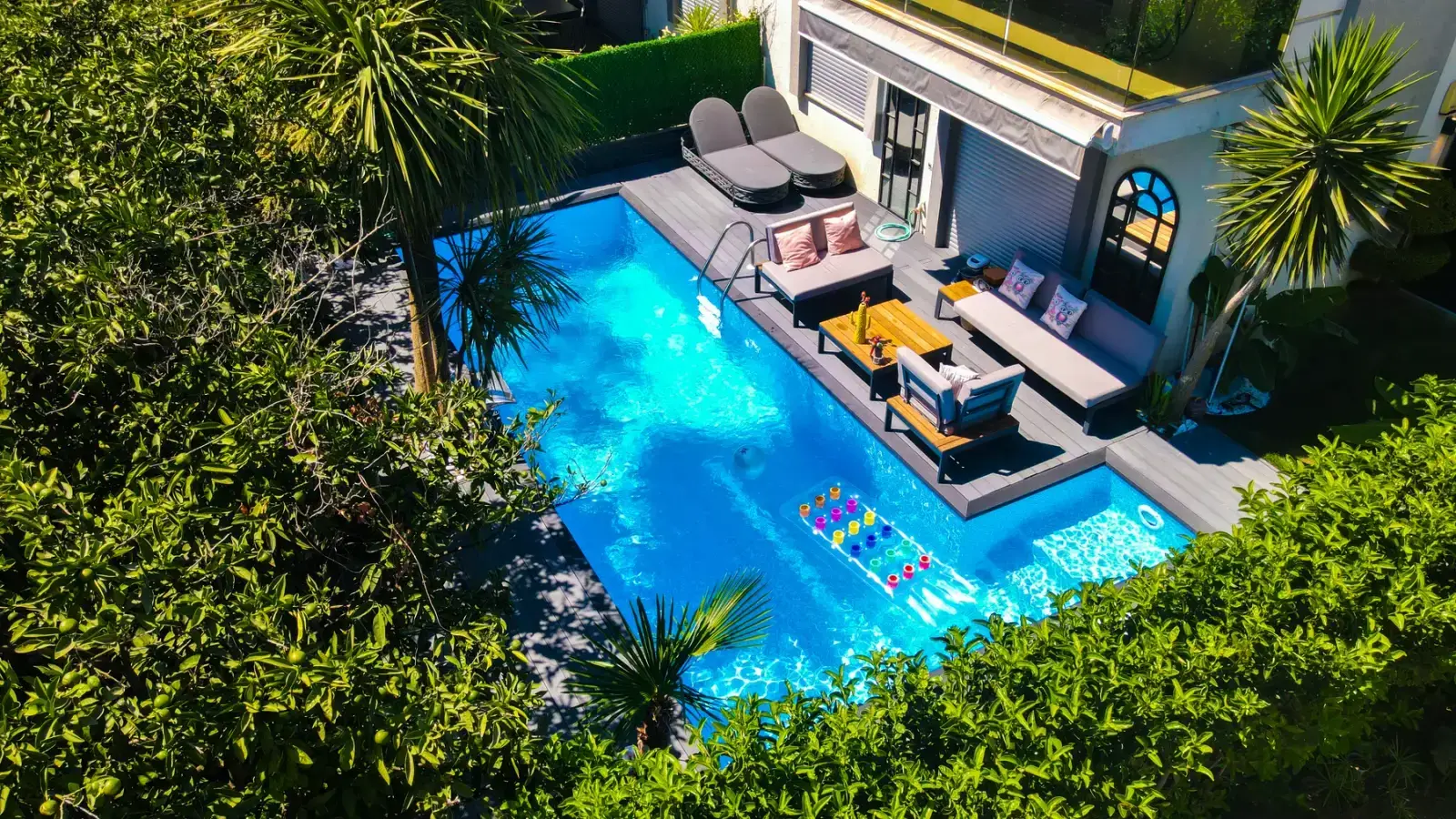
Pool models, construction conditions and care to help you plan your project.
In this guide 4
Application note: Chemical doses, pH and chlorine targets, run times and maintenance intervals are determined by the product label, measured water values, the usage class and local requirements. Numerical examples are not, on their own, application instructions. Chemicals must never be mixed with one another; electrical work, pressurized equipment and pool draining must be carried out under expert supervision.
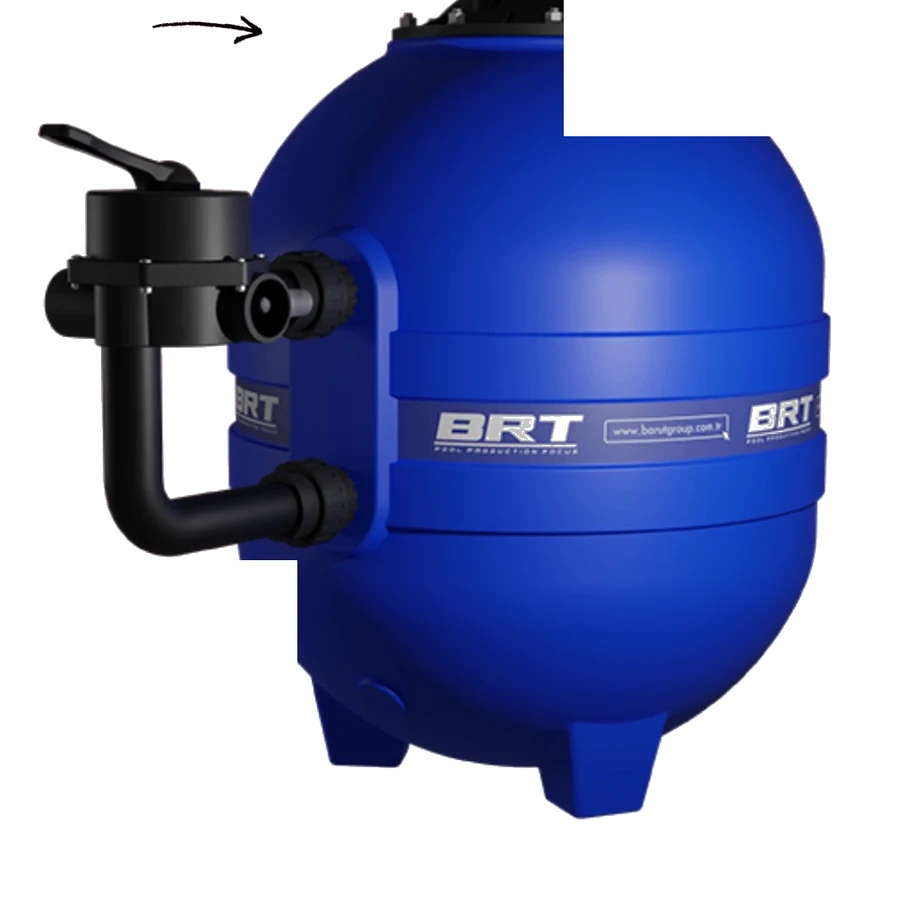
One of the most critical components determining the clarity of pool water is the filter tank, and the type of media that strains the water inside the tank directly affects filtration quality. Traditional quartz silica sand, because of its porous surface structure, can offer a favourable environment for bacterial biofilm formation; when maintenance is neglected, the grains stick together into clumps and chlorine consumption rises. This does not mean that every correctly operated sand filter is bound to fail; maintenance quality, backwash discipline and water chemistry determine the outcome. Activated Green Glass Media (AFM - Activated Filter Media), thanks to its surface chemistry, offers a structure that is more resistant to biofilm formation, finer filtration performance than silica sand, and generally a shorter backwash time. The comparison values below should be read as planning assumptions that vary with the manufacturer type, the media grading and the installation design.
Silica sand whose maintenance is neglected can over time harbour biofilm, form clumps and increase chlorine consumption. Activated Green Glass Media (AFM), thanks to its surface charge and structure, is markedly more resistant to biofilm formation, can retain finer particles than silica sand in a suitable installation, helps reduce backwash water consumption, and because of its resistance to clumping generally gives a longer service life than silica sand. The extent of these gains depends on flow rate, media grading and operating discipline.
The inside of a filter tank is dark, wet and warm; it is a favourable environment for microbial growth. AFM glass media is a material choice intended to make it harder for biofilm to take hold in that environment.
01. The Hidden Biological Decline of Silica Sand: Biofilm, Hardening and Channeling
Problems that can be seen in silica sand filters with inadequate maintenance:
- Biofilm Layer: Bacteria can attach to the sand surface and form a protective polysaccharide matrix; this matrix reduces the effect of the disinfectant and raises chlorine consumption.
- Channeling: When grains stick together and form clumps, the water passes through the preferential channels that develop instead of through the whole media bed, and so is not strained adequately.
- Service Life: In hard water and with inadequate backwashing, sand can scale up and form clumps; in that case the media has to be removed from the tank and replaced. How long this takes varies with water hardness and maintenance.
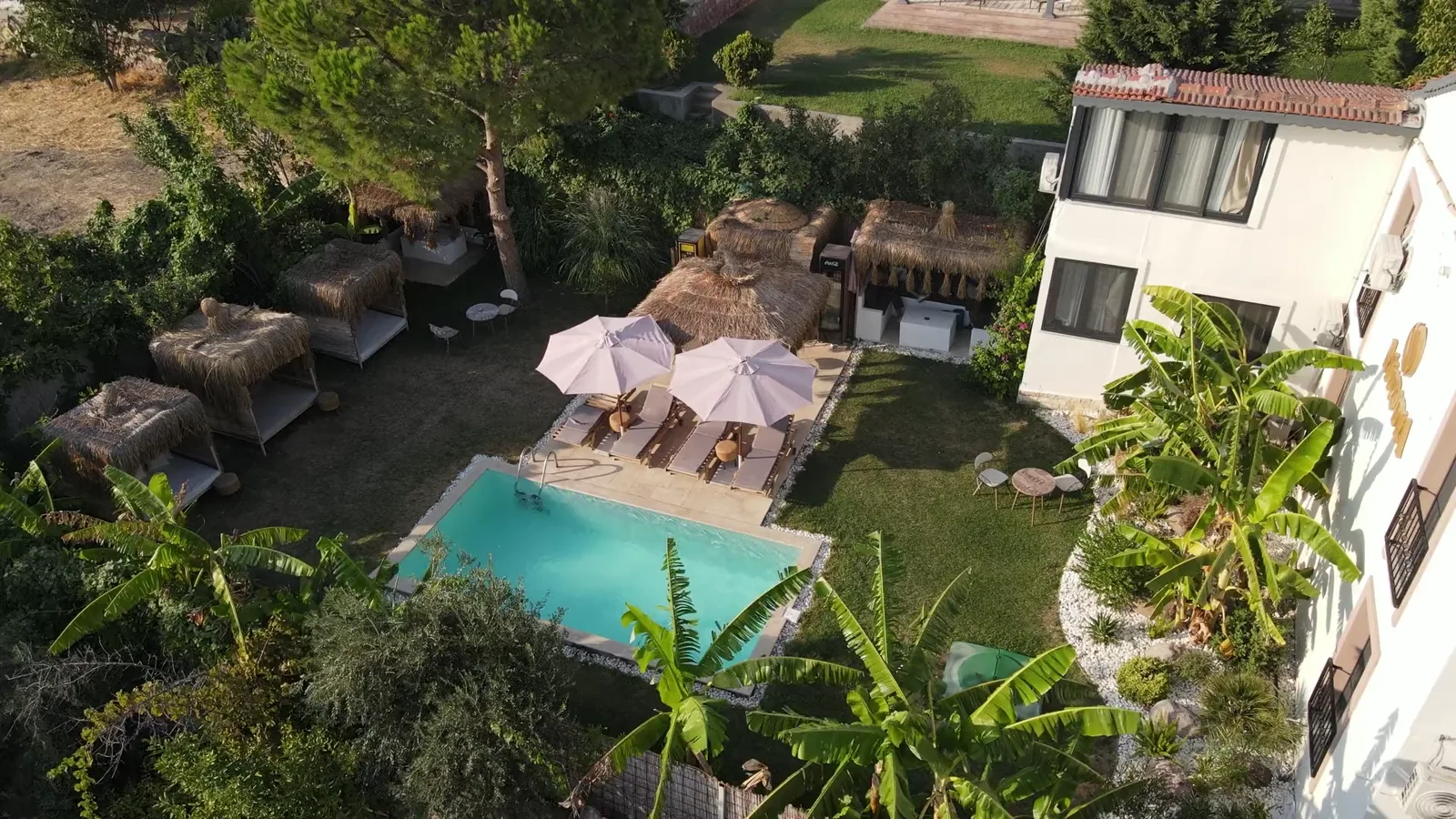 Fiplus ↗
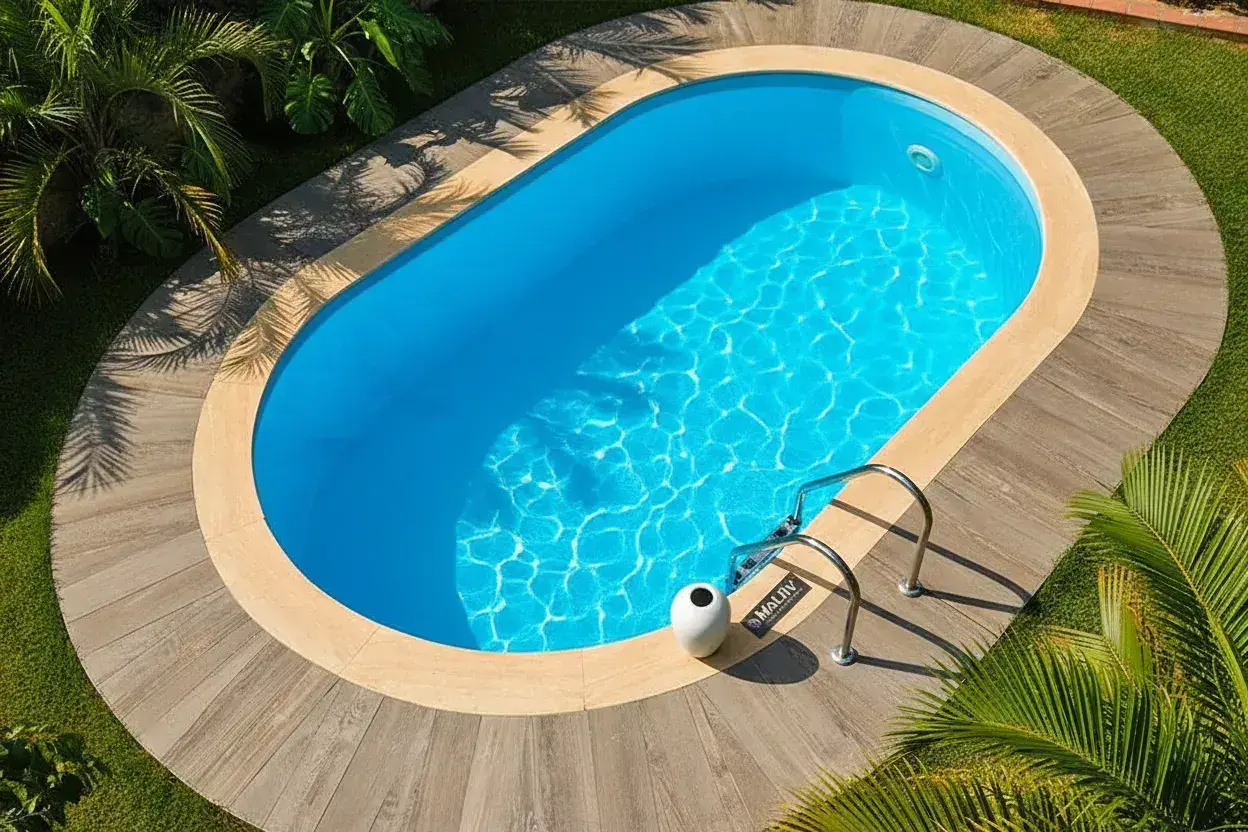 Maldiv ↗
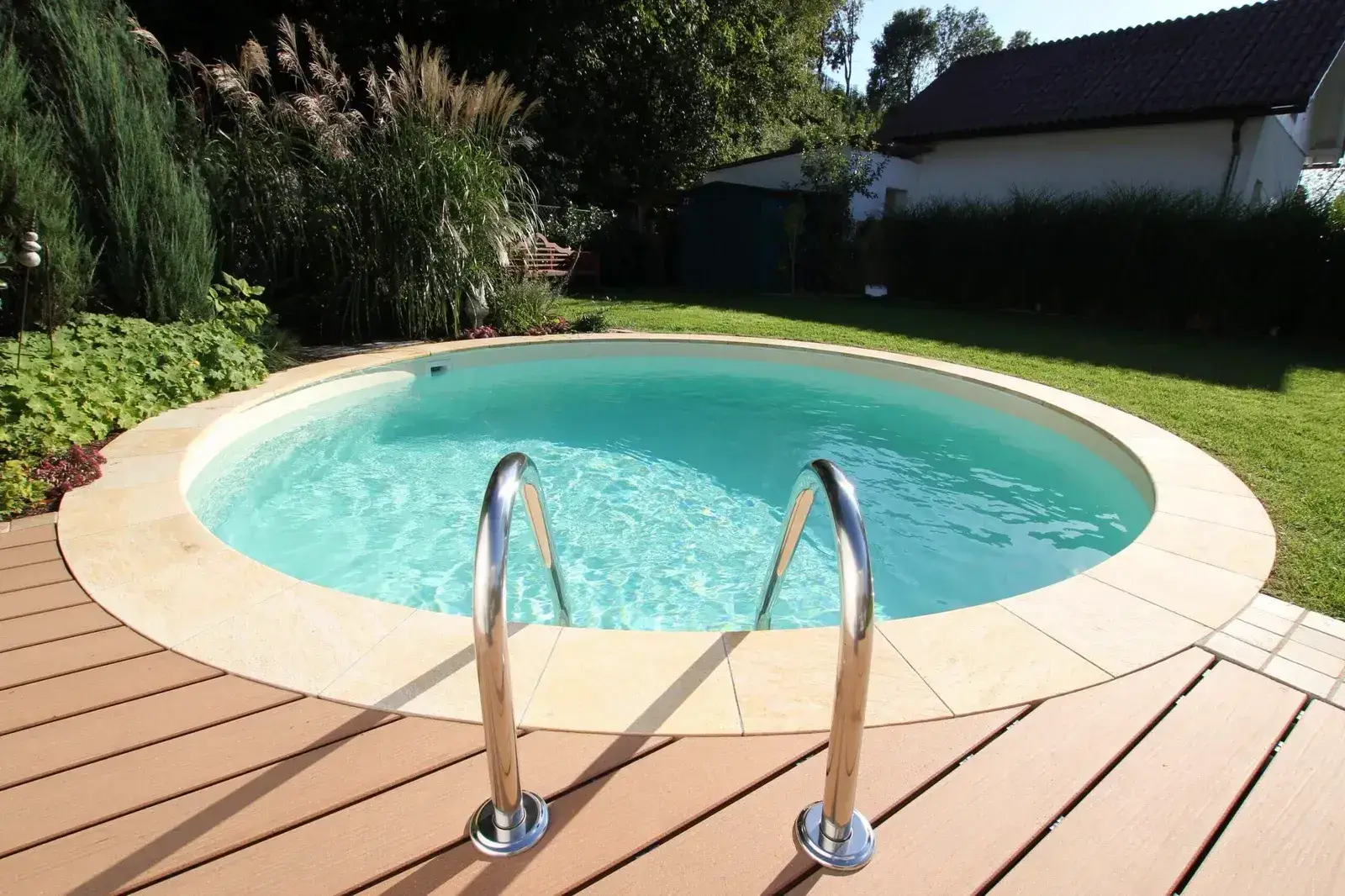 Bora ↗
02. The Engineering of AFM Glass Media: Negative Electrostatic Charge and Self-Cleaning
Three prominent features of AFM glass media:
- Bio-Resistant Surface: The surface chemistry of the activated glass granules makes it harder for microorganisms to attach, which helps reduce biofilm formation. This is not a claim of absolute sterility; water chemistry and regular backwashing are still required.
- Fine Filtration Performance: At a suitable grading and flow rate, it captures a portion of the finer suspended solids that silica sand struggles to retain, improving water clarity.
- Long Service Life: Because of its resistance to clumping, it can operate for a long time without loss of performance compared with silica sand. Manufacturers frequently refer to service lives in the region of 10 years; the life actually achieved depends on water quality and operating conditions.
03. Silica Sand vs. Activated Glass Media (AFM) Comparison Table
The values below are not finalized measurement results but comparative planning assumptions; for precise data, the technical documentation of the selected media should be taken as the basis.
| Filtration Property | Standard Quartz Silica Sand | Activated Green Glass Media (AFM) |
|---|---|---|
| Filtration Fineness (example value) | Approximately 25 – 35 microns | Finer particle retention under suitable conditions (example: in the order of 1 – 5 microns) |
| Biofilm Attachment | High tendency | Markedly more resistant (backwashing still required) |
| Backwash Time (example value) | 4 – 5 minutes | In the order of 1.5 – 2 minutes (potential reduction in water consumption) |
| Service Life | Varies with water hardness and maintenance; there is a risk of clumping | The order of magnitude manufacturers refer to is 10 years and above; depends on conditions |
| Chlorine Consumption | Rises as the biofilm load increases | A decrease in consumption is expected as biofilm decreases (the rate varies from pool to pool) |
Conclusion: AFM glass media is an investment aimed at reducing the biofilm load in the filter and improving water clarity, whose measurable benefit should be assessed under the pool's own conditions.
Frequently asked questions
Can glass media be put into an existing sand filter?
Generally yes; the old silica sand in the existing filter can be emptied out and replaced with AFM glass media of a suitable grading (for example a combination of Grade 1 and Grade 2). The fill quantity and the grading distribution are determined by the tank diameter, the bottom collector type and the design flow rate.
Is glass filter media sharp?
AFM is supplied as granules whose surfaces have been processed during manufacture to remove the corners; no pronounced sharp edges are expected compared with standard silica sand. Even so, the manufacturer's instructions and occupational safety precautions must be followed when handling the media.
Does glass media escape during backwashing?
When the correct grading is selected, the granule diameter is larger than the slot width of the filter's bottom laterals (the octopus collector), so no media loss is expected. Escape can occur with the wrong grading, a damaged lateral or an excessive flow rate.
Does glass media reduce the chlorine smell?
A reduction in the biofilm load in the filter can help lower chlorine consumption and chloramine formation, which in turn contributes to a reduction in odour. The smell disappearing completely depends not on the media alone but on free chlorine balance, bather load and ventilation.