Pool models, construction conditions and care to help you plan your project.
In this guide 4
Selection note: The Fiplus shell is a 20 mm F-Stone fiber cement panel; the galvanized steel external cross leg is a component separate from the shell. Maldiv and Bora have special alloy steel casings. Shell warranty periods are 25 years for Fiplus and 10 years for Maldiv/Bora; coverage and exclusions depend on the conditions set out in the written warranty document and do not constitute a performance commitment against hydrostatic or seismic effects. Dimensions, performance and document compliance must be verified separately for the selected product and project.
Among the problems most often reported by villa owners a few years after having a reinforced concrete pool built are a drop in the pool water level beyond expected evaporation and soil around the pool that stays permanently wet. This is not an unavoidable outcome in every reinforced concrete pool; on fill ground and sloping hillsides, when ground movement is not uniform and rigid structures are subjected to settlement differences (differential settlement), the cold joints at the junction between the floor slab and the retaining wall can become a weak point. Leak detection and repair in reinforced concrete requires expert diagnosis; the method is not always full demolition, and depending on the engineer's assessment it can range from local repair to renewal of the lining. Systems with flexible liner coverings and modular panels can behave more tolerantly toward limited ground movement than rigid plaster and ceramic surfaces; however, a liner is also not independent of movement in the load-bearing structure, and suitability is assessed on a project basis.
A leaking pool does not just mean a higher water bill; water seeping into the soil can loosen the backfill behind retaining walls, cause subsidence in the surrounding landscape and add a further moisture load to the building foundation. The magnitude of these effects depends on the soil structure and the leak flow rate.
01. The Cracking Mechanism of Reinforced Concrete in Batumi Ground and Cold Joint Weakness
Although reinforced concrete pools appear monolithic (single piece), on site they are usually poured in two separate stages: first the floor slab, then the retaining walls days later. Where appropriate detailing and workmanship are not applied, this separation can give rise to the following weaknesses:
- Cold Joint Separation: If the water-stop tape (swelling tape) has not been applied flawlessly along the line where the floor meets the wall, or if relative movement occurs in this area, watertightness can be lost at the interface between the two concrete masses.
- Differential Ground Settlement: On clayey and alluvial soils, if one side of the pool settles differently from the other, shear and bending stresses increase in the rigid shell; if the design does not accommodate this effect, cracks can develop in the retaining wall. Settlement magnitudes can only be determined by a geotechnical investigation.
- Tearing of the Waterproofing Beneath the Ceramic: Cement-based liquid-applied waterproofing has a limited elongation capacity; if a live crack develops in the load-bearing structure, the waterproofing can tear and become water-permeable.
- Separation of Underwater Equipment Flanges: When cracks form in the concrete around light housings, skimmers and nozzles, the performance of the sealing gasket between the shell and the plastic part can deteriorate.
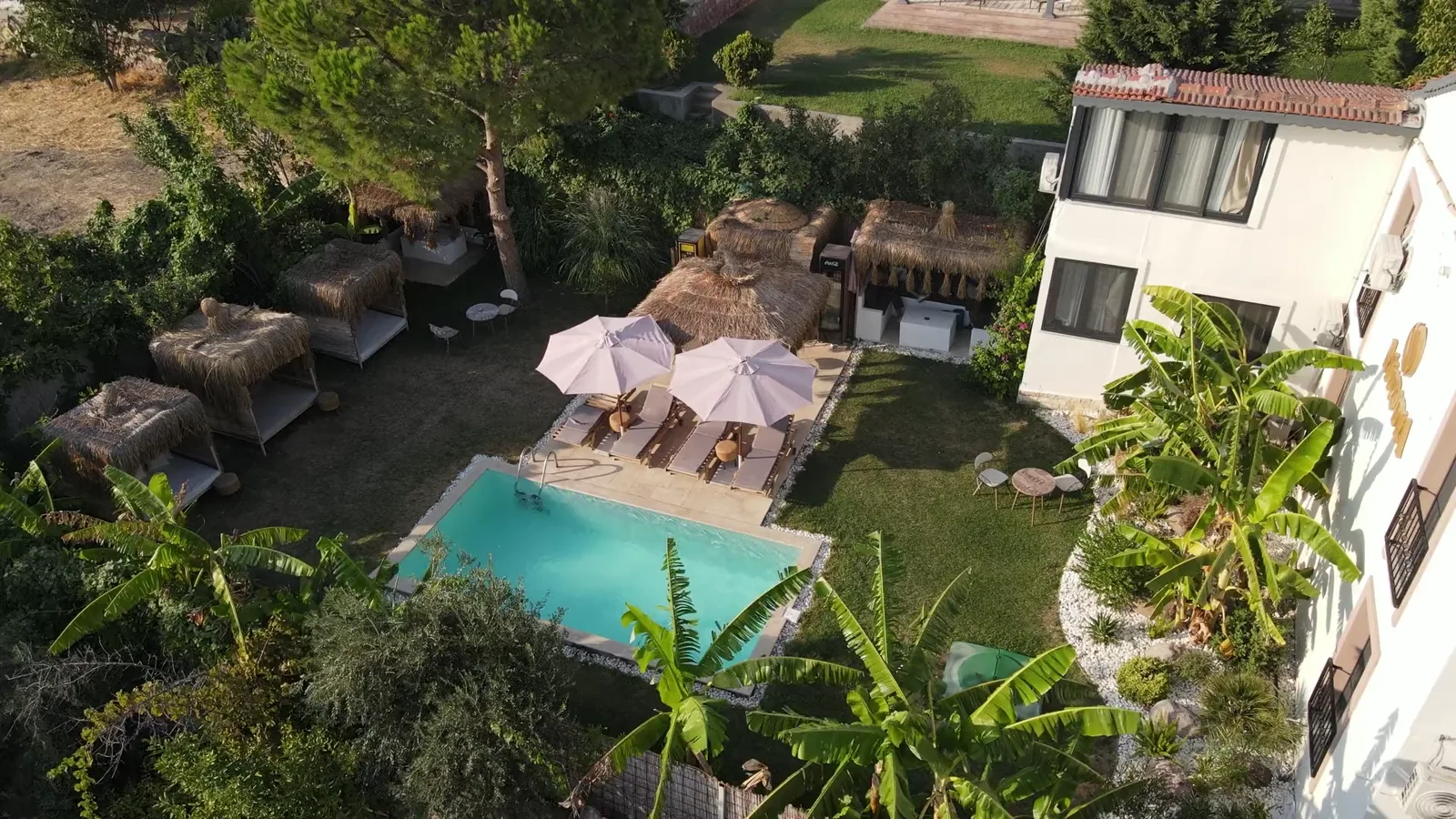 Fiplus ↗
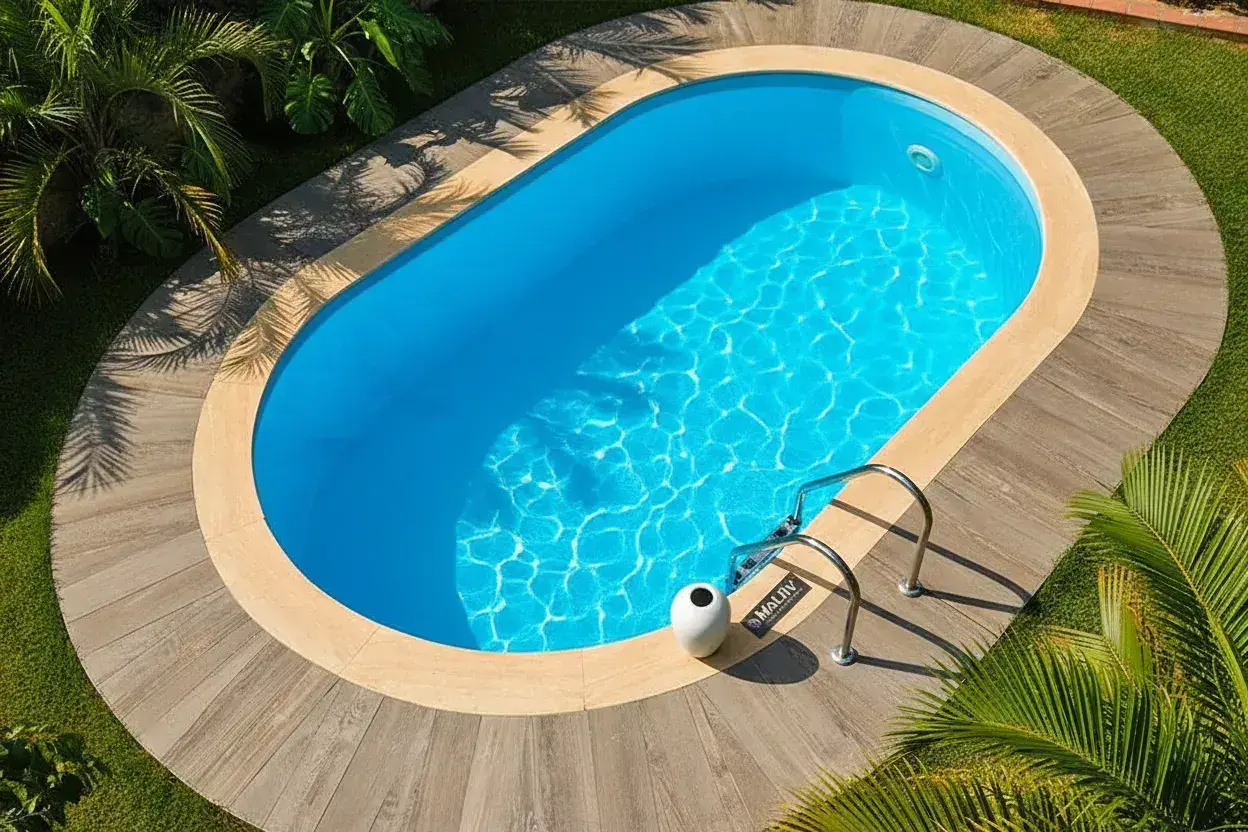 Maldiv ↗
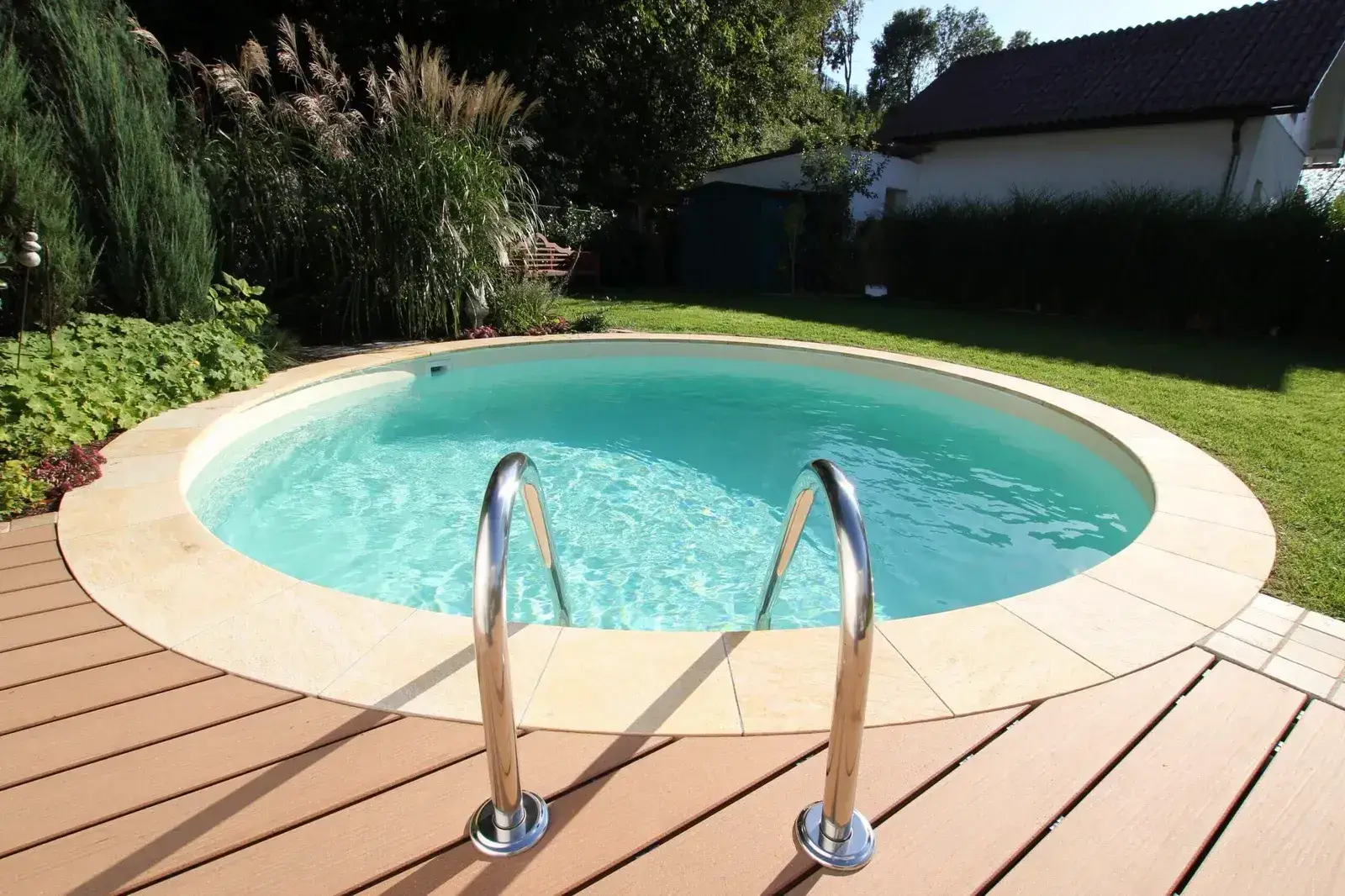 Bora ↗
02. Leak Detection on Site: Bucket Test, Pressure Test and Dye Tracing
The common diagnostic sequence applied to pools suspected of leaking is as follows:
- Distinguishing Evaporation from Leakage (Bucket Test): A bucket filled with water is placed on a pool step; the water level in both the pool and the bucket is marked with tape. As an example calculation, if after 24 hours the water in the bucket has dropped by 5 mm while the pool water has dropped by 20 mm, the 15 mm difference points to a loss other than evaporation and calls for further investigation. The values given here are hypothetical examples intended to illustrate the method.
- Measurement With the Pump Running and With It Stopped: If water loss increases while the pump is running, the leak is most likely in the pressurized discharge line; if the level drops at a similar rate with the pump off as well, the leak is sought in the pool shell or in the suction line.
- Dye Syringe Test (Dye Testing): Once the filter has been stopped and the water has settled, colored test fluid is released with a syringe around suspect cracks, nozzles and lights. If the fluid is drawn into the crack, the leak point is marked. Filter and valve operations must be carried out with the pump off.
- Plumbing Pressure Test: The pipe runs are plugged and air or water is pressurized with a gauge; the pressure drop helps identify the line that is leaking. Test pressures must be selected to suit the pipe class.
03. Leak Repair: Reinforced Concrete Demolition Cost vs. Liner Overlay Solution
| Repair Approach | Conventional Reinforced Concrete Repair Method | Sermed Pools 1.50 mm Reinforced Liner Renovation | Expected Outcome |
|---|---|---|---|
| Form of Intervention | In the damaged area the ceramic is removed and epoxy or crystalline injection is applied | If the surface is suitable, the ceramic is kept and geotextile and liner are laid over it | Rigid repairs can recur at a live crack; a flexible membrane accommodates limited movement better |
| Site Duration | Usually several weeks of dust, rubble and noise | Once preparation is complete, installation and filling with water in a few days (the duration depends on pool size and ground preparation) | The schedule varies with site conditions and is not guaranteed |
| Future Ground Settlement | If movement continues, new cracks can develop | A flexible membrane can tolerate limited movement | In cases of major structural deformation both solutions require an engineer's assessment |
| Cost and Budget | Demolition, excavation, new waterproofing and ceramic items drive the cost up | A single-piece lining generally involves fewer demolition items | The cost comparison becomes clear with a project survey; warranty coverage depends on the written conditions |
Conclusion: If the cause of the crack is ongoing ground movement, renewing only the plaster and ceramic may not deliver a lasting result. A flexible membrane lining is a suitable renovation option in many situations; the correct method is chosen according to an engineering diagnosis that identifies the cause.
Frequently asked questions
When a reinforced concrete pool cracks in Batumi's damp ground, is it possible to repair the leak without demolition?
In most cases it is. If the existing surface is sufficiently even and the load-bearing structure is sound, watertightness can be restored by covering the ceramic, without removing it, with a protective felt and a 1.50 mm reinforced liner membrane, and demolition items are largely reduced. The extent of the structural damage and whether ground movement is still ongoing are determined first by an engineering diagnosis; a demolition-free solution may not be suitable for every pool.
How much is normal daily evaporation?
Evaporation varies with air temperature, humidity, wind and sunshine; in temperate humid climates, daily losses on the order of millimeters are expected on summer days. This article does not give a verified official evaporation figure for Batumi. For a definite distinction, a comparative measurement should be made in the same pool with the bucket test; losses clearly above evaporation call for investigation of a structural or plumbing leak.
Do crystalline mortars provide a permanent solution in crack repair?
In narrow, stable cracks where movement has stopped, crystalline mortars and injection resins can give a lasting result. On ground where movement continues, rigid repairs can crack again with new micro movements; in that case a flexible membrane or a joint detail that accommodates movement is more suitable.
Does a water leak damage the pool's ground and the villa?
It can. Continuously leaking water can wash out the fill beneath the pool and create voids, increase settlement, and seep into the nearby foundation area and lead to moisture problems. The degree of the effect depends on the amount of leakage, the permeability of the ground and the drainage arrangement.