Pool models, construction conditions and care to help you plan your project.
In this guide 4
Selection note: The Fiplus shell is a 20 mm F-Stone fiber cement panel; the galvanized steel external cross leg is a component separate from the shell. Maldiv and Bora have special alloy steel casings. Shell warranty periods are 25 years for Fiplus and 10 years for Maldiv/Bora; coverage and exclusions depend on the conditions set out in the written warranty document. Dimensions, performance and document compliance must be verified separately for the selected product and project.
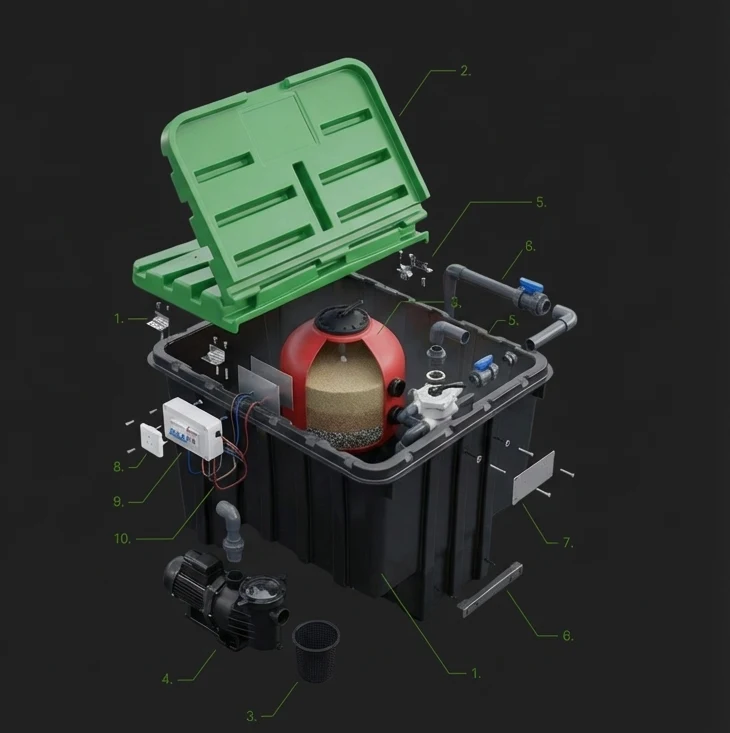
The technical problem frequently reported by villa owners who have pools built in humid, rainy climates is this: reinforced concrete plant room pits buried in the garden take on water because of a high water table and condensation, sweat constantly, and the circulation pump and electrical panel inside them develop corrosion-related faults. Under conditions of high relative humidity, climbing down into a narrow underground shaft to turn a valve is problematic in terms of both safety and comfort. The above-ground or semi-recessed MyBox Compact Filter Cabinet aims to keep the equipment above the water table level and at an accessible height, with its corrosion-resistant composite body (the body material and protection class must be verified from the product documentation), its ventilation louvers and its ready-made hydraulic plumbing.
The plant room is the heart of the pool; placing the equipment in a permanently damp pit increases the likelihood of failure. The correct approach is to separate the equipment from soil moisture and the risk of flooding and to position it at a user-friendly level.
01. The Damp Trap of Underground Reinforced Concrete Plant Shafts Under Batumi's Humidity
When a reinforced concrete plant room is built underground, the following operational problems are commonly seen if drainage and waterproofing are inadequate:
- Water Welling Up From the Base and the Pump Being Submerged: On plots with a high groundwater level, water can seep in through the joints and penetrations of the shaft. When the accumulated water rises above the motor level, the electric motor is submerged and winding damage occurs.
- Condensation and Rusting: The difference between the coolness underground and the outside temperature leads to condensation (sweating) on the shaft walls. Dripping water can cause the residual current device to trip and corrosion in the contactors.
- Gas Accumulation and Accident Risk: Storing chlorine products in an unventilated underground shaft is inadvisable; because the gas released is heavier than air, it can collect at the base. Anyone descending into the shaft may face respiratory irritation and a risk of poisoning. Chemicals must be stored in accordance with the manufacturer's label, in ventilated and separate locations; different chemicals must never be mixed under any circumstances.
- Difficulty of Servicing: Climbing down a narrow ladder into a dark shaft makes valve control difficult; maintenance is neglected and changing the filter sand becomes laborious.
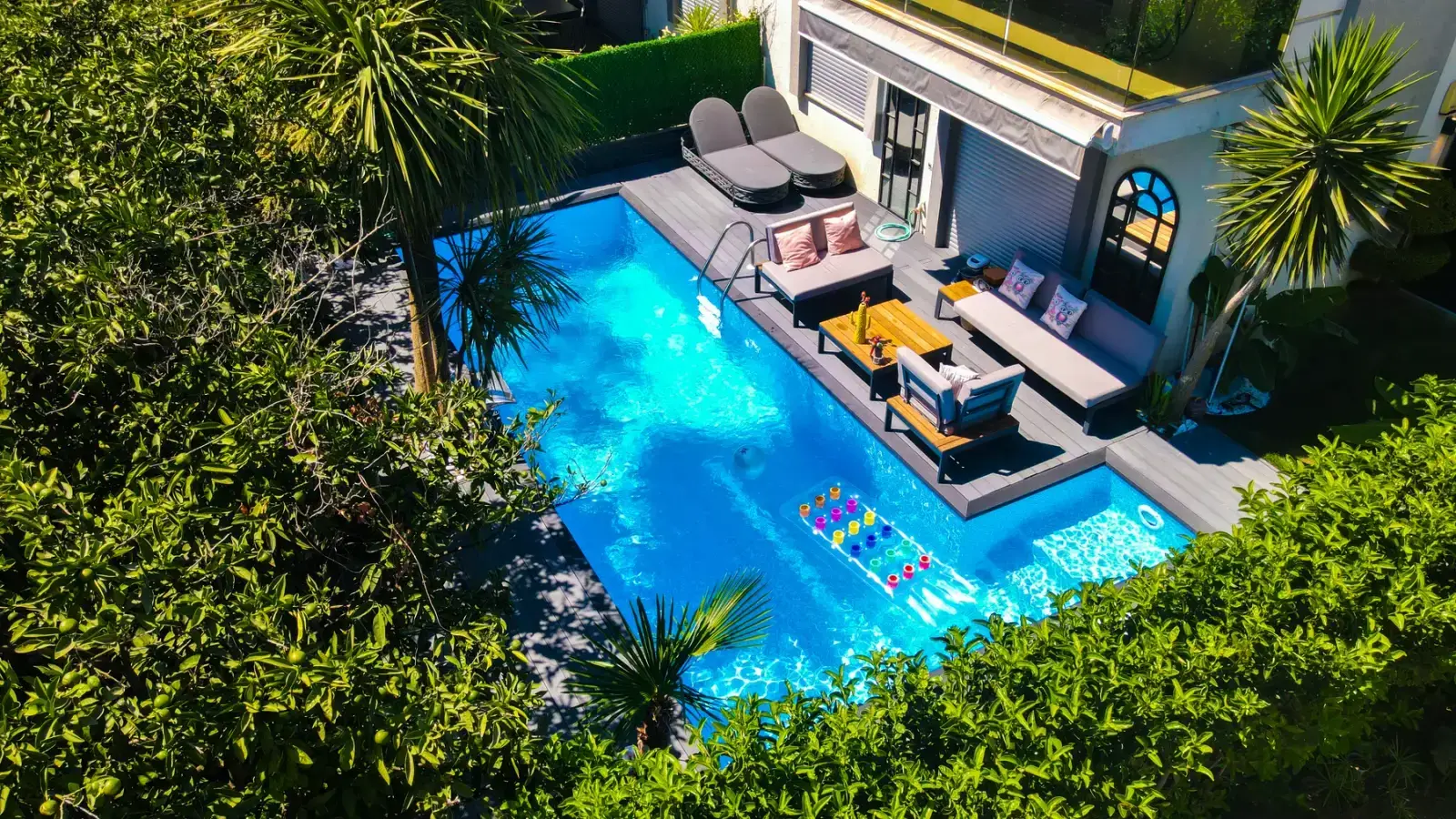
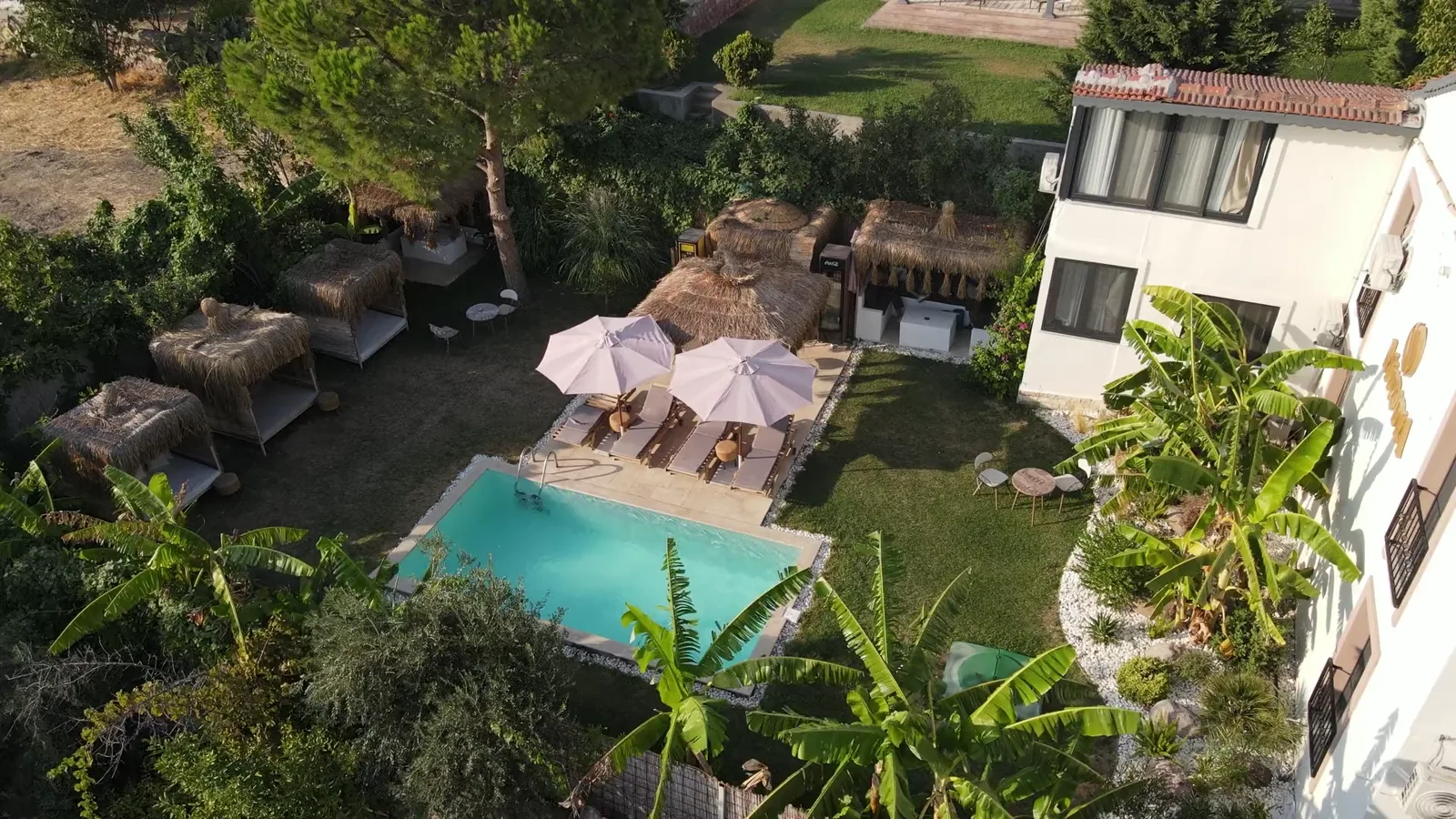 Fiplus ↗
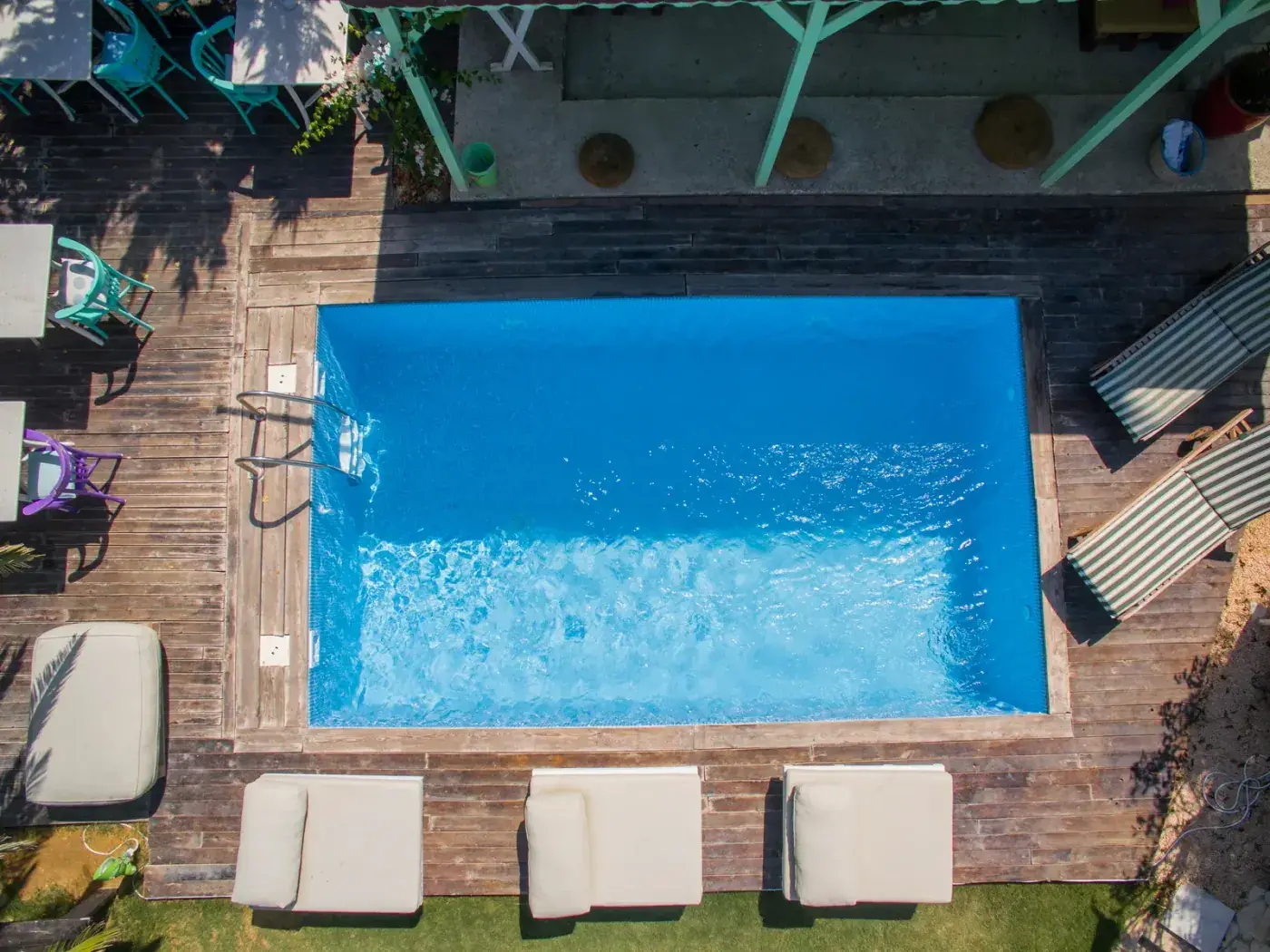
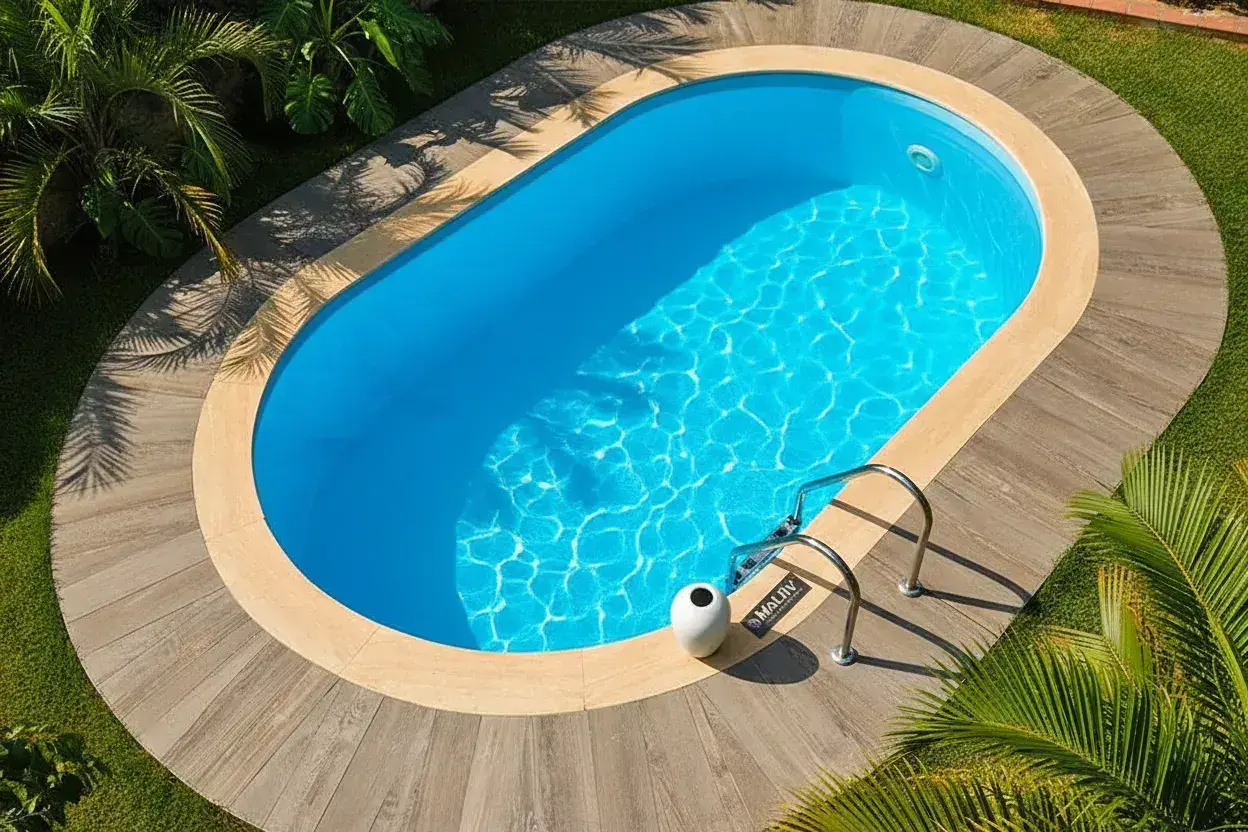 Maldiv ↗
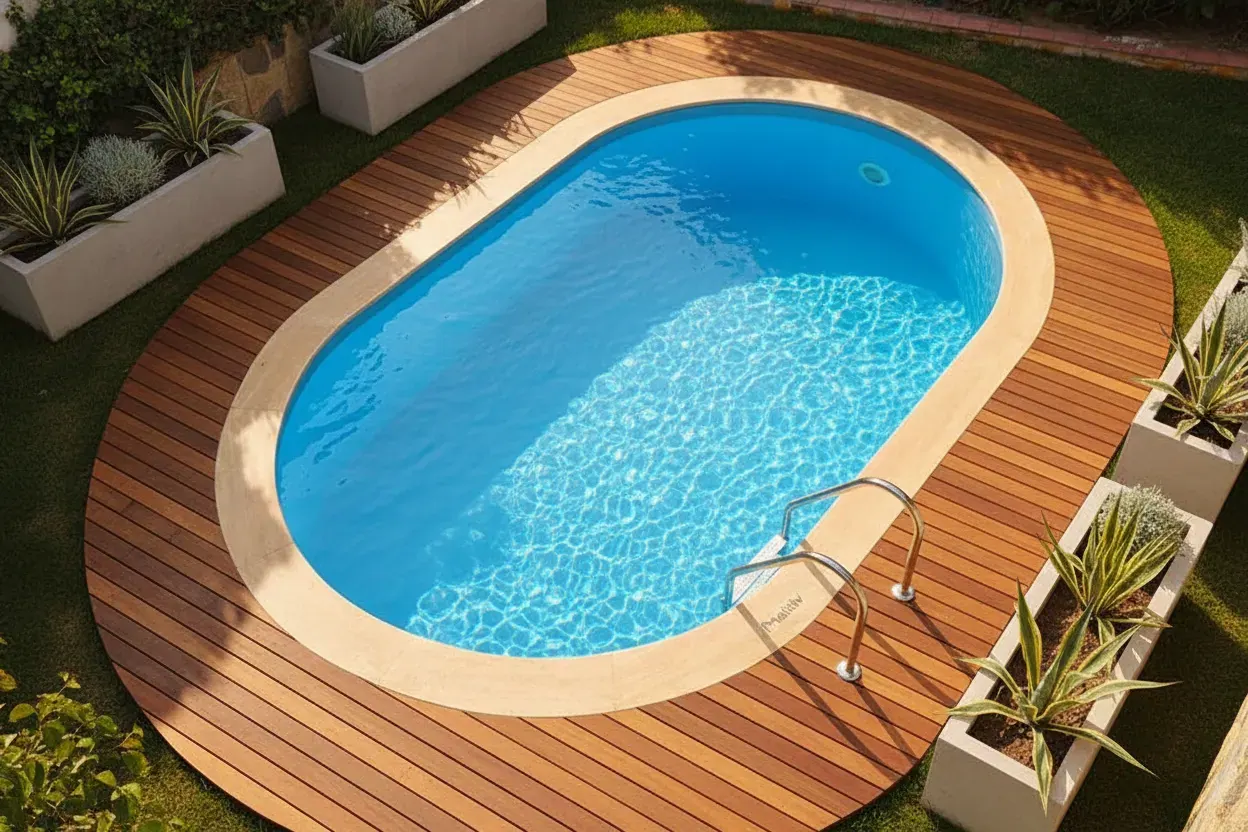
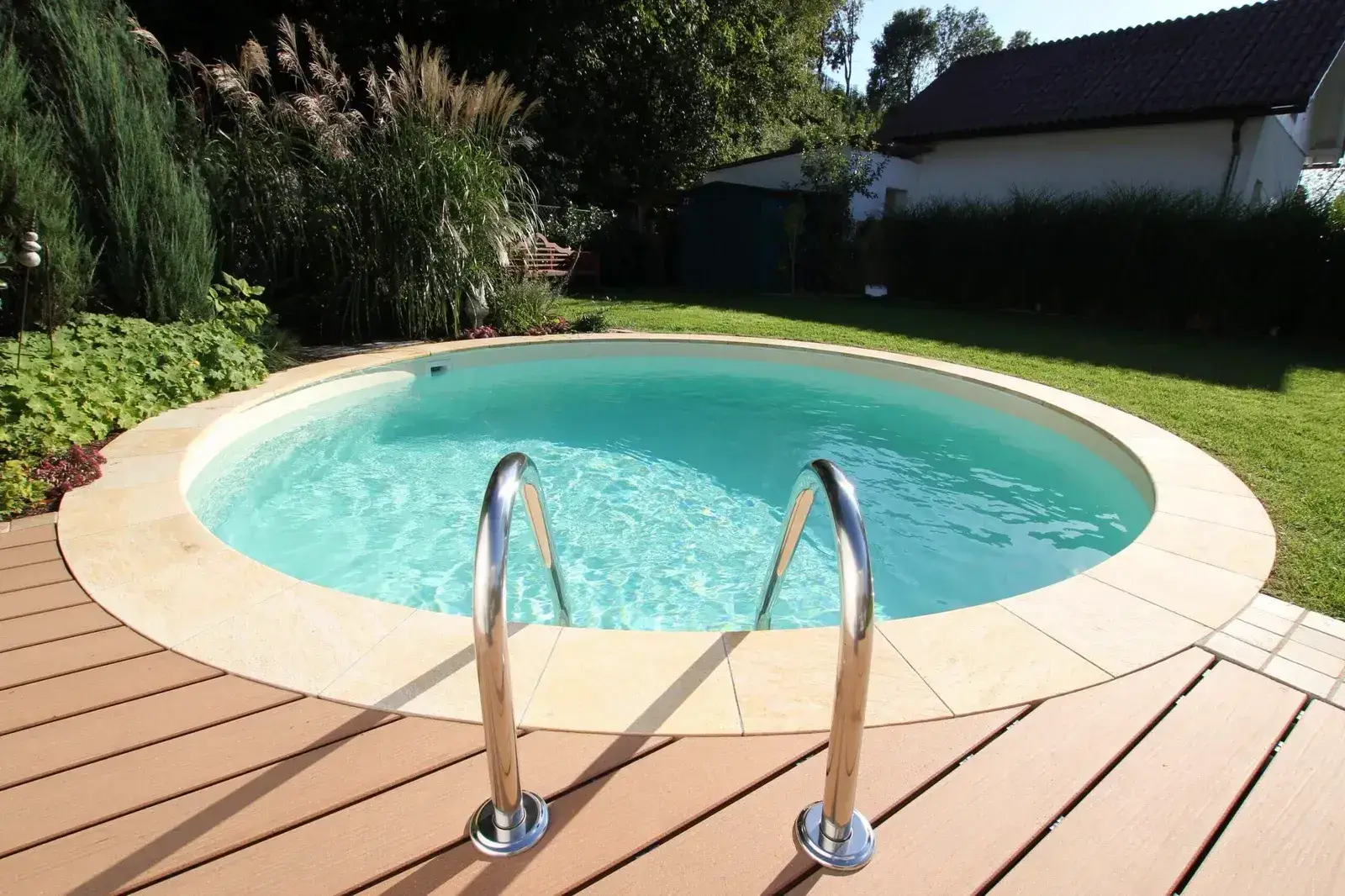 Bora ↗
02. Sermed Pools MyBox Cabinet Architecture: Dry Environment, Ventilation and Easy Access
The MyBox compact filtration cabinet offers a layout aimed at reducing these problems:
- Above-Ground / Semi-Recessed Compact Layout: MyBox can be placed in roughly 1 m² of space beside the pool. It requires no deep shaft excavation and is positioned so that the equipment stays above the water table level.
- Corrosion-Resistant Composite Body and Damped Lid: The UV-resistant composite body is selected according to outdoor conditions. The damped top lid provides standing access to the valves and the pressure gauge.
- Natural Cross-Ventilation Grilles: The rain-protected labyrinth louvers on the sides of the cabinet help expel the heat generated while the motor runs and help reduce the build-up of condensation inside.
- Integrated Electrical Panel and Residual Current Protection: The cabinet is prepared to house an electrical panel with a documented water-tightness rating, a residual current protection device, a timer and the lighting transformer. The panel selection, the earthing and all connections must be carried out and verified by a qualified electrical specialist in accordance with the local electrical standards in force; this is not work to be done by the user.
03. Underground Reinforced Concrete Shaft vs. MyBox Compact Cabinet Technical Comparison Table
| Technical Criterion | Conventional Underground Reinforced Concrete Shaft | Sermed Pools MyBox Compact Cabinet | Operating and Safety Difference |
|---|---|---|---|
| Humidity and Flooding | If drainage is inadequate, a high risk of filling with groundwater and motor damage | Above ground/semi-recessed; the flooding risk is clearly reduced | Lowers the likelihood of humidity-related motor failure |
| Ease of Use | Descent into a dark shaft by ladder (difficult and risky) | The damped lid is opened and checks are made standing up | Daily backwashing is completed quickly (valve operations with the pump off) |
| Ventilation and Heat | If ventilation is inadequate, the motor heats up and damp increases | Heat is expelled through natural cross labyrinth louvers | Suitable temperature and dryness contribute positively to equipment life |
| Excavation and Construction Load | Deep excavation, formwork, reinforcement and concrete work | No deep excavation; sits on a suitably sized concrete base | Reduces site costs and loss of space |
| Gas Accumulation Risk | Gas can collect at the bottom of an unventilated shaft | Air is exhausted from above; the risk of accumulation is reduced | Chemicals must still be stored according to the label, separately and locked away |
Conclusion: In a rainy, humid climate, an underground plant room with poor drainage can be a source of chronic faults. The MyBox cabinet aims to keep the equipment in a drier, accessible and service-friendly environment.
Frequently asked questions
Why does a MyBox compact plant room protect the motor better than a conventional reinforced concrete shaft in Batumi's damp ground?
Because MyBox is installed above ground or semi-recessed, the equipment is positioned to stay above the groundwater level and the risk arising from water collecting at the bottom of a shaft is reduced. The cross-ventilation louvers help expel the humid air inside, so the likelihood of failure caused by condensation and corrosion falls. The level of protection is achieved together with correct drainage, the correct installation level and electrical installation compliant with standards.
Will a salt chlorine generator fit inside MyBox?
Depending on the model and volume, yes. In addition to the sand filter and the pump, MyBox cabinets offer modular internal volume for further equipment such as a salt electrolysis cell, an automatic pH dosing pump and a UV lamp; which equipment will fit is clarified at the project stage according to the cabinet size selected.
Is it noisy outside while the pump is running?
The closed composite cabinet body provides a degree of sound insulation and lowers the perceived pump noise. The exact sound level varies with the pump model, its speed, the cabinet's position and its connection to the ground; a numerical decibel value can only be determined by measurement on site.
Does the equipment inside MyBox freeze in winter?
In regions where there is a frost risk, the drain plugs of the pump and the filter should be opened to empty the water as winter approaches and the lines should be put into winter maintenance. Alternatively, a thermostat-controlled frost protection heater can be placed inside the cabinet; the electrical connection of such a heater must be made by a qualified electrical specialist in accordance with local standards.