Pool models, construction conditions and care to help you plan your project.
In this guide 4
Calculation note: The statements about prices, savings rates, energy consumption, rental income and payback periods in this article are only examples illustrating a method; they are not current Georgian prices, verified operating results or an income guarantee. A real budget must be calculated using local quotations, tariffs, actual usage and a written scope of work. Timeframes depend on site preparation, weather, permits and logistics conditions.
The most critical financial comparison on the table for anyone wanting a villa pool is the question: "Should I have a traditional reinforced concrete pool built, or a prefabricated panel pool?" Most consumers see only the cost of cement and steel for reinforced concrete; yet once the lengthy formwork labour, the waterproofing chemicals, the daily rates for tiling specialists and the crane hire are added, the reinforced concrete budget grows noticeably. Because the factory-made Fiplus panel system from Sermed Havuz removes a portion of these site items, it generally offers a more economical solution in terms of initial investment. Since the savings rate depends on local labour, material and logistics prices, no fixed percentage can be committed to; the percentages below are sample scenario assumptions.
Prefabricated panel pools largely eliminate double-sided timber formwork labour, long site day rates, liquid-applied waterproofing and tiled finishes. For this reason, a clear cost advantage over reinforced concrete may arise in the initial investment. Over the long term, since there are no items for maintaining cement grout joints or repairing mosaic tiles, the total cost of ownership (TCO) also tends to be lower. The precise ratio varies with the equipment selected, how intensively the pool is used and local prices.
Expensive does not always mean high quality; the cost difference arises largely from the amount of labour time spent on site. Correctly built reinforced concrete pools can also be long-lasting; what is being compared here is the cost structure of the construction methods.
01. How Do the Hidden Labour and Time Costs of Reinforced Concrete Inflate the Budget?
The hidden construction factors that increase the invoice for a reinforced concrete pool:
- Long-Term Specialist Day Rates: The formwork carpenter, steel fixer, plasterer, waterproofing specialist and tiler work in your garden for weeks; in most projects the labour cost approaches or may exceed the material cost.
- Layer-by-Layer Waterproofing Expenditure: Reinforced concrete requires waterstop tape, crystalline mortar, two coats of liquid-applied elastic waterproofing and reinforcing mesh; each layer means additional material and curing time.
- Tiles and Flexible Adhesive: Glass mosaic or porcelain tiling inside the pool requires epoxy or flexible grouts that are resistant to pool water.
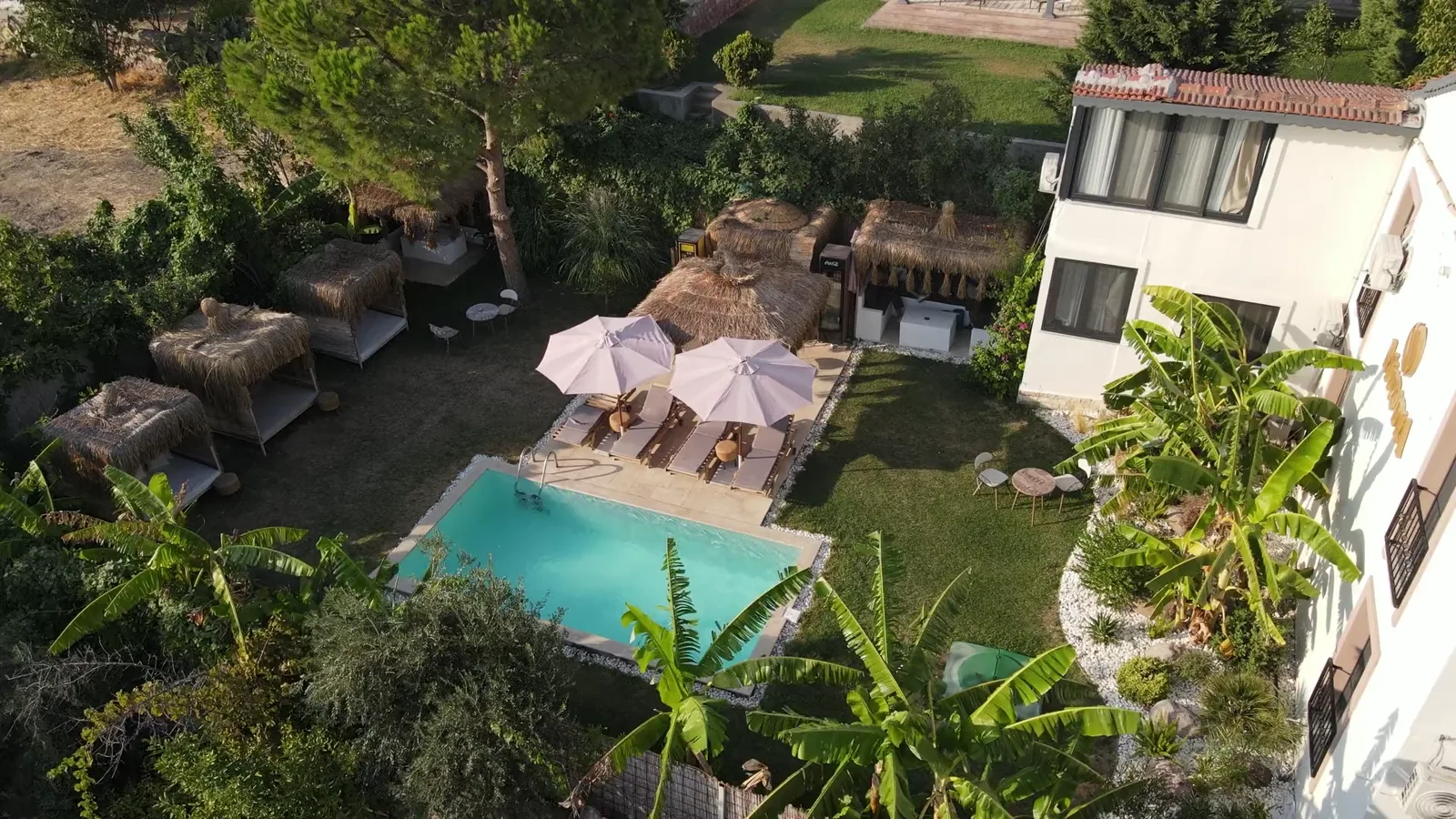 Fiplus ↗
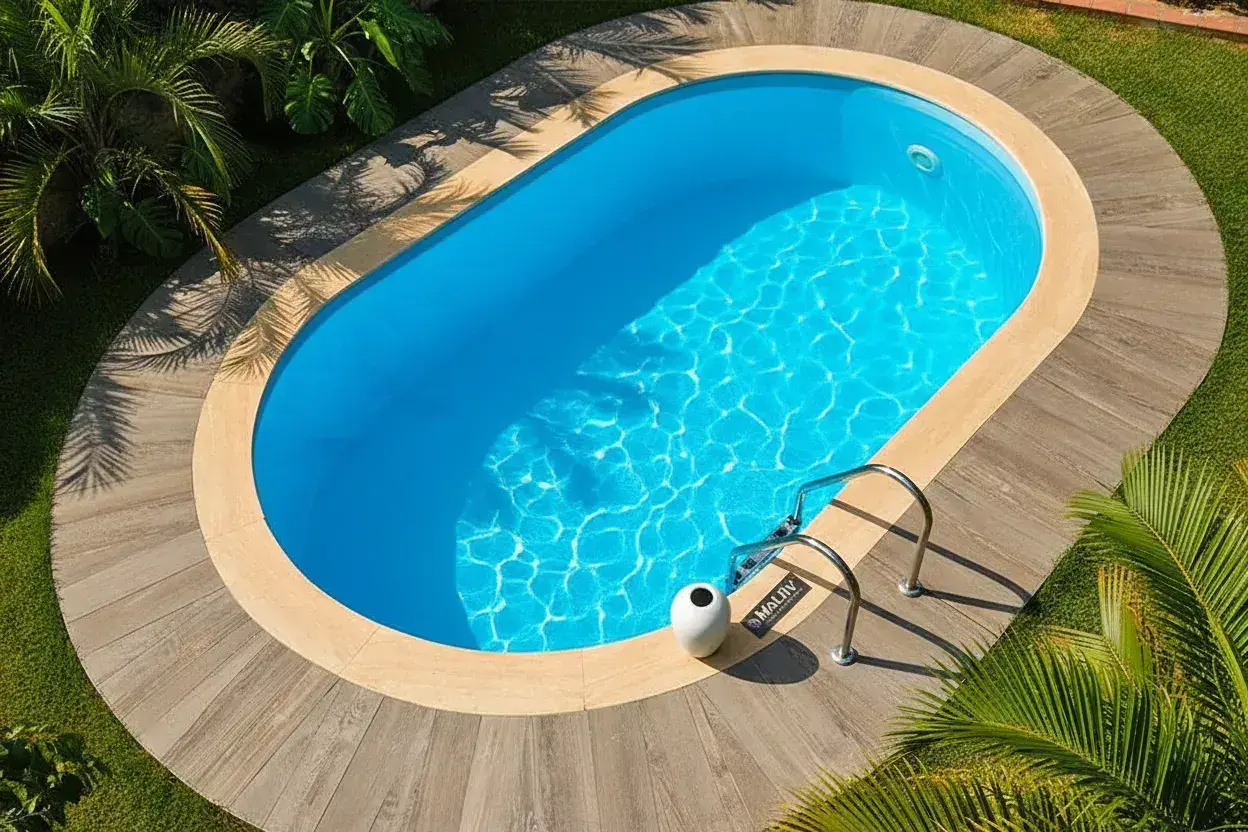 Maldiv ↗
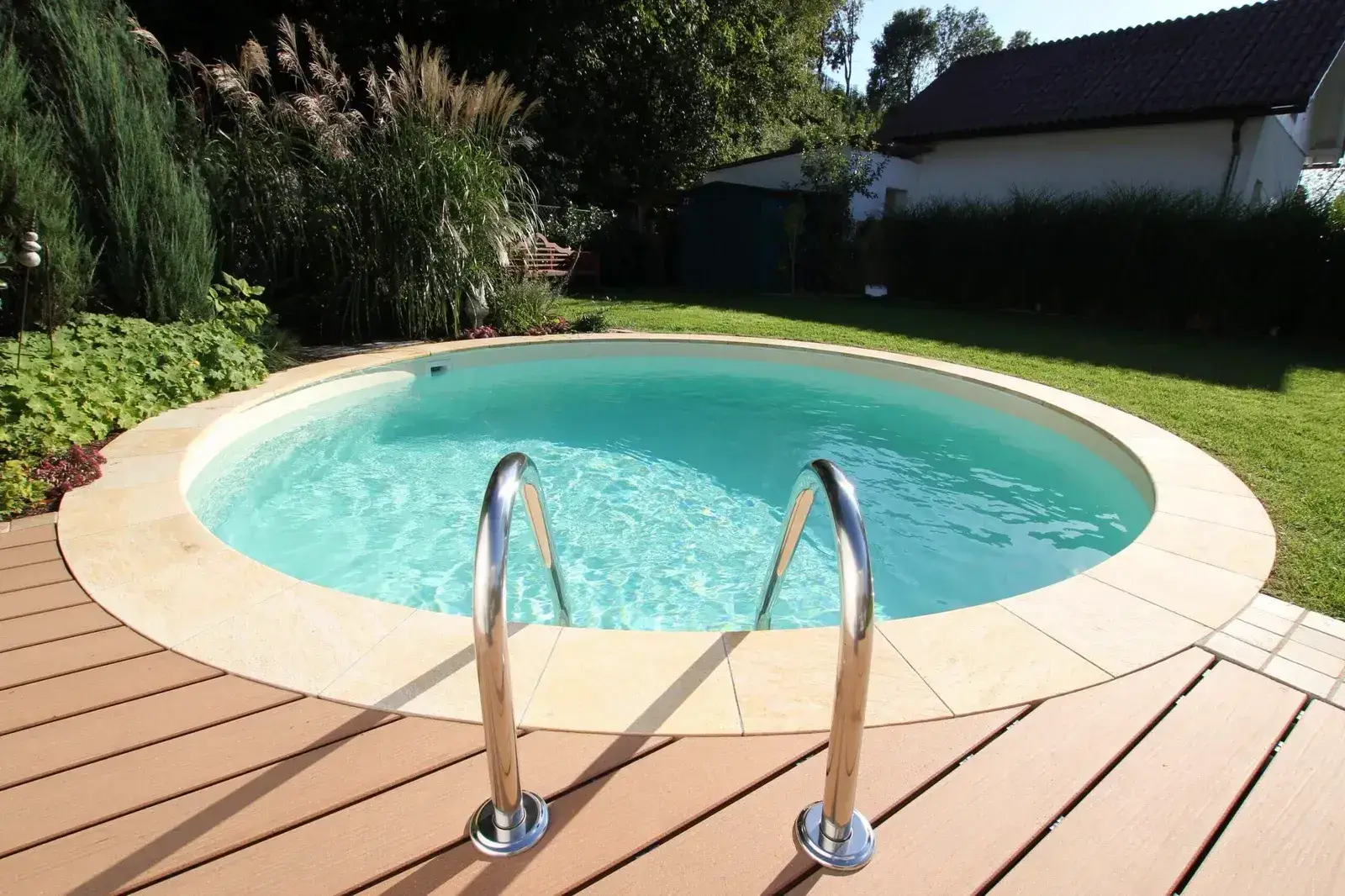 Bora ↗
02. The Manufacturing Savings of a Prefabricated Pool: Eliminating Formwork, Waterproofing and Tiling Items
The cost advantage of Sermed Havuz rests on these 3 principles:
- A Ready-Made Shell from the Factory: The 20 mm F-Stone fibre cement panels arrive finished from the factory; no formwork is erected on site and no wall concrete is poured. The panel shell works together with the galvanized steel external cross bracing system.
- Waterproofing and Finish in a Single Move (the Liner): The 0.80 mm homogeneous or 1.50 mm reinforced liner, depending on the design, forms both the watertight surface and the final aesthetic finish; there is no need for separate tiling and liquid-applied waterproofing items. Liner performance depends on correct installation, drainage and water balance.
- Short Installation Time: On projects where site preparation has been completed, installation generally finishes within a few working days; this means the surrounding landscaping is less affected and the loss of use during the tourism season is reduced. The duration depends on weather, permits and logistics conditions.
03. Reinforced Concrete vs. Prefabricated: Item-by-Item Savings Matrix Table
The ratios in the table are sample scenario values based on the stated items falling outside the scope.
| Construction Item | Classic Reinforced Concrete Pool (4x8 m) | Sermed Fiplus Panel Pool (4x8 m) | Example Cost Impact |
|---|---|---|---|
| Formwork and Wall Steel Labour | Yes (Timber formwork + double layer of steel) | No (Factory-made 20 mm F-Stone panel + galvanized steel external cross bracing) | This item falls outside the scope |
| Liquid-Applied Waterproofing | Yes (2-3 coats of chemical waterproofing) | No (Watertightness is provided by the liner) | This item falls outside the scope |
| Internal Finish & Tiling | Glass mosaic + pool grout | 0.80 mm homogeneous or 1.50 mm reinforced liner | Generally a noticeably lower cost |
| Total Site Duration | Typically 60 - 90 Days | Typically a few working days | A major reduction in site duration |
| Long-Term Maintenance Expense | Grout renewal and mosaic repairs | A surface that requires no grout maintenance | No grout-related maintenance item arises |
In conclusion: a prefabricated panel pool makes your budget predictable by reducing unnecessary site labour and the burden of grout maintenance.
Frequently asked questions
Why is a prefabricated pool cheaper than reinforced concrete?
Because the shell is mass-produced at the factory with industrial moulds; the lengthy formwork, steel fixing and tiling labour on site is largely eliminated, and the liner membrane serves as both the watertight layer and the finish. The size of the difference varies according to local labour and material prices.
Does being cheaper mean it is poor quality?
No. The Fiplus body/casing warranty is 25 years and that for Maldiv and Bora is 10 years; the warranty scope is subject to the written terms. Panel systems offer a light and flexible shell arrangement, while reinforced concrete is a durable solution when correctly designed. In both systems, service life depends on the geotechnical investigation, the structural design, the quality of the installation and maintenance. Earthquake resistance cannot be inferred from the shell material; it can only be assessed through structural calculations made in accordance with the local seismic code.
In which situations should a reinforced concrete pool be built?
Reinforced concrete may be the preferred solution in cases such as deep diving pools, semi-Olympic and heavily used commercial facilities, special geometries, or difficult ground and groundwater conditions. The choice of system should be made with an engineering assessment on every project.
Which one costs more after 10 years?
In reinforced concrete pools, the periodic maintenance of grouts and mosaic surfaces constitutes an expense item. Liner pools require no grout maintenance; instead, renewal of the liner should be planned for the end of its service life. In both systems, the actual expense depends on water chemistry management, how intensively the pool is used and the maintenance regime. In the event of a possible leak or liner floating, the repair method is determined by an engineer's diagnosis; not every case requires complete demolition. Always apply chemical doses according to the product label and the measured water values; do not mix chemicals together. The filter valve position should only be changed while the pump is switched off, and electrical work must be carried out by authorized persons in accordance with local standards. A pool cover is no substitute for a physical barrier and supervision; the risk of drowning cannot be eliminated entirely.