Pool models, construction conditions and care to help you plan your project.
In this guide 4
Project note: The slab thickness, concrete class, reinforcement, excavation allowance, pipe diameter and quantities given in this guide are preliminary planning examples; they do not constitute a structural design that can be applied to every site. The design must be prepared by a licensed engineer after evaluating the geotechnical investigation, groundwater, loads and local regulations. A full pool can also be affected by external hydrostatic pressure; draining, drainage and electrical work require expert supervision.
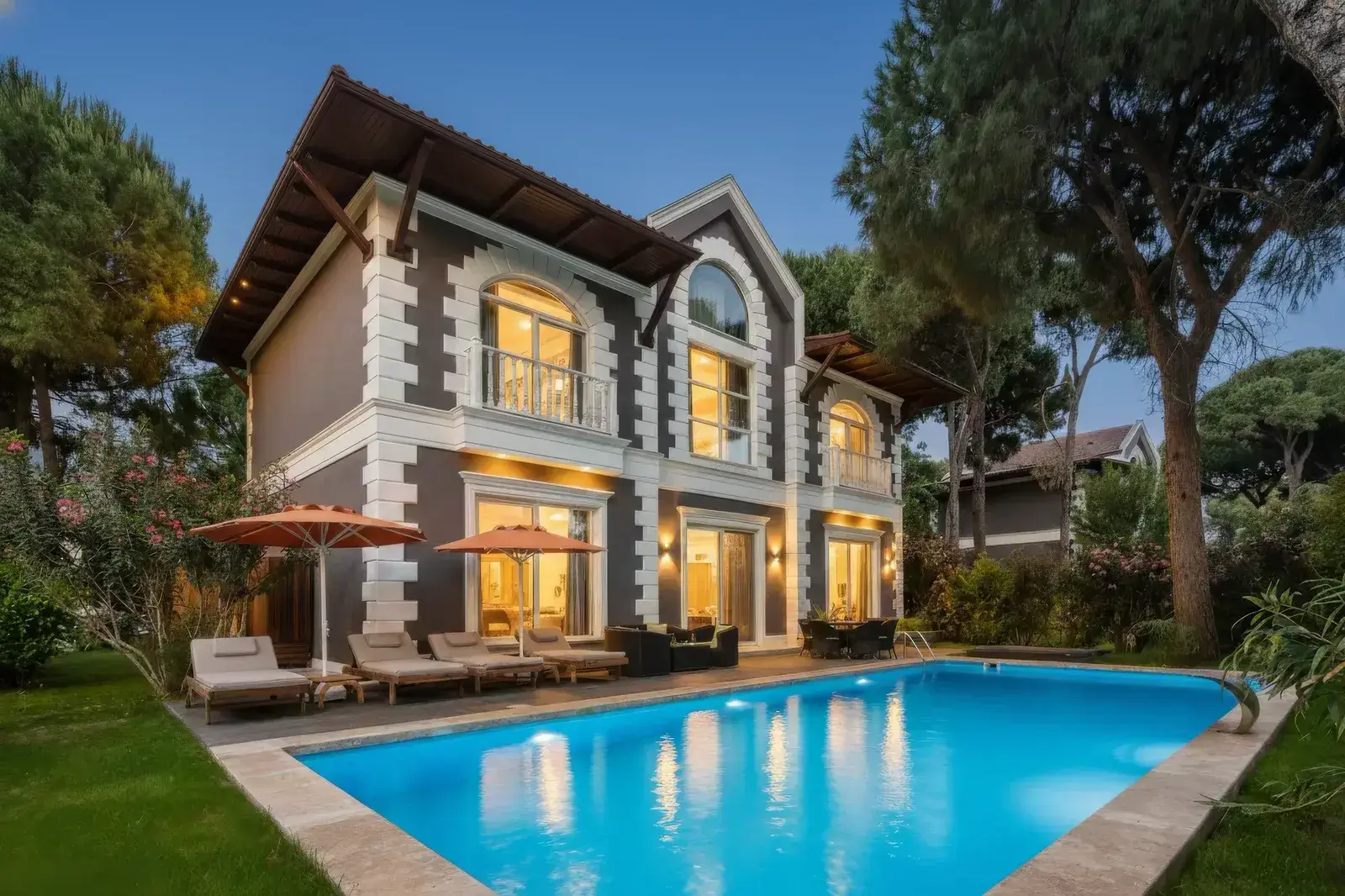
Once the pool shell has been erected and filled with water, the stage that gives the garden its final aesthetic touch is laying the coping stones around the pool edge and joining the sunbathing terrace to them with timber or composite decking. The workmanship defects most often encountered at this stage are letting cement mortar get inside the liner locking profile while the coping stones are being laid, crushing the profile, or using an adhesive with insufficient flexibility and thereby setting the stage for the stones to work loose within a short time. The protective profile tape, C2TE S1 class flexible adhesives and curved marble/travertine coping details used in Sermed Havuz projects allow the pool to integrate neatly with the landscape.
Coping stone is not merely edge decoration; it is a boundary element that limits the spilling of surging water into the garden, and a comfortable, slip-resistant frame for bare feet.
01. Mistakes Made When Laying Coping: Blocked Lock Profiles and Shifting Stones
Critical defects encountered on site during the landscaping stage:
- Cement Getting into the Hung Lock Channel: If mortar fills the lock channel while the coping is being bonded, removing and replacing the liner in later years becomes very difficult and there is a risk of damaging the profile or the membrane; the channel should be protected with masking tape.
- Use of Adhesive with Insufficient Flexibility: Standard mortars struggle to accommodate the movement caused by temperature differences and contact with water; the risk of voids forming and the coping stones shifting increases.
- Fall Sloped the Wrong Way: If the coping stones are given a reverse fall towards the pool rather than towards the garden, muddy irrigation water from the garden runs straight into the pool.
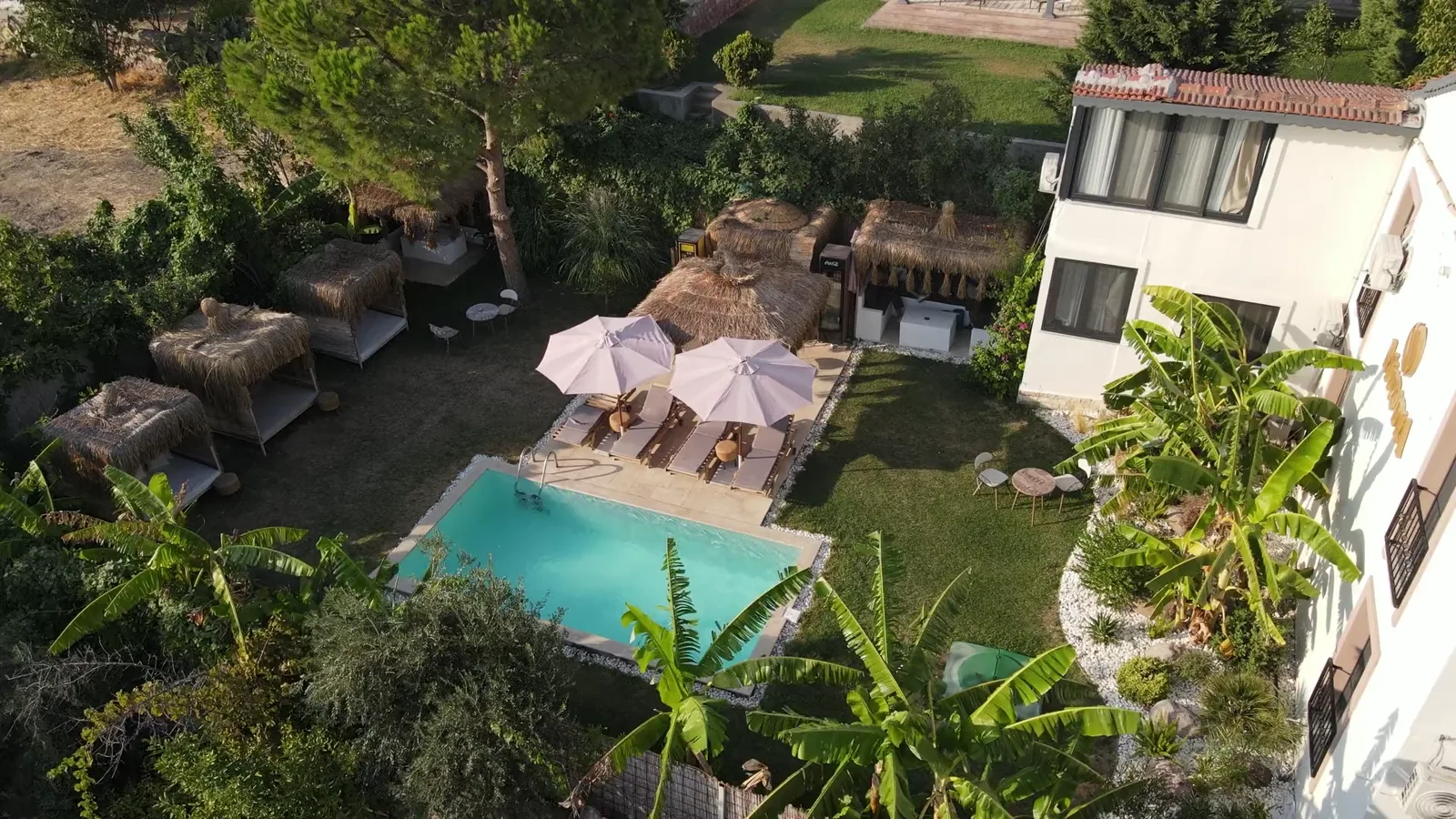 Fiplus ↗
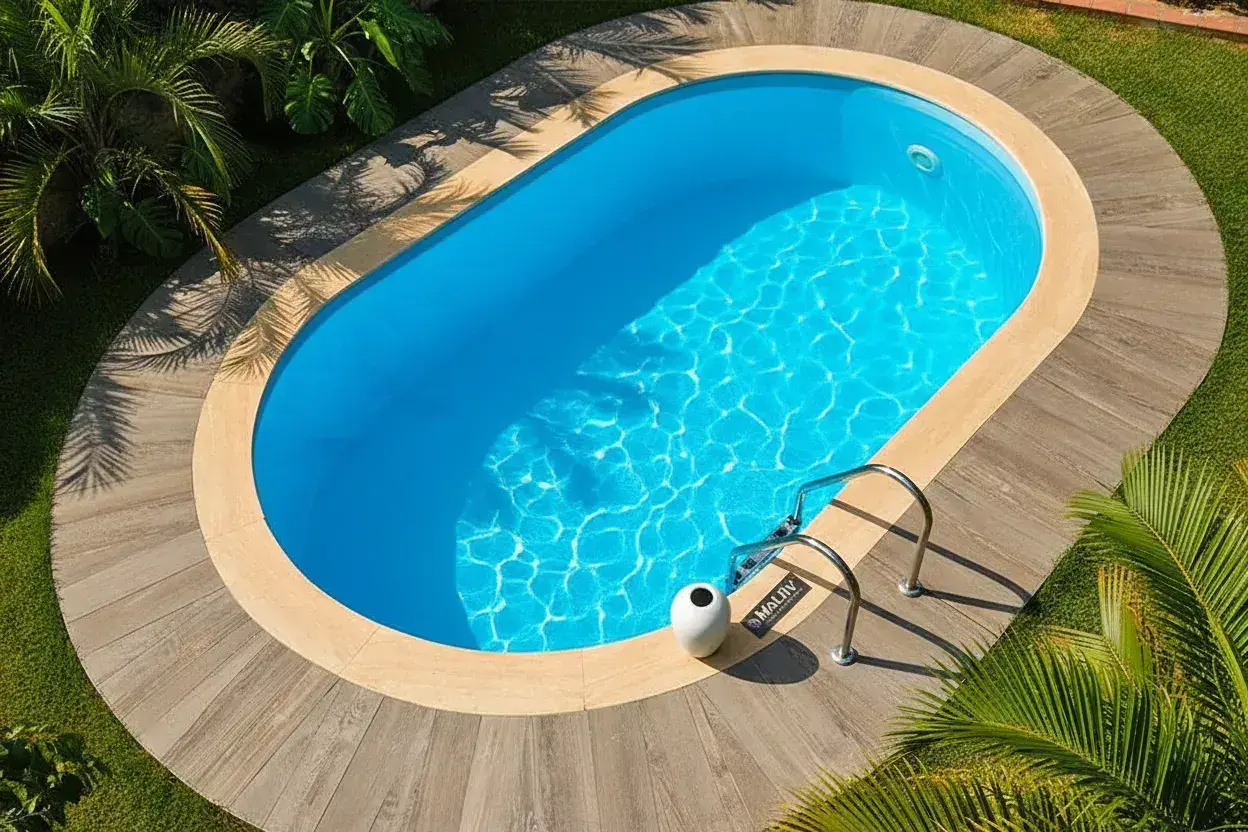 Maldiv ↗
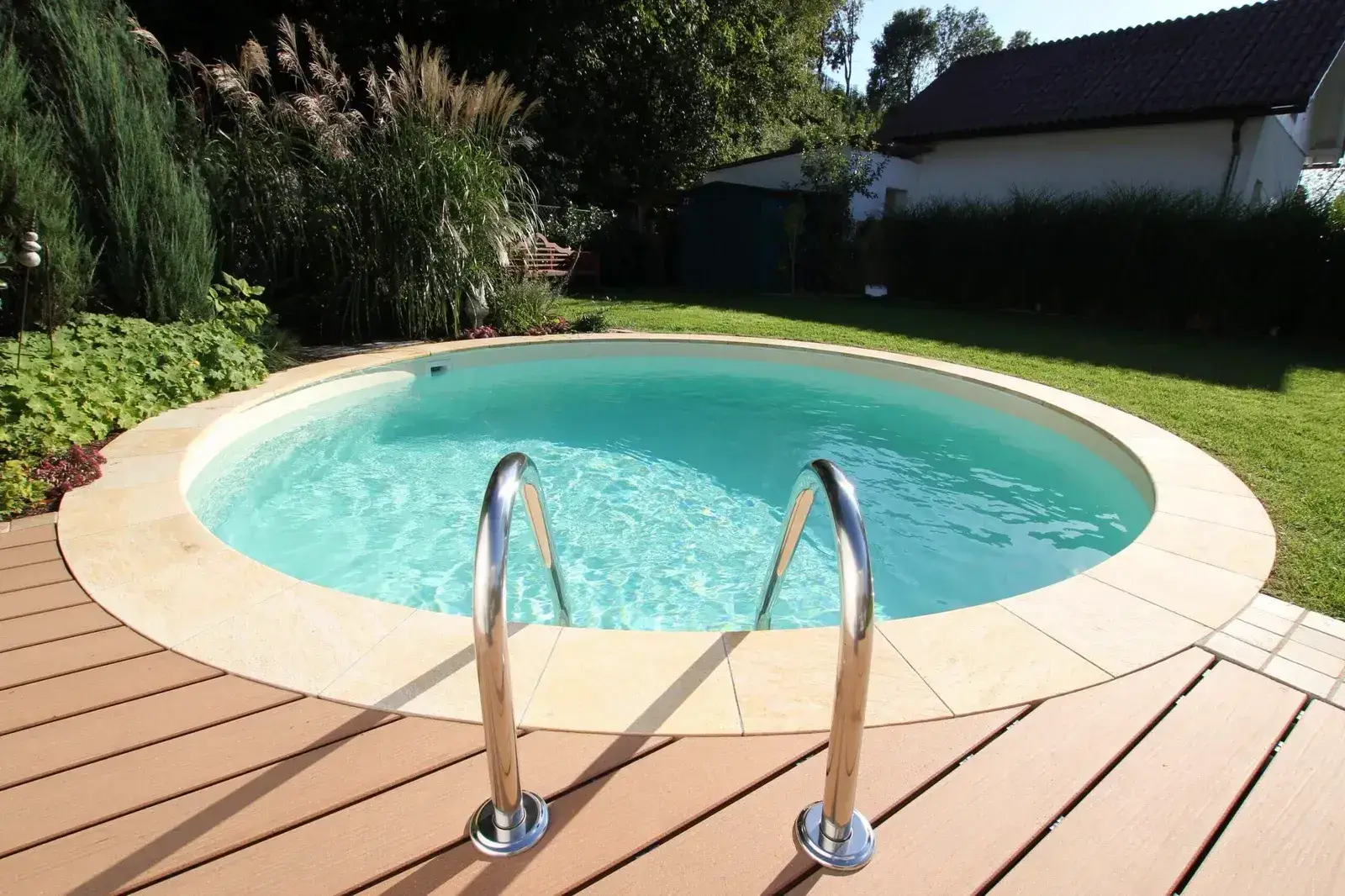 Bora ↗
02. Sermed Havuz Coping Standard: C2TE S1 Flexible Mortar and Protective Masking
Sermed Havuz applies the following rules when installing coping and decking:
- Covering the Lock Channel with Masking Tape: Before the coping is bonded, the Hung profile is covered with protective tape, minimising mortar contamination.
- C2TE S1 High-Performance Flexible Adhesive: A polymer-modified flexible adhesive suitable for outdoor conditions and contact with water is applied by combing both surfaces (both the panel and the stone). Product selection and application conditions are determined according to the manufacturer's technical data sheet.
- 1% Outward Fall Rule: The coping stones overhang into the pool by approximately 2 cm and are given a fall of around 1% towards the garden, so that dirty water is prevented from running into the pool when feet are rinsed or the garden is watered.
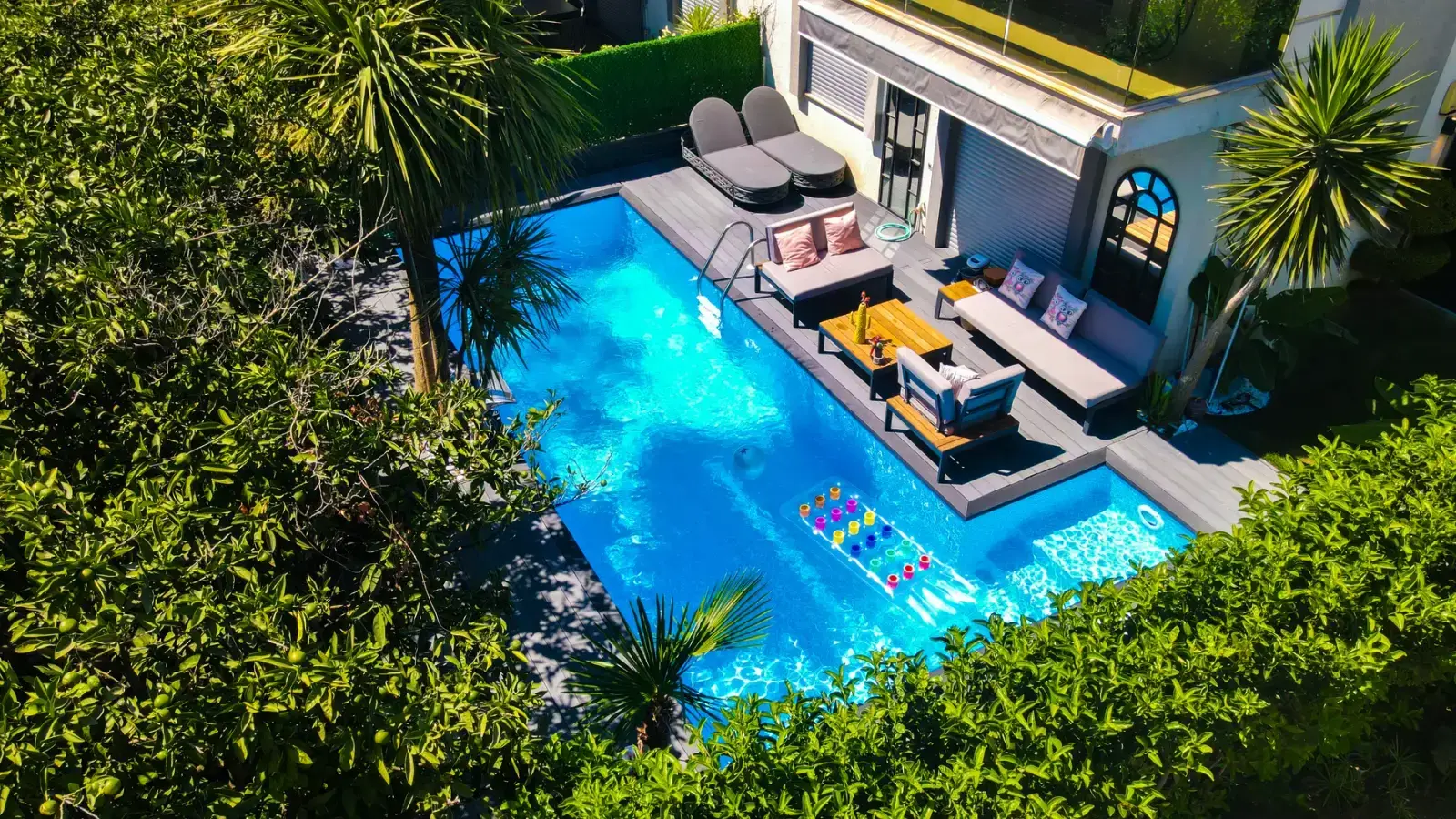
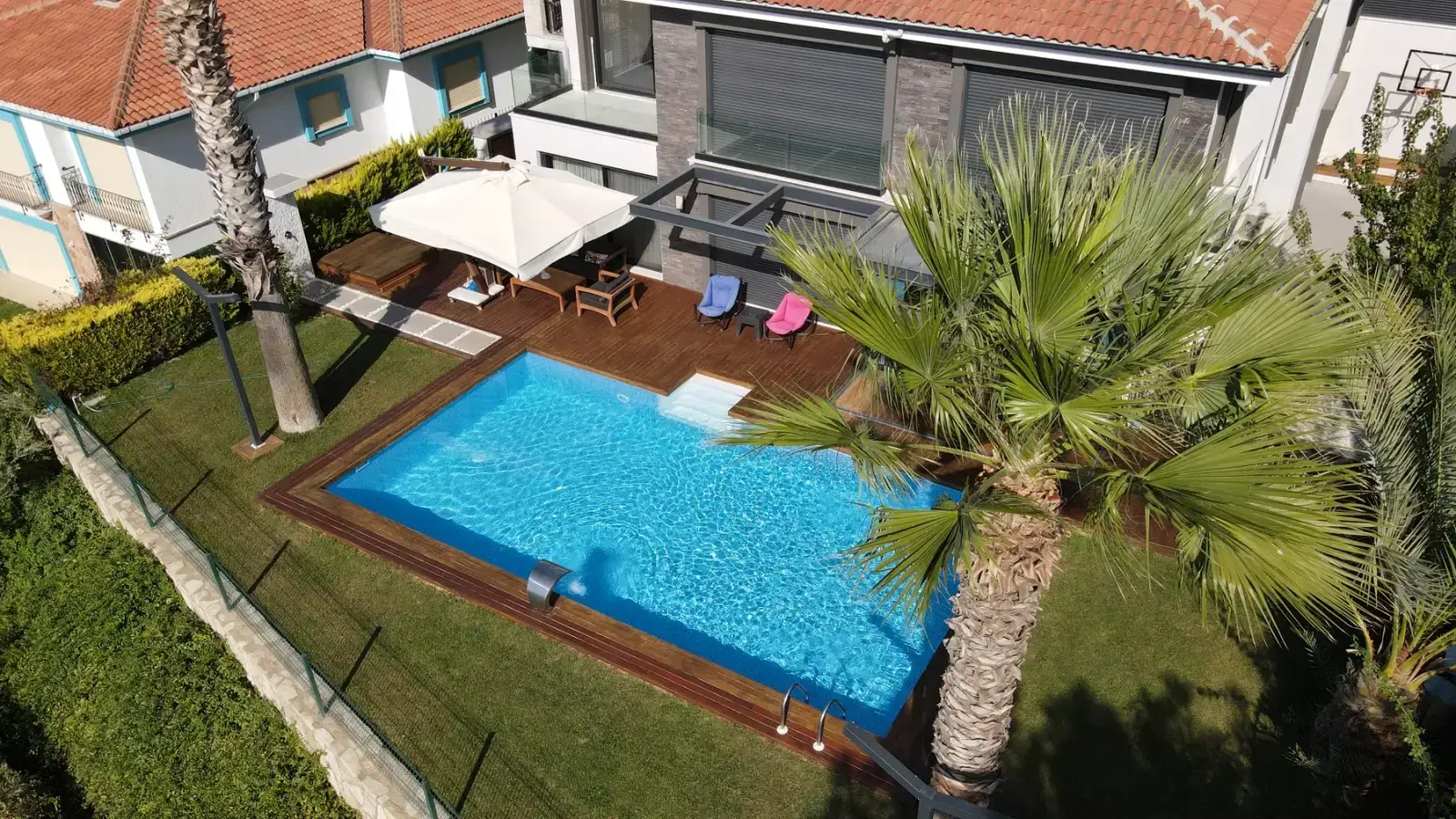
- Composite / Thermowood Timber Deck Compatibility: If a timber terrace is to be built, a corrosion-resistant aluminium frame is preferred; the deck boards are joined flush with the coping profile to create a single continuous surface.
03. Pool Edge Surfacing Materials Table (Marble vs. Decking vs. Porcelain)
| Surfacing Material | Slip Resistance When Wet | Degree of Heating in Sun | Maintenance Requirement | Aesthetic Fit |
|---|---|---|---|---|
| Sandblasted White Marble | High (with the sandblasted surface) | Low (light colour, stays cooler) | Low | Luxury classic villa |
| Travertine Coping | Very high (naturally porous) | Low | Low to medium (pore filling may be required) | Mediterranean and rustic style |
| 2 cm Outdoor Porcelain | Slip resistance class as declared by the manufacturer (e.g. C) | Medium | Low (stain-resistant surface) | Modern minimalist |
| Thermowood Timber Decking | High (natural timber texture) | Low (very comfortable underfoot) | Annual oiling | Glamping/villa in a natural setting |
Conclusion: The coping stone and terrace surfacing are the pool's frame. A suitable flexible adhesive and protection of the lock profile increase the likelihood that the surfacing will remain trouble-free for many years.
Frequently asked questions
Which adhesive is used when laying pool edge coping stones so that the liner lock profile is not damaged?
C2TE S1 class polymer-modified flexible adhesives with a high deformation capacity are suitable. Before the stones are bonded, the liner lock channel should be covered with masking tape to prevent mortar from getting inside.
How far should the coping stone overhang into the pool?
In practice, the inner edge of the coping stone overhangs the pool water by approximately 2-3 cm and a drip groove is formed on its underside; this detail helps reduce water travelling back under the stone and leaking outwards.
How should the joints between coping stones be filled?
The gaps between coping stones should be filled with a polyurethane sealant that can accommodate movement, or with a suitable class of epoxy grout; this reduces the risk of the joints cracking as the material expands.
Can timber decking be screwed directly to the pool panel?
No; the deck frame must be anchored to the concrete terrace slab around the outside of the pool, and screws must never be driven directly into the pool panels.