Pool models, construction conditions and care to help you plan your project.
In this guide 4
Calculation note: Prices, savings rates, energy consumption, rental income and payback periods are example planning assumptions only; they are not current Georgian prices, verified operating results or an income guarantee. Your real budget should be calculated using local quotations, tariffs, actual usage and a written scope of work. Timelines depend on site preparation, weather, permits and logistics conditions; no fixed construction period is committed to. Hygiene requirements and measurement frequencies must be verified against the official regulations in force where the project is built and with the opinion of the competent authority.
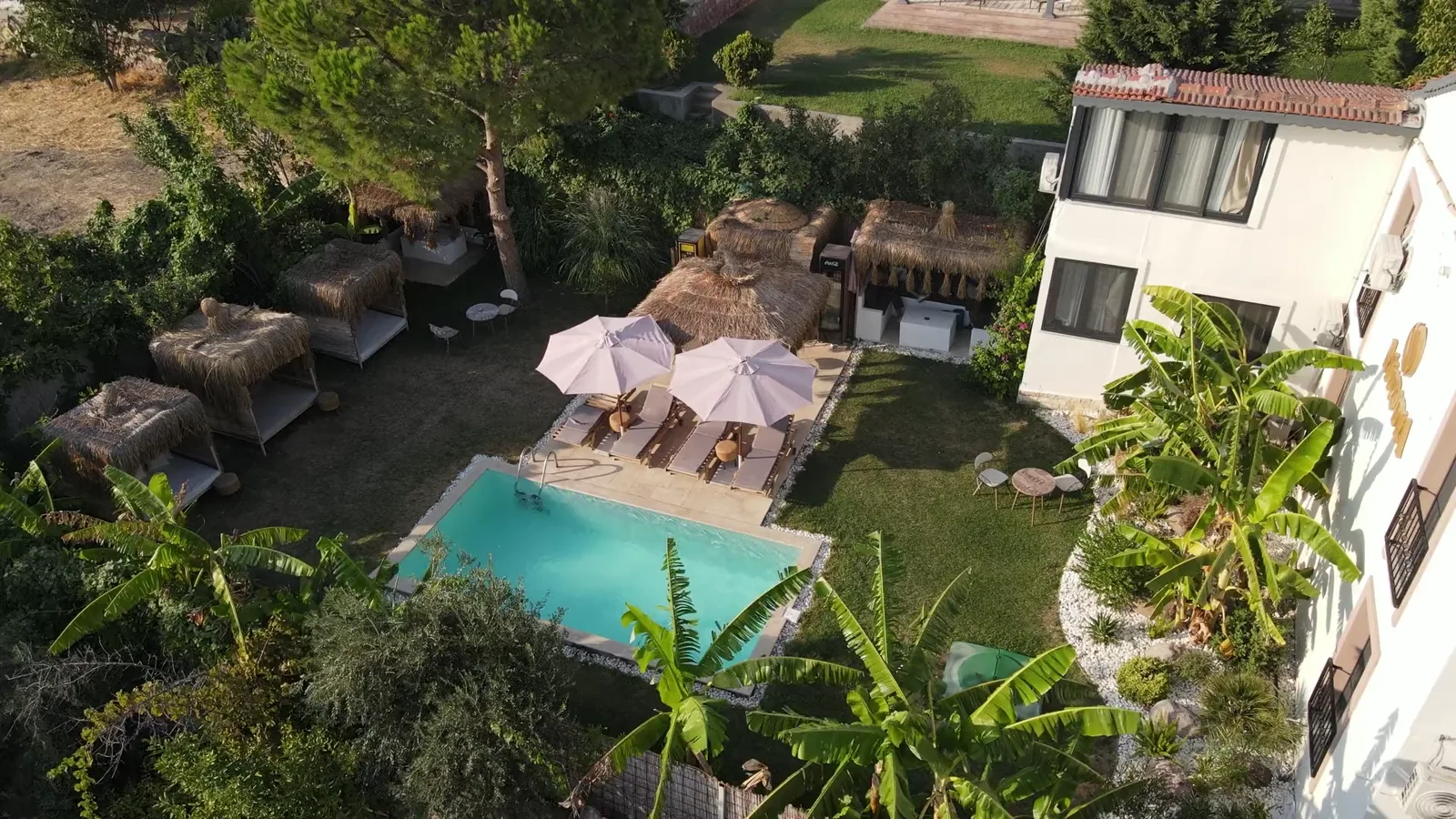
In the boutique hotels, holiday villages and aparthotels along the Kobuleti and Chakvi coast, running a pool calls for a different hydraulic and hygiene discipline from that of a private villa pool. In a commercial pool used by dozens of people a day, the load of sun oils, cosmetics and organic contamination rises markedly. Trying to run a commercial pool with villa-scale small filters and pumps can cause the water to turn cloudy within a short time and lead to negative hygiene complaints about the hotel. The Sermed Pools commercial engineering approach favours passing the entire body of pool water through the filter within a short turnover time (a common design target of around 4 hours), a redundant twin pump arrangement and a durable reinforced membrane. The liner option is specified per project as either a 0.8 mm homogeneous liner or a 1.5 mm reinforced membrane.
A hotel's pool is its calling card: clear water has a positive effect on guest reviews, while a cloudy pool leads to dissatisfaction.
01. Heavy User Load in Boutique Hotels and the Cloudy Water Crisis
The filtration shortfalls encountered in commercial accommodation facilities are as follows:
- An Excessively Long Turnover Time: If the time taken for the pool water to pass through the filter reaches 6 to 8 hours, the contamination left behind by guests using the pool during the day cannot be filtered out adequately, and the water can turn cloudy and develop algae.
- Pump Failure Without a Standby: In hotels running on a single pump, when the pump motor fails the pool may have to be closed for the duration of the spare part supply and service work.
- Inadequate Filter Media: Standard sand filters retain very fine suspended solids only to a limited degree; glass media (AFM) or supporting cartridge filtration can improve filtration quality.
 Fiplus ↗
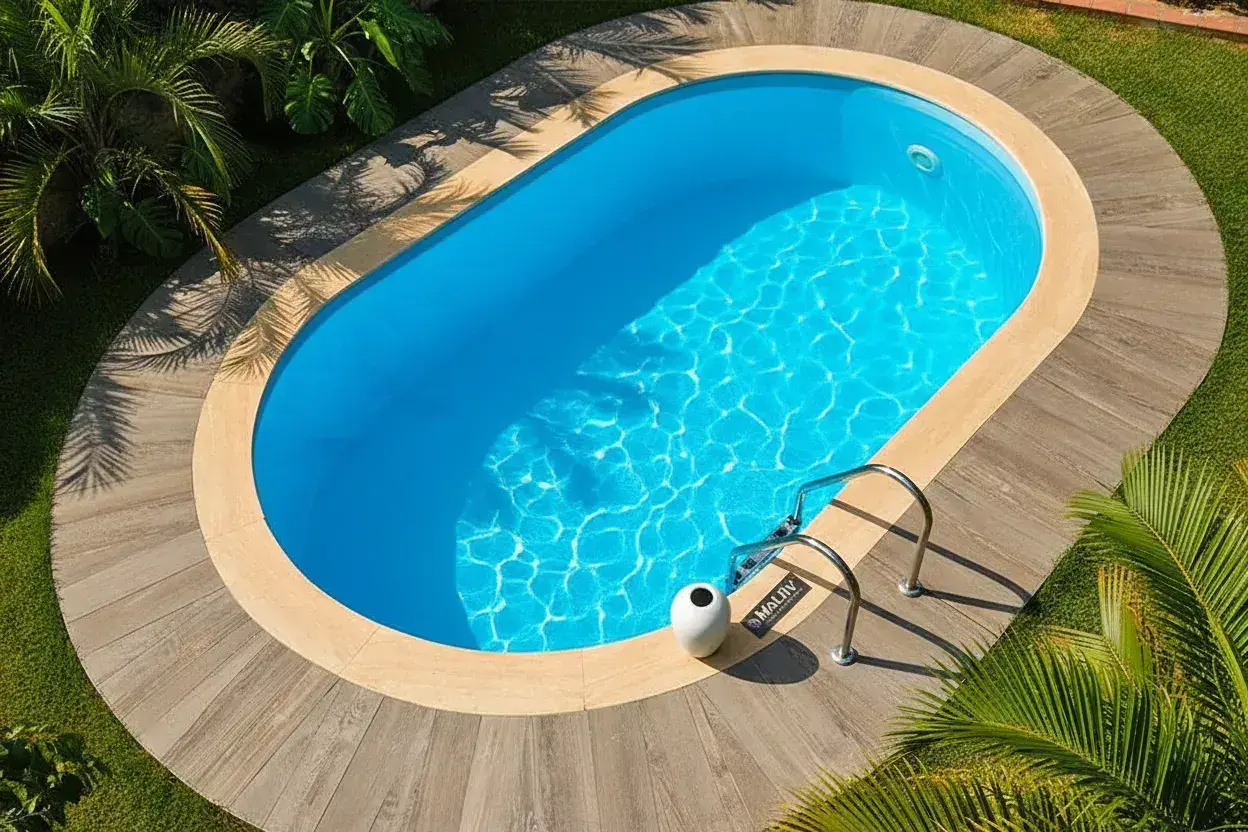 Maldiv ↗
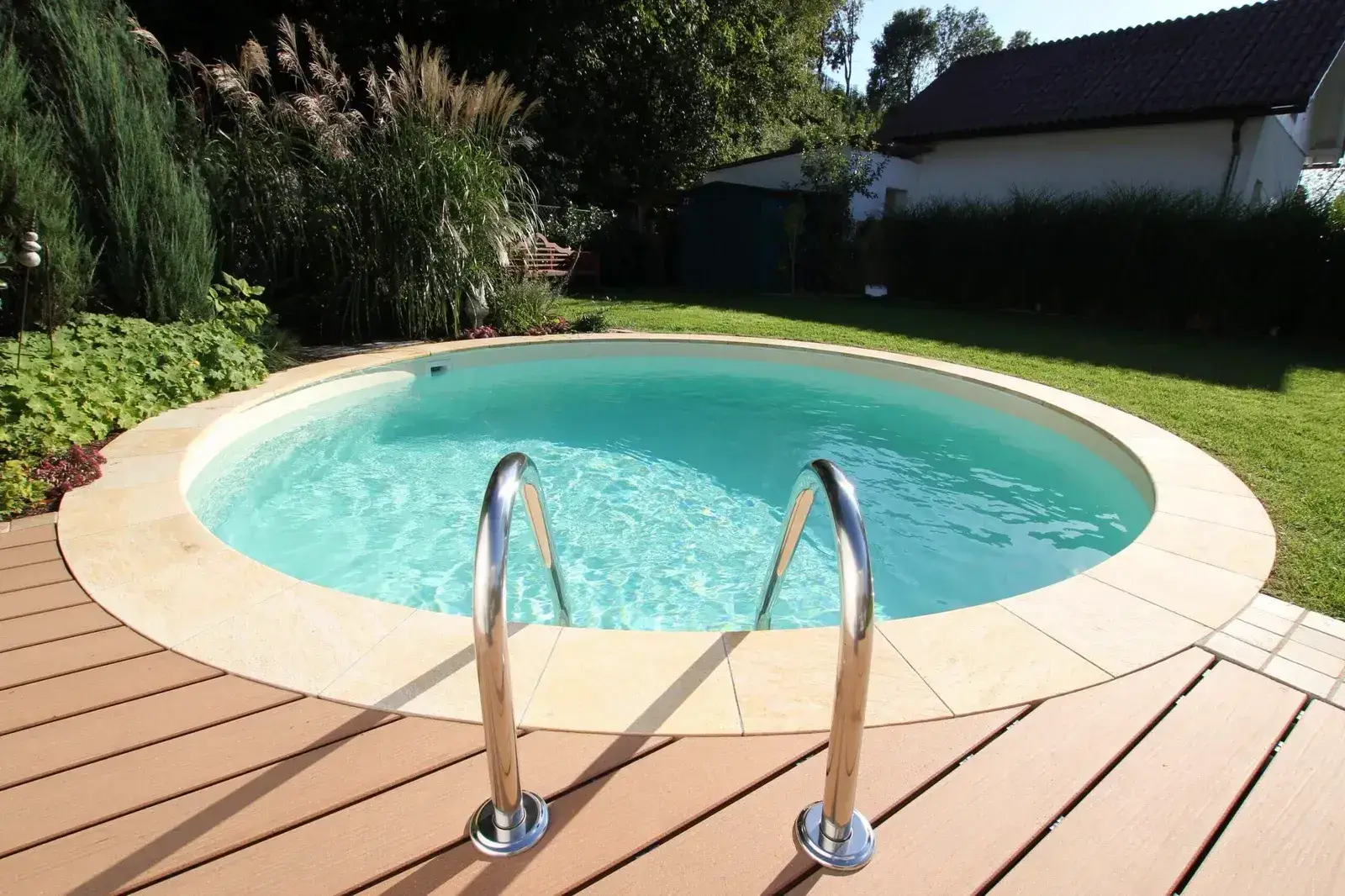 Bora ↗
02. Sermed Pools Commercial Hydraulic Architecture: 4-Hour Turnover and Twin Pumps
Sermed Pools offers boutique hotels in Adjara the following commercial design approach:
- Targeted Full Turnover Rate:
Pump Flow Rate (m³/hour) = Total Pool Volume (m³) / Turnover Time (hours)
For example, in a 100 m³ hotel pool, a 4-hour turnover target requires a net flow rate of 25 m³ per hour. The turnover time selected is designed around user density and the local hygiene rules in force. - Redundant Twin Pump Set (1 Duty + 1 Standby): The pumps run alternately; when one fails, the second is brought on line so that interruption to operations is minimized. Continuity depends on the automation configuration and on the continuity of the electrical supply.
- Durable Reinforced Membrane: To withstand heavy use and chlorine loading, the floor and walls are lined, according to the project specification, with a 1.50 mm reinforced membrane (or a 0.8 mm homogeneous liner).
- Automatic Measurement and Liquid Chlorine / Acid Dosing: Free chlorine and pH levels are monitored continuously by sensors and kept within the target range as far as possible. Dosing quantities are determined by the product label and the measured water values; chemicals are never mixed with one another and each is applied separately from its own container.
03. Capacity and Flow Rate Calculation Table for a Commercial Boutique Hotel Pool
The table below is an example planning calculation based on a 4-hour turnover assumption; equipment selection must be verified with hydraulic calculations and manufacturer curves.
| Hotel Pool Size | Water Volume (m³) | Daily Guest Load (example) | Target Flow Rate (4-Hour Turnover) | Recommended Filter & Pump (example) |
|---|---|---|---|---|
| Fiplus 5.00 × 10.00 m | ~70 m³ | 30 – 50 people | 17.5 m³/hour | Ø750 mm filter + 1.5 HP pump |
| Fiplus 6.00 × 12.00 m | ~105 m³ | 50 – 80 people | 26.2 m³/hour | Ø900 mm filter + twin 1.5 HP pumps |
| Fiplus 7.00 × 15.00 m | ~155 m³ | 80 – 120 people | 38.7 m³/hour | Ø1050 mm filter + twin 2.0 HP pumps |
| Custom Resort 8.00 × 20.00 m | ~230 m³ | 150+ people | 57.5 m³/hour | Twin Ø900 mm commercial filter battery |
Conclusion: In a boutique hotel pool, filtration capacity should be calculated according to guest numbers and the targeted turnover time. A short turnover time makes hygiene management easier.
Frequently asked questions
In a boutique hotel pool used by 50 to 100 people a day, how often should the water pass through the filter?
In commercial and public pools, the common design approach is for the entire body of water to pass through the filter roughly every 4 hours, and for this time to be reduced to 1.5 to 2 hours in children's pools. The binding figure is set by the regulations in force in the country where the project is located and should be confirmed with the competent authority.
Is a skimmer pool system sufficient for hotels?
In boutique hotels with limited user numbers, a skimmer system can perform well with the correct flow rate and an adequate number of skimmers; in heavily used resort facilities an overflow system is preferred because surface cleaning is more effective. The choice is made according to usage intensity and the architectural concept.
How often should water analysis be carried out in commercial pools?
In commercial facilities, measuring free chlorine and pH several times a day (for example morning, midday and evening) and recording the results in the operating log is good operating practice. For the mandatory minimum frequency and the required record format, local health regulations should be taken as the basis.
How is overnight chlorine shocking carried out?
After the pool is closed to use, the chlorine level is raised in line with the dosage and method stated on the label of the product used, and the filtration is run for an extended period to clarify the water. The target chlorine value and the waiting period are determined by the product label together with the measured water values; different chemicals are not mixed with one another. The pool should not be reopened for use until the values have returned to normal.