Pool models, construction conditions and care to help you plan your project.
In this guide 4
Project note: The foundation thicknesses, concrete classes, reinforcement, excavation allowances, pipe diameters and quantities mentioned in this guide are preliminary planning examples; they do not constitute a structural design that can be applied to every site. The design must be prepared by a qualified engineer after evaluating the geotechnical investigation, the groundwater, the loads and local regulations. A full pool can also be affected by external hydrostatic pressure; if the external water load exceeds the internal water load, liner floating can occur even in a full pool. Draining, drainage and electrical work require specialist supervision; electrical and earthing work must be carried out by authorized personnel in accordance with local standards. This text does not present verified meteorological data for Adjara; the temperature and altitude values are illustrative examples.
While winters are generally milder on the Batumi coast, in the mountainous inland districts of Adjara such as Keda, Shuakhevi and Khulo, winter temperatures can be expected to fall markedly below zero, along with snowfall. The minimum temperature and the frost depth of the soil to be taken as the basis for the pipework design must be determined from official meteorological data for the region and from local practice rules. At these altitudes, the most destructive failure faced by mountain houses and eco hotel investors operating open air pools is water left in the pipes, the filter tank or the pump body freezing, expanding and bursting the PVC pipes. For high altitude mountain projects, Sermed Pools recommends sloped, self draining pipework, winter plugs, freeze protection bottles and thermostatic heating solutions inside the plant cabinet.
As water freezes, it expands by roughly 9 percent in volume; in an enclosed volume this expansion generates high pressures that can crack pipes. Draining the water from the pipework in winter is a relatively short maintenance task; if it is neglected, it can lead to repairs that require pipe replacement and excavation, with a cost that varies according to the extent of the pipework.
01. Frost Expansion and Pipework Bursts on High Altitude Mountain Plots
In the inland valleys of Adjara, climatic conditions diverge markedly from those on the coast as the altitude rises. The main types of frost related damage encountered on site are as follows:
- Fractures in Buried Pipes: In PVC pipes buried shallowly above the local frost line, the water left inside can freeze and split the pipe. When the system is started up in spring, the location of the leak can often only be identified by excavation or leak detection.
- Bursting of the Skimmer Body: Ice freezing in the skimmer throat expands outward and can crack the plastic skimmer body. Depending on its position, replacing this part may require the partial removal of the surrounding coping and concrete sections.
- Cracking of the Pump Body and the Filter Multiport Valve: Water that is not drained from the plant room can freeze and break the pre filter of the circulation pump and the multiport valve body of the sand filter.
- Ice Sheet Pressure on the Pool Surface: The frozen surface ice can exert pressure on the side wall panels; if no measure is taken to absorb the expansion, there is a risk of deformation in the upper frame.
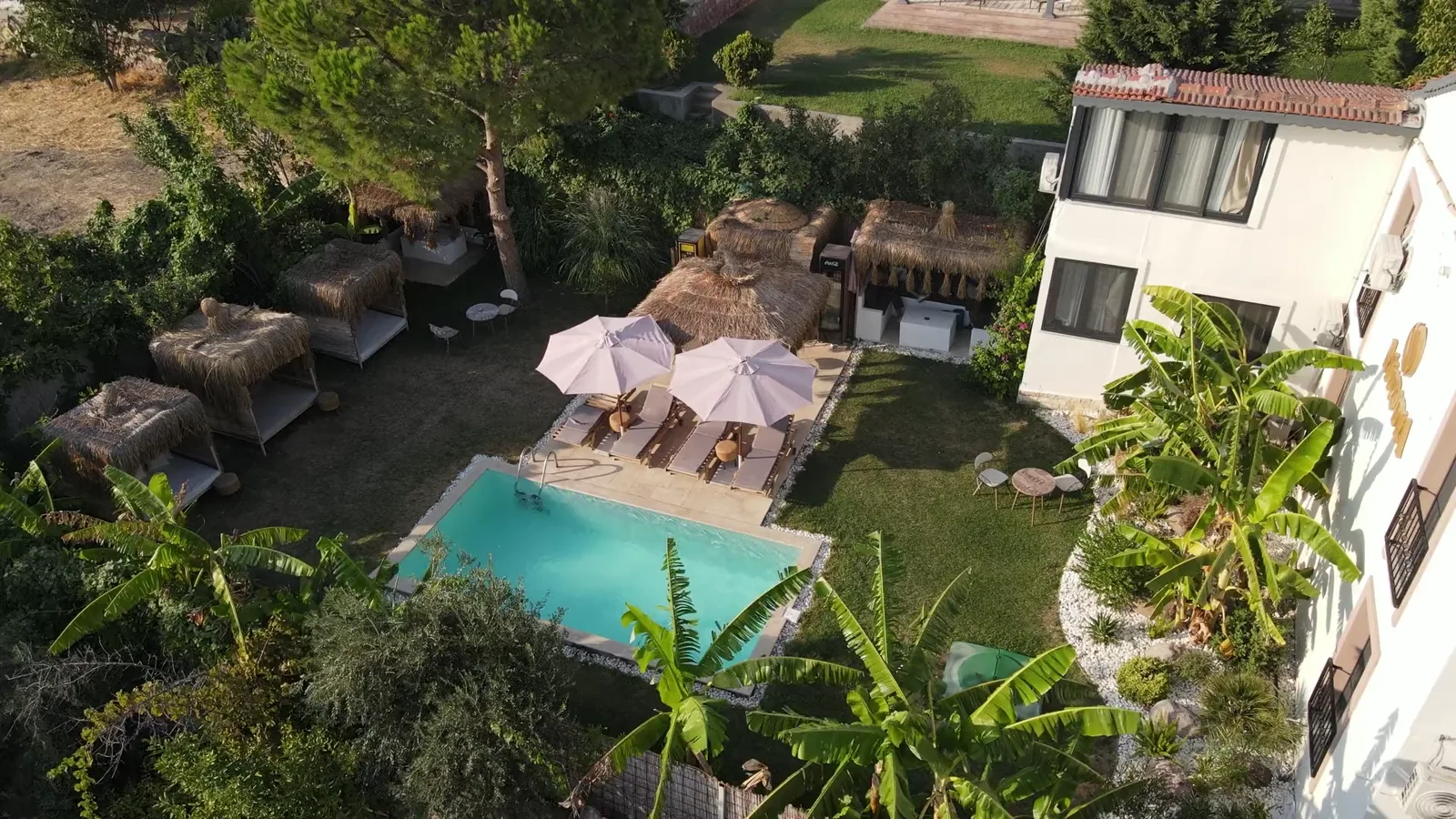 Fiplus ↗
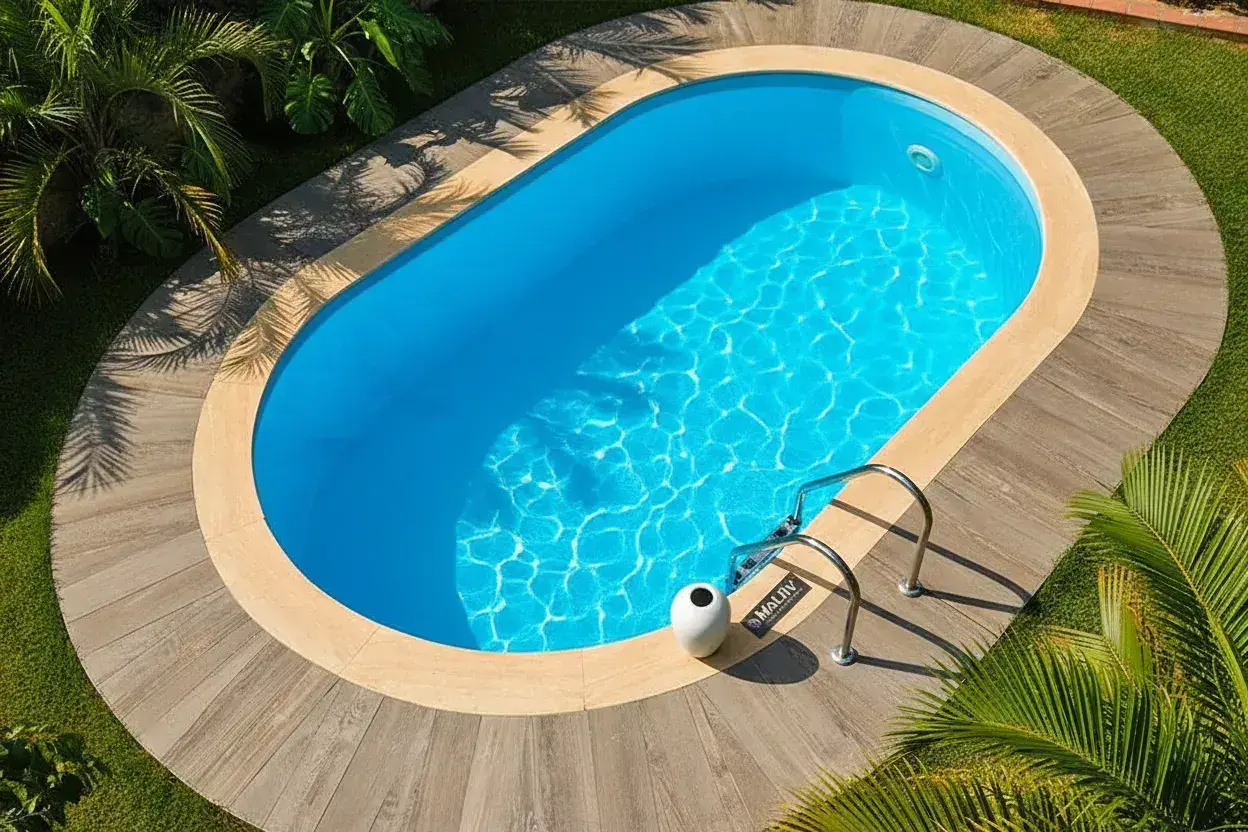 Maldiv ↗
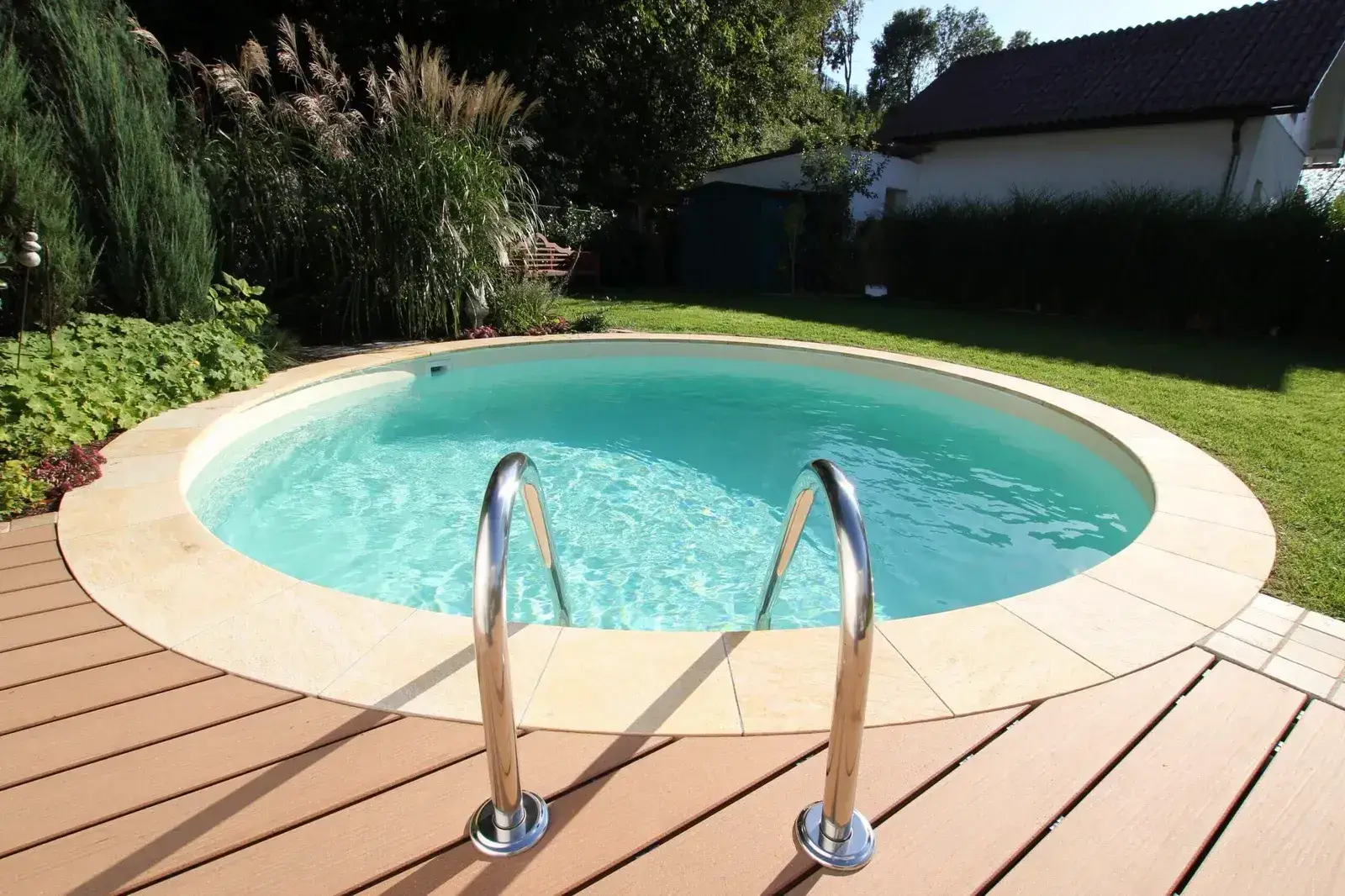 Bora ↗
02. The Sermed Pools Winterization Discipline: Sloped Drainage, Skimmer Gizzmo and Winter Plugs
For mountain projects such as Keda and Shuakhevi, Sermed Pools recommends the following mechanical protocol, which aims to reduce the risk of frost damage significantly:
- Sloped Pipework: All buried suction and return pipes are laid with a continuous fall toward the plant room (reference value: at least 1.5 percent). When the lower drain valves are opened at the end of the season, the aim is for the water in the pipes to empty by gravity; the lines must be checked after draining.
- Skimmer Freeze Protection Device (Gizzmo): Once the water in the skimmer throat has been drained, a threaded plastic Gizzmo bottle is screwed into the lower suction port. Even if the chamber takes in water again and freezes, the bottle absorbs the expansion, which reduces the risk of the skimmer body fracturing.
- Expanding Rubber Winter Plugs: Rubber winter plugs with butterfly screws are fitted to the inlet nozzles inside the pool, with the aim of preventing water from flowing back into the pipe runs from the pool. The watertightness of the plugs must be checked throughout the season.
- Opening the Winter Drain Plugs of the Filter and Pump: The drain plug at the base of the sand filter and the drain screws of the pump are removed so that the units are left free of water. Before the filter valve position is changed and before this operation is carried out, the pump must always be switched off electrically; the valve must never be turned while the pump is running.
- Surface Ice Compensators (Freeze Floats): Flexible ice absorbers (partly filled sealed plastic drums) are placed diagonally across the pool water surface. These elements absorb part of the ice expansion and are intended to reduce the lateral thrust reaching the panels.
03. Table of Infrastructure and Winterization Measures Against Freezing Risk
| Pool Equipment | Degree of Freezing Risk | Common Mistake / Omission | Sermed Pools Winterization Standard |
|---|---|---|---|
| Buried PVC Pipes | High (the pipe bursts) | Water is left in the pipe | Draining via a continuous fall plus rubber winter plugs |
| Skimmer Body | Very high (the body splits) | Left empty or left blocked | A Gizzmo protection bottle is screwed inside the skimmer |
| Filter and Pump | Critical (the body and valve crack) | The drain plugs are not removed | With the pump switched off, the lower blanking plugs are opened and the water is drained |
| Pool Wall Panels | Medium to high (ice thrust) | The water is drained completely or the pool is left bare | The water level is set according to the engineer's recommendation plus a freeze float is secured on the surface |
| Plant Room | Medium (ambient freezing) | An unheated open pit | A thermostatic freeze protection heater in the cabinet (installed by an authorized electrician) |
Conclusion: Owning a pool in the high mountains of Adjara does not mean having to fear the winter. For users who apply the winterization procedure in full and drain the water from the pipework, the risk of frost related leaks is markedly reduced; even so, a watertightness check should still be carried out when the season opens.
Frequently asked questions
How are the pool pipework and plant room protected against frost damage inland, where winter temperatures fall below zero?
The pool water should be lowered below the skimmer level (common practice is around 15 cm, with the final level determined by the pool type and the manufacturer's instructions), rubber winter plugs should be fitted to the nozzles, a Gizzmo should be placed inside the skimmer, and after the pump has been switched off electrically the lower drain plugs of the filter and pump should be opened so that the water in the pipes is drained.
Is it correct to protect the pool from freezing by draining the water completely in winter?
This is generally not recommended. If the pool is drained completely, frozen ground and lateral earth pressure can act on the frame, and the liner may also shrink and lose its shape. On sites with a high water table, an empty pool carries an additional risk because of external hydrostatic pressure. On the other hand, liner floating can also occur in a full pool if the external water level exceeds the internal water level; for this reason the decision on the water level should be taken together with the project engineer, taking the drainage situation into account. In pools left full, floats that absorb ice expansion are placed on the surface.
Should the small amount of water left in the pipes be cleared with a blower?
Yes; at very cold locations, blowing air into the pipe runs with an air compressor or winterizing blower at a suitable pressure in order to expel the remaining water is a safe additional measure. The pressure must be set so that it does not exceed the limits of the pipes and equipment.
Is it possible to heat and use the pool in the mountains in winter?
Yes; with a heat pump or boiler integration of suitable capacity and a thermal pool cover, the water temperature can be kept at a comfortable level (for example around 30°C). The achievable temperature and the energy consumption depend on the capacity of the unit, the outdoor conditions and the use of the cover. Measures should be planned to maintain continuous circulation in the event of power cuts, and a closed cover must not take the place of a physical barrier and supervision.