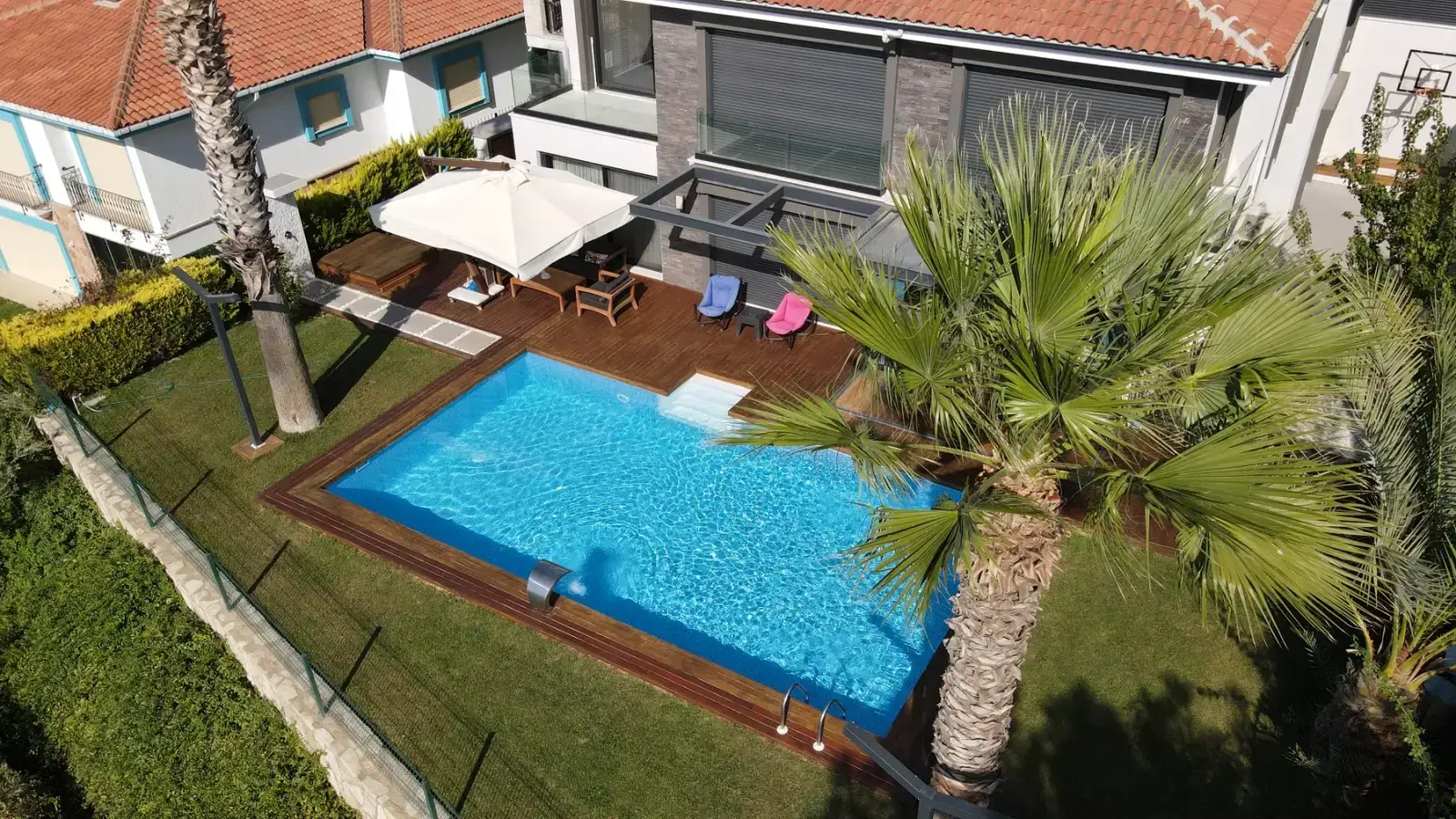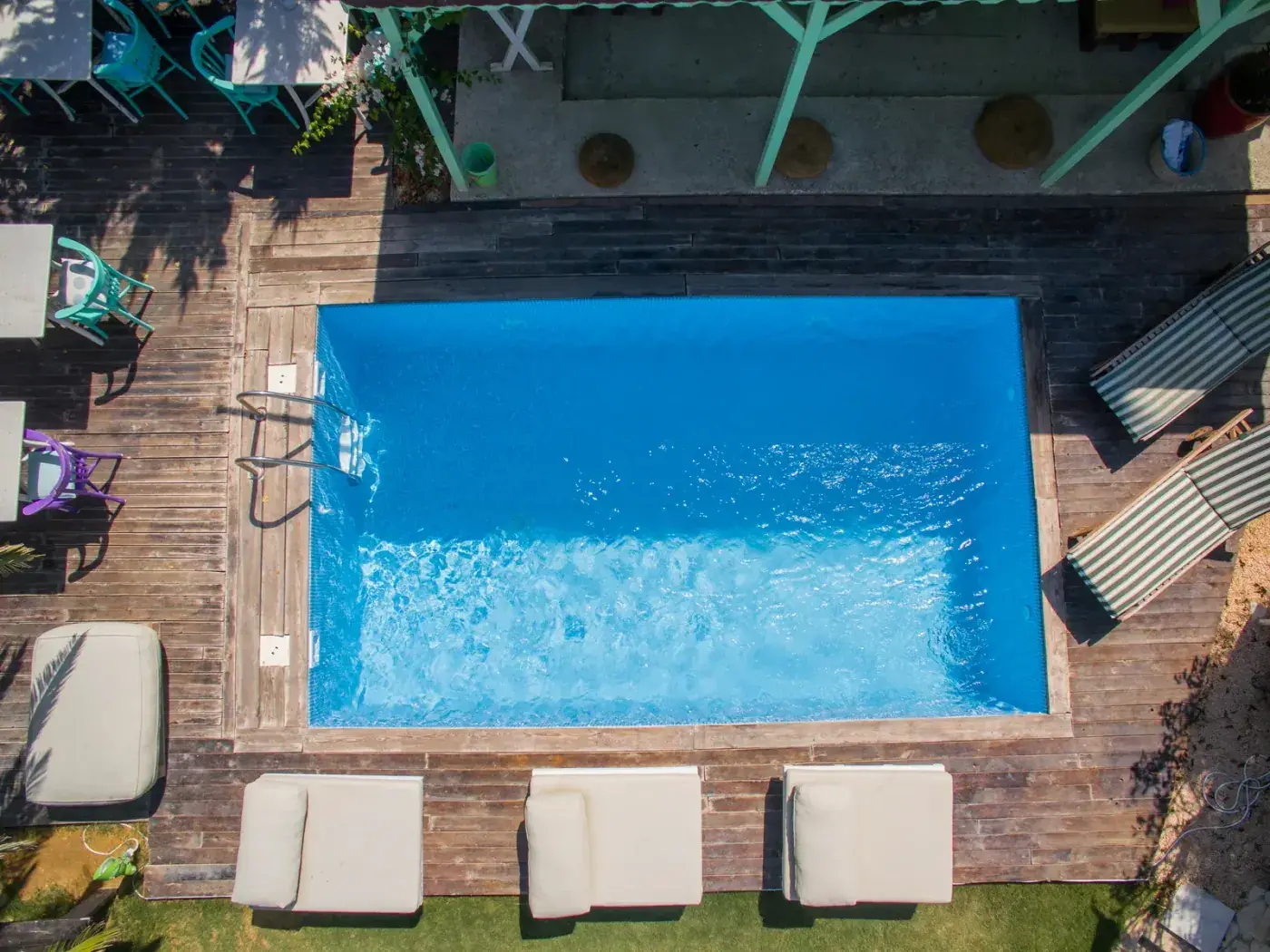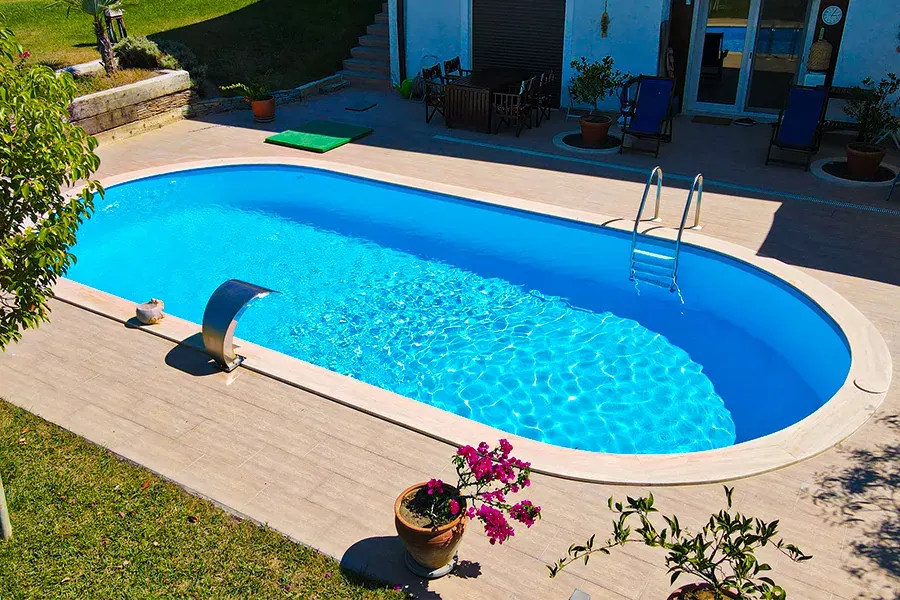
Pool models, construction conditions and care to help you plan your project.
In this guide 4
Application note: Chemical doses, pH and chlorine targets, running times and maintenance intervals are determined according to the product label, the measured water values, the usage class and local requirements. Numerical examples alone are not application instructions. Chemicals must never be mixed with one another; electrical work, pressurized equipment and pool emptying must be carried out under specialist supervision. The filter valve position must only be changed while the pump is switched off.
In reinforced concrete pools, watertightness relies on cement-based waterproofing layers applied on site and on the ceramic grout. This method does its job when applied correctly; however, dust, moisture and variations in workmanship under site conditions can lead to fluctuations in quality. The 0.80 mm one-piece (monobloc) antibacterial liner included in Sermed Pools packages is produced at the factory on high-frequency welding lines as a single piece, like a bag made to the pool's dimensions. Installed on site by vacuum with no additional welded seams, this system largely reduces algae growth between grout joints and the maintenance burden caused by grouting.
Sticking ceramic tiles inside a pool does not in itself amount to waterproofing; ceramic is a decorative finish. The layer that provides watertightness is the waterproofing beneath it or a one-piece flexible membrane.
01. The Difficulties of Site-Made Grout Joints and the Advantage of Factory Monobloc Production
The hygiene and maintenance issues that the use of ceramic tiles and grout can bring are as follows:
- Biofilm and Algae Nesting in Porous Grout: Cement-based grouts have a micro-porous structure. Once algae and biofilm take hold in these pores, surface brushing may not be enough and the water can turn green again and again.
- Calcium Balance and Grout Erosion: In water where the calcium hardness and LSI balance are kept low, calcium can dissolve out of cement-based grout; over time the joints erode and the ceramic edges become exposed. This is a process driven by water chemistry and is managed through measurement.
- Weld Quality Depends on Workmanship: With membranes hand-welded on site, deviations in welding speed and temperature can lead to burning or inadequate adhesion; with a factory-made one-piece liner, the welds are made on a controlled production line, so repeatability is higher.
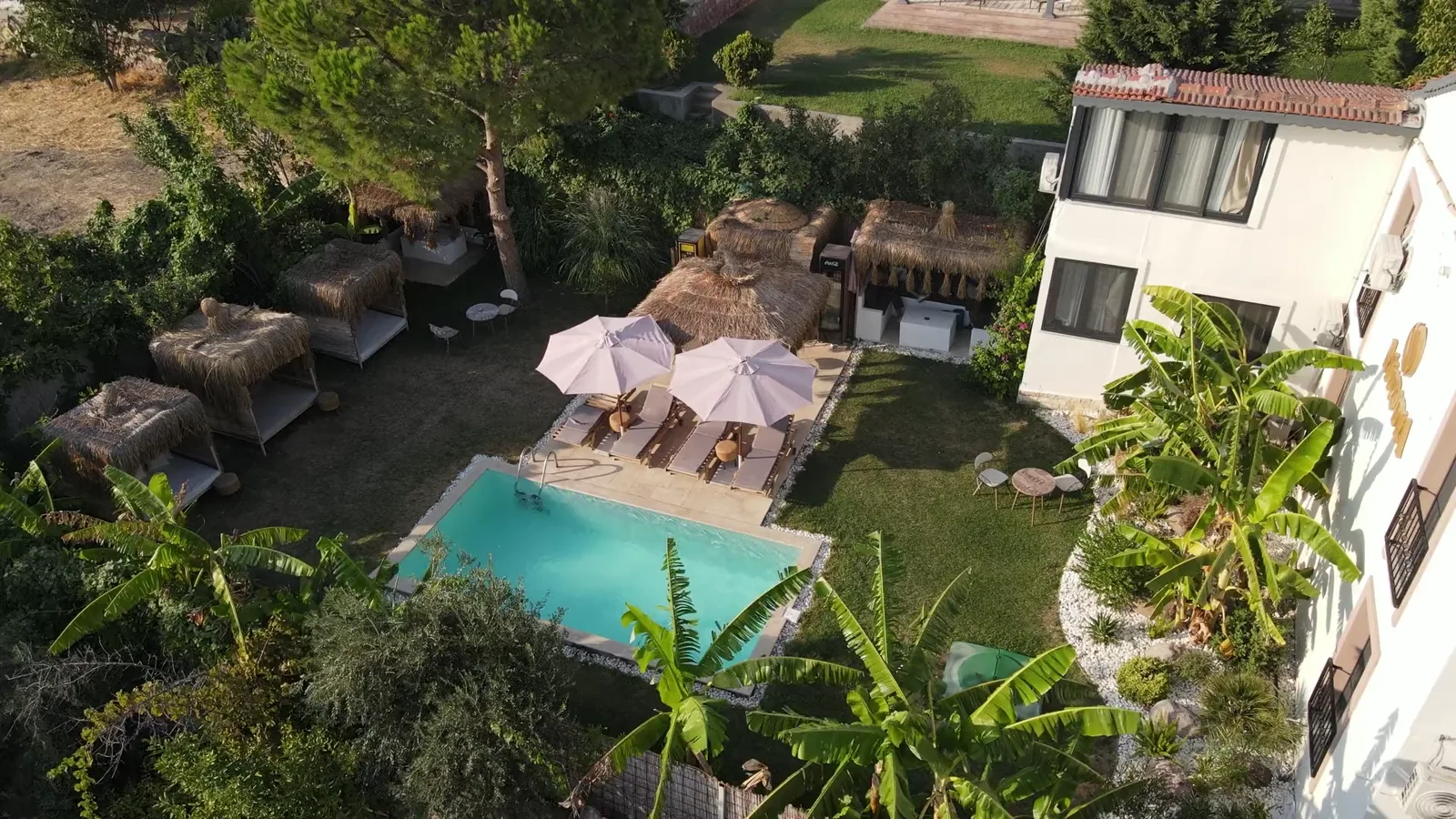 Fiplus ↗
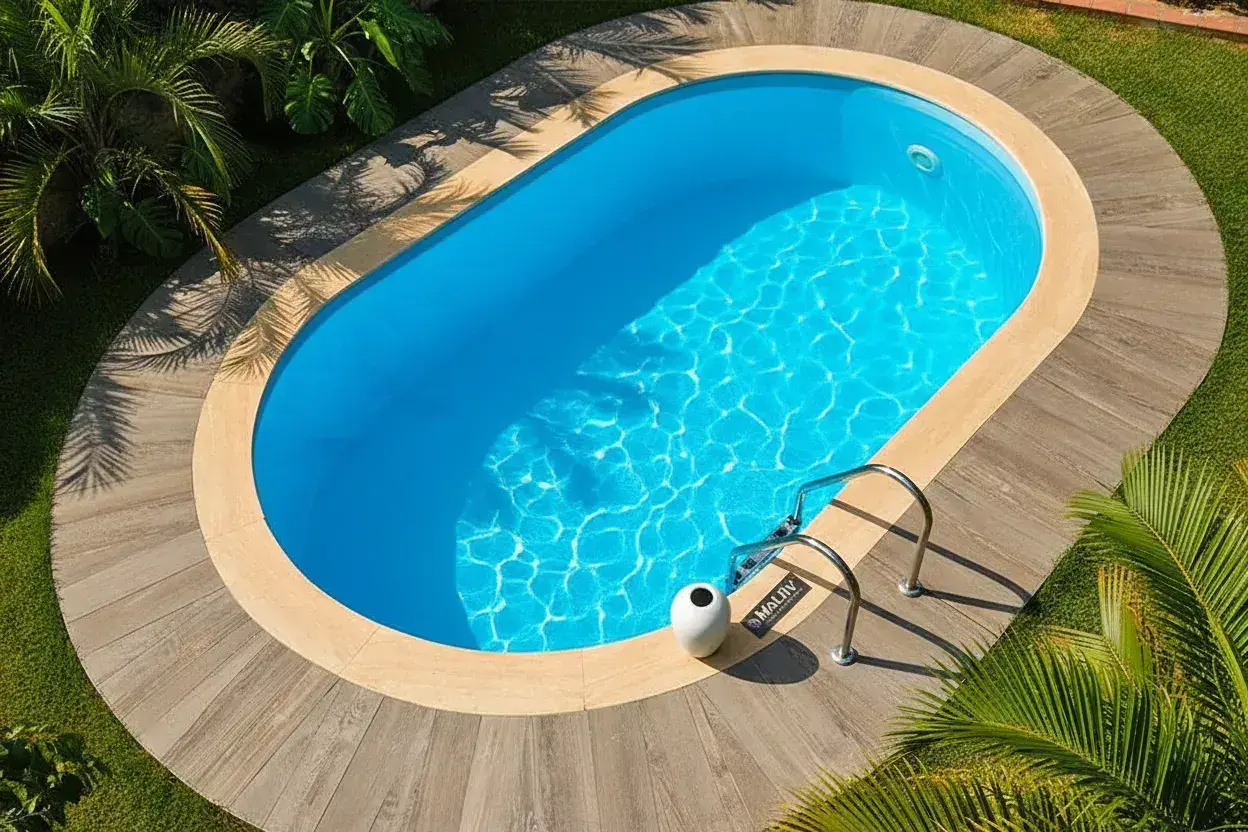 Maldiv ↗
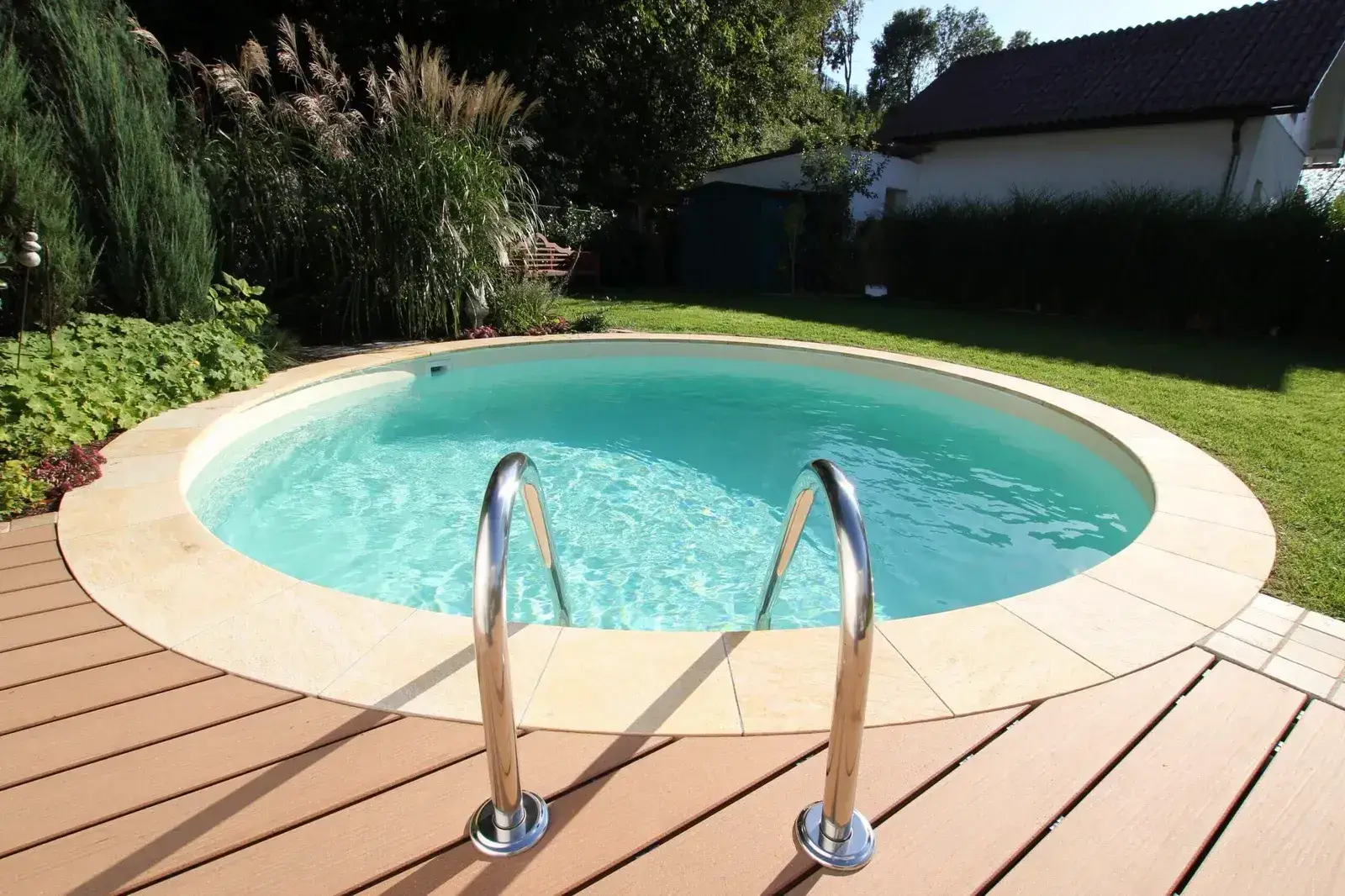 Bora ↗
02. Sermed Pools 0.80 mm One-Piece Technology: Pure Line and the Vacuum-Fitted Hung Profile
- Pure Line Plain Colours (0.80 mm Thickness): Unlike thinner 0.50-0.60 mm liners, it is produced as unreinforced homogeneous PVC in a thickness of 0.80 mm. Thanks to plasticizers and UV stabilizers, it stays elastic for a long time as long as the water balance is maintained.
- Antibacterial and Antifungal Protection: The antimicrobial components in the membrane formulation help to delay the formation of bacteria, fungi and biofilm on the surface. This does not remove the need for regular filtration and disinfection.
- Hung Locking Profile: The factory-made bead of the liner is fitted into the locking profile mounted on the top edge of the pool panels. If the liner needs to be replaced in future, it can be removed and a new one fitted without breaking up the coping stones.
- Seating with a Vacuum Motor: A vacuum turbine connected between the pool shell and the liner extracts the air in between; the liner is drawn against the shell and creases are largely eliminated as the pool fills.
03. Comparison Table: Ceramic / Mosaic Finish vs. 0.80 mm One-Piece Liner
The comparison below shows general technical tendencies; the duration and cost columns are not verified measurements but example assumptions for planning purposes.
| Assessment Parameter | Ceramic / Mosaic with Cement Grout | Sermed 0.80 mm One-Piece Antibacterial Liner | Difference in User Comfort and Budget |
|---|---|---|---|
| Algae and Bacteria Adhesion | High (takes hold in the grout pores) | Low (non-porous antibacterial surface) | May reduce chemical consumption; the actual difference depends on water chemistry and usage |
| Watertightness Assurance | Depends on the applied waterproofing beneath the ceramic | One-piece impermeable PVC membrane | Eliminates leak points caused by grout joints; ground and structural performance are designed separately |
| Installation and Labour Time | Ceramic and grouting work can take several weeks | Vacuum installation and filling within the same day | Markedly shortens the time on site |
| Surface Feel and Comfort | Hard, rough and lined with grout joints | Smooth and soft to the touch | More comfortable underfoot |
| 10-Year Maintenance Cost | Periodic grout renewal required | No grouting cost; written conditional warranty for the liner | Removes the maintenance item caused by grout joints |
Conclusion: The 0.80 mm one-piece liner is an industrial solution that reduces the site variability caused by the finish. The seamless, smooth surface makes pool cleaning easier.
Frequently asked questions
How does the factory-made 0.80 mm monobloc liner, with its seamless structure, delay algae growth in the pool?
With their rough, porous structure, cement-based grouts make it easier for algae and bacteria to take hold. A one-piece liner, by contrast, helps to delay biofilm adhesion thanks to its non-porous, smooth and antibacterial surface. This does not replace regular filtration and measurement-based disinfection.
How is the liner repaired if it tears or is punctured?
Small punctures can be repaired with underwater adhesives and transparent PVC patches without emptying the pool. The size of the tear, its location (for example a weld line, the base of a profile or the corner of a step) and its cause all matter; a specialist carrying out an on-site inspection decides whether the repair method will be durable. Not every instance of damage requires complete emptying or dismantling.
How many years does a 0.80 mm liner last?
As long as the water balance is maintained (common target range pH 7.2-7.6, adjusted according to measurement results), the surface suffers no mechanical damage and the liner is not left without water over winter, it can serve for many years. A service life of over 10 years is a reasonable assumption for planning purposes; the warranty period and scope are subject to the written conditions in the warranty certificate.
Which chemicals and brushes should be used when cleaning the liner?
Wire brushes must not be used on the liner surface; soft-bristled plastic brushes or liner-compatible pool robots should be preferred. Harsh acid-based chemicals must not be poured directly onto the liner in concentrated form; they should be diluted and used in line with the instructions on the product label. Different chemicals must never be mixed with one another under any circumstances.