Pool models, construction conditions and care to help you plan your project.
In this guide 4
Project note: The foundation thickness, concrete class, reinforcement, excavation allowance, pipe diameter and quantities mentioned in this guide are preliminary planning examples and have the status of manufacturer reference details; they are not a structural design that can be applied to every site. The design must be prepared by a qualified engineer after assessing the geotechnical investigation, groundwater, loads and local regulations. A full pool can also be affected by external hydrostatic pressure; if the external water level is higher than the internal water level, liner floating can occur even in a full pool. Draining, drainage and electrical work require the supervision of a qualified specialist in accordance with local standards.
When a pool excavation is carried out on villa and hotel plots close to the sea along the Batumi coastline, part of the groundwater that fills the base pit may originate from seawater intrusion (saline water seepage). This distance, the salinity level and the groundwater table are specific to each plot; since we do not have verified groundwater depth data for Batumi, a plot specific soil and water analysis must always be carried out during planning. Saline water containing sodium chloride and magnesium sulfate can accelerate corrosion in inadequately protected reinforcing steel and can weaken the bond between the concrete and the reinforcement. At Sermed Havuz, for coastal strip projects we recommend the discipline of sulfate resistant concrete, increased concrete cover subject to engineer approval (example reference: 5 cm plastic spacers), a membrane barrier and welded wire mesh reinforcement; the final values are determined according to the project.
The real risk posed by saline water is not the concrete itself but the steel inside the concrete. A reinforced concrete slab whose reinforcement has corroded severely can suffer a loss of section and its load bearing capacity can decrease; for this reason, a pool foundation in the coastal belt must be designed and waterproofed with the same seriousness as a building foundation.
01. Seawater Intrusion and the Risk of Reinforcement Corrosion in Coastal Fill Soils
The damage mechanisms that may be encountered on plots with saline ground water are as follows:
- Chloride Induced Localized Corrosion (Pitting): Chloride ions can break down the alkaline passive protective layer of the concrete and reach the reinforcing steel. The rust products that form can expand to several times the volume of the steel and can cause cracking or spalling in the concrete cover.
- The Problem of Insufficient Concrete Cover: Laying the reinforcement mesh directly on the ground sheeting or on stones leaves the steel unprotected on its underside. In such an application corrosion begins far earlier; no definite claim such as "it dissolves in 2 years" can be made, since the rate of deterioration depends on the chloride concentration, the concrete quality and the cover thickness.
- Sulfate Attack: Sulfates can react with the calcium aluminates in the cement paste to form expansive products (for example ettringite); this chemical expansion can lead to surface scaling and loss of strength.
- Concrete Remaining Permeable: Concrete placed with a high water to cement ratio and poorly compacted remains open to the transport of water and salts through capillary voids.
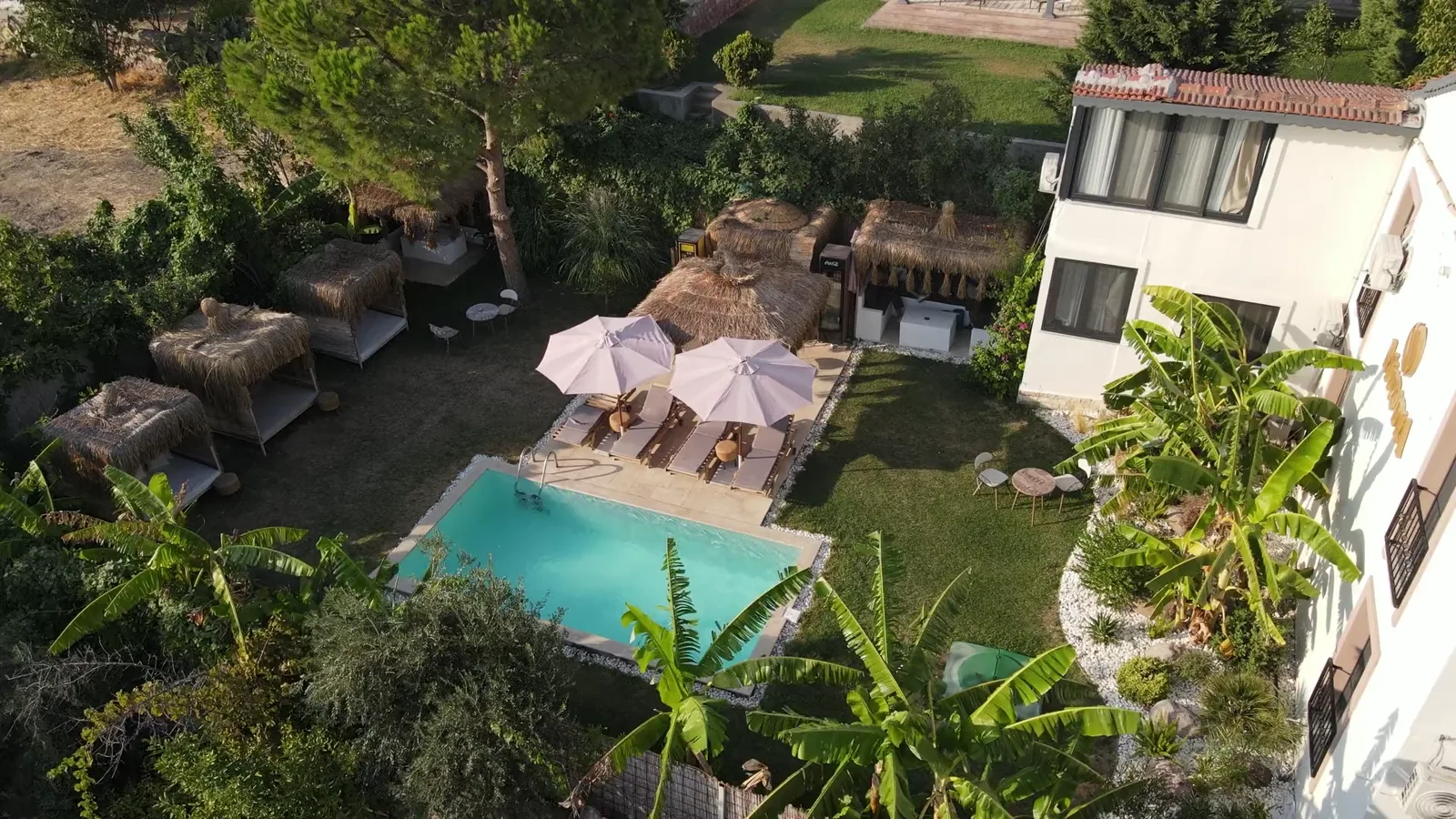 Fiplus ↗
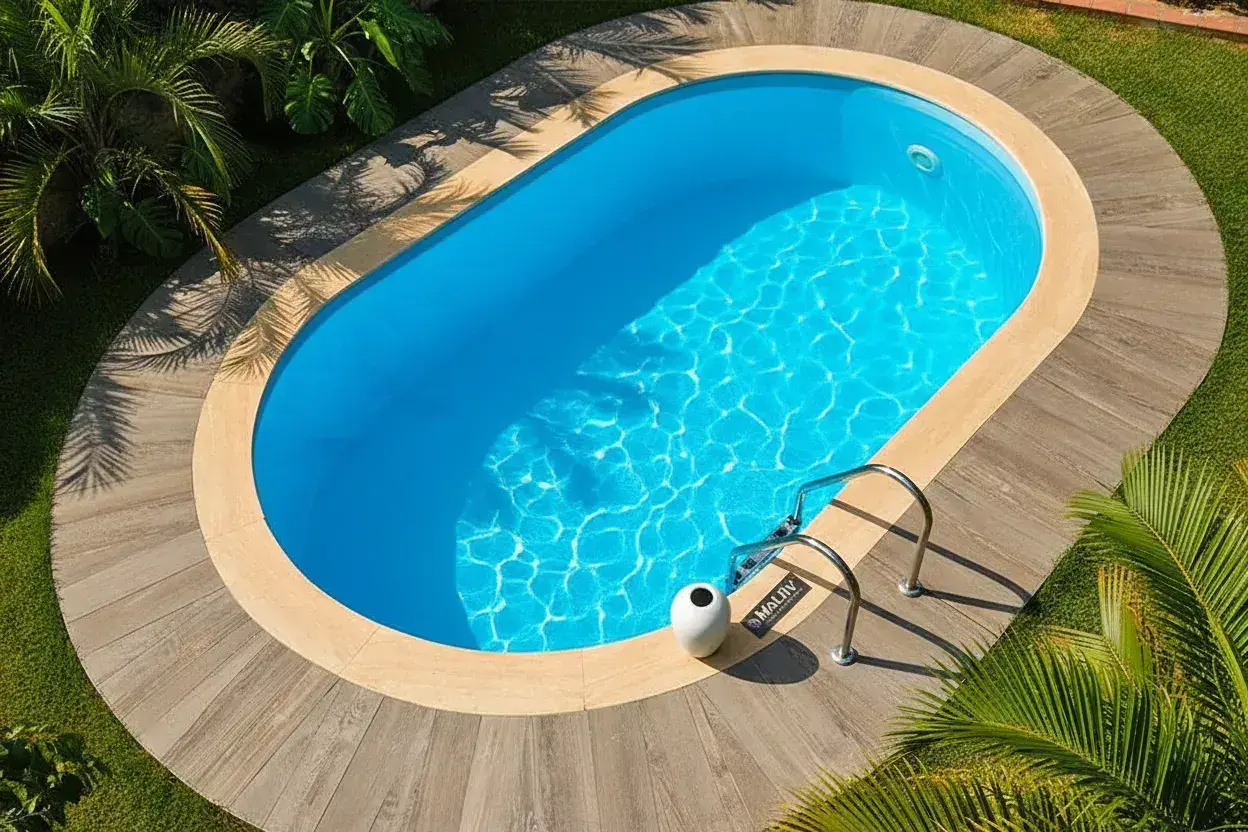 Maldiv ↗
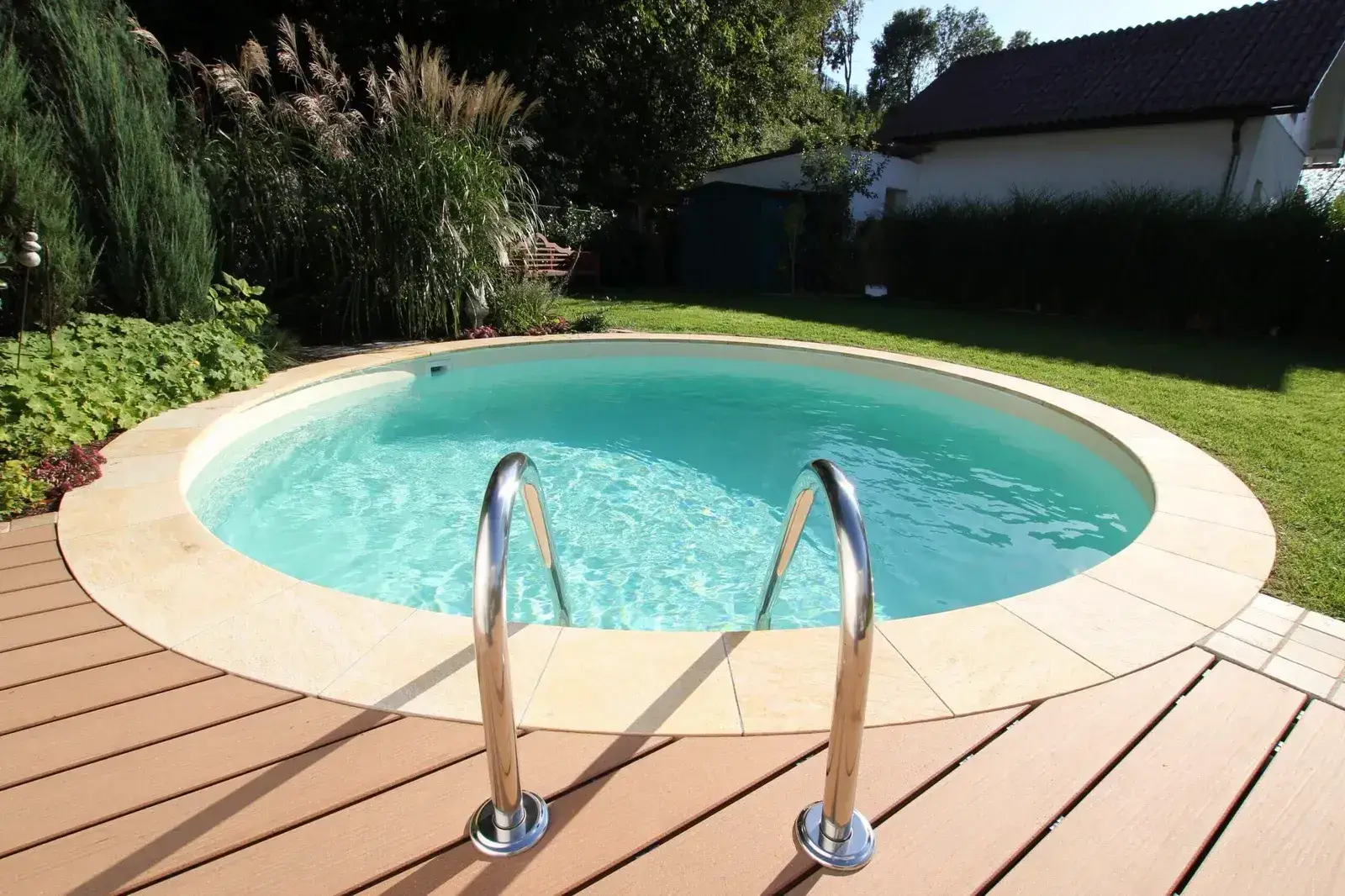 Bora ↗
02. The Sermed Havuz Approach to a Sea Resistant Raft Slab: Concrete Cover and Sulfate Resistant Concrete
Sermed Havuz recommends the following four stage waterproofing approach on plots with saline ground water; the choice of layers and the thicknesses must be approved by the project engineer:
- Double Layer SBS Modified Polymer Bitumen Membrane: A double layer of elastic membrane, torch bonded with a blowtorch, is laid over the levelling screed placed on top of the crushed stone blinding. When correctly detailed, this layer forms a physical barrier that greatly reduces the contact of saline ground water with the base slab.
- Sulfate Resistant Concrete Class: Sulfate resistant cement and waterproofing admixtures can be used in concrete supplied by local ready mixed concrete plants. C30 is a reference value; the exposure class and the concrete class are determined according to the project.
- Plastic Cover Spacers (Reference: minimum 50 mm): The reinforcement mesh is not placed at the very bottom of the concrete but seated on spacer feet, so that a protective concrete cover forms around the steel. The cover thickness required in aggressive environments is determined by design, and 5 cm is a reference example.
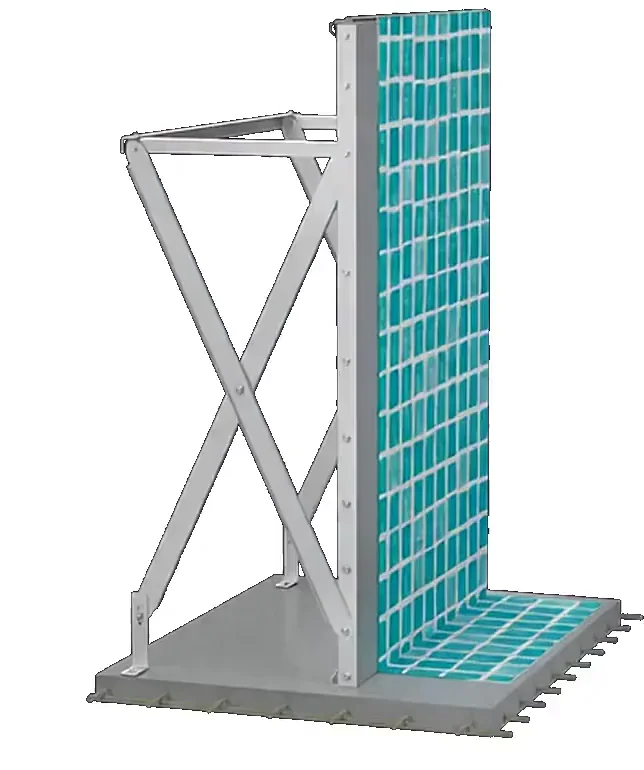
- Upper Shell with F-Stone Panels: The Fiplus pool shell consists of 20 mm F-Stone fibre cement panels; the galvanized steel external cross braces are a component separate from the shell. Fibre cement panels are resistant to corrosion and rot; nevertheless, performance is subject to the written product and warranty conditions.
03. Foundation Waterproofing and Material Table for Ground in Contact with Seawater
| Waterproofing and Concrete Item | Common Site Omission | Sermed Havuz Coastal Strip Recommendation | Effect on Reinforcement Protection |
|---|---|---|---|
| Ground Membrane | Plain, torn polythene sheeting is laid | Double layer torch bonded polymer bitumen membrane | With correct detailing, greatly reduces contact between water and concrete |
| Reinforcement Cover | A piece of stone or brick (0-2 cm) | Factory made plastic spacer (reference net 5 cm) | Lowers corrosion risk by increasing the concrete cover |
| Cement and Concrete Type | Low class, unsupervised site mixed concrete | C30 reference class plus sulfate resistant cement or admixture | Increases resistance to chemical sulfate attack |
| Welded Wire Mesh Class | Rusty or uncertified scrap steel | Q131 welded wire mesh with documented origin | Provides tensile strength in line with the design |
| Shell Material | Unprotected, painted sheet metal | Fiplus 20 mm F-Stone fibre cement panel (25 year shell warranty, subject to written conditions) | High corrosion resistance in a coastal environment |
Conclusion: When having a pool built at a villa close to the shore, supervising the composition of the concrete and the reinforcement cover is a critical engineering duty. Adequate cover and sulfate resistant concrete can significantly reduce the effect of saline ground water; they do not provide absolute immunity.
Frequently asked questions
Where the ground water is saline, what is the membrane and concrete cover standard that prevents corrosion of Q131 welded wire mesh?
To reduce the corrosion risk in a saline water environment, spacers must be placed under the welded wire mesh so that adequate concrete cover is provided; 50 mm is a common reference value, and the exact value is set in the design according to the exposure class. A double layer of SBS modified bitumen membrane is laid beneath the base slab to reduce capillary contact between the water and the concrete.
How is a crystalline waterproofing admixture added to the concrete?
The admixture is added using the dosage and method stated in the product's technical data sheet; in general practice, when the truck mixer arrives on site a liquid or powder admixture is added to the mix and the mixer is run for the period specified in the manufacturer's instructions. The product label governs the mixing time and dosage. These admixtures aim to increase impermeability by forming crystals in the capillary voids of the concrete; on their own they do not replace waterproofing layers.
Does seawater affect the internal lining of the pool?
A 0.80 mm homogeneous liner or a 1.50 mm reinforced liner is used as the internal lining of the pool (one or the other, depending on the project selection). PVC based liner has high resistance to salts and chlorides; even so, a long service life depends on keeping the water chemistry balanced and on correct operation.
Why is it important to use a vibrator when pouring the base slab?
Leaving no air voids inside the concrete is important for both impermeability and strength; the concrete is placed with a poker vibrator so that voids are reduced. Since excessive vibration can cause segregation, the duration of the application must be kept under control.