Pool models, construction conditions and care to help you plan your project.
In this guide 4
Selection note: The Fiplus shell is a 20 mm F-Stone fibre cement panel; the galvanised steel external cross legs are a component separate from the shell. Maldiv and Bora have special alloy steel casings; they do not have stainless, inox or fibreglass casings. The shell warranty periods are 25 years for Fiplus and 10 years for Maldiv/Bora; the scope, the exclusions and the conditions depend on the written warranty document. Dimensions, performance and document compliance must be verified for the selected product and project.
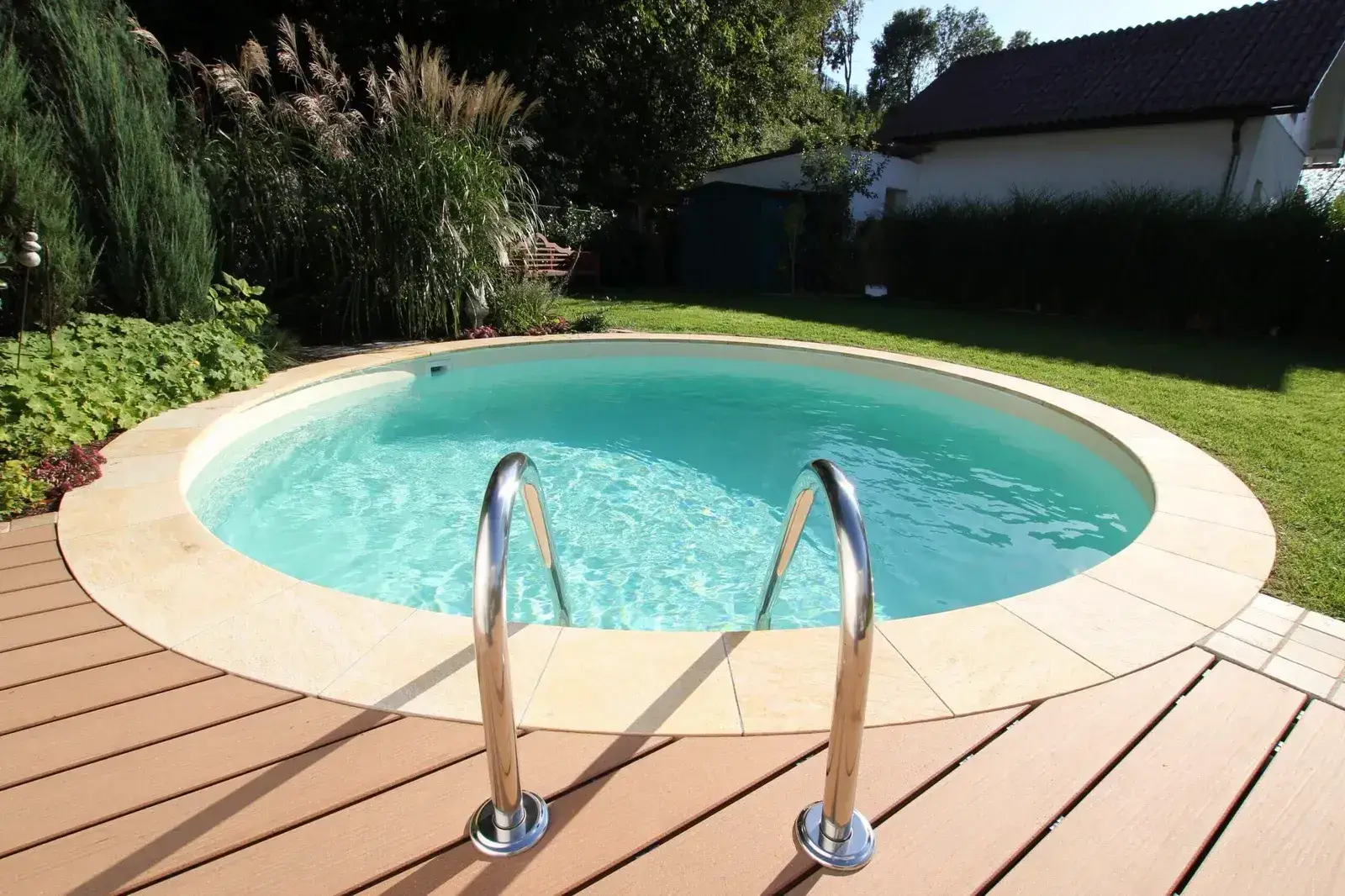
One of the largest cost items facing villa owners who want to have a pool built in a sloping garden is the retaining walls and deep excavation expenses needed to level the land. Since cast-in-place reinforced concrete pools are generally planned to be completely buried in the ground, the site workload increases noticeably on sloping hillsides. Sermed Havuz's circular Bora Pool model with its special alloy steel casing offers installation flexibility: it can be assembled above ground (without excavation), semi-inground or fully inground. On a sloping hillside, burying the pool halfway and combining its lower side with a wooden sunbathing deck can reduce excavation and retaining costs and create a viewing terrace that opens onto the landscape. In every installation, the bearing capacity of the ground and the necessary structural details must be verified according to the site conditions.
You do not have to reshape the land completely in order to fit your garden to the pool; the right pool design can turn the natural slope of the garden into an advantage.
01. The Heavy Site Workload Created by the Requirement for Full Burial on Sloping Plots
When an attempt is made to build a fully inground pool on hillside plots, the following costs typically arise:
- Cost of Retaining Walls on Both Sides: One retaining wall may be needed to hold back the soil on the upper side of the slope and a second one to hold the fill on the lower side of the pool. In some projects the cost of the retaining walls can approach or even exceed the cost of the pool itself.
- Excessive Excavation and Spoil Haulage: A significant amount of soil is excavated in order to level the slope; on narrow and steep roads, transporting this spoil raises the haulage cost noticeably.
- Disruption of Natural Drainage: When the slope is excavated deeply, the natural water paths of the ground can be cut; rainwater may collect in the excavation pit. For this reason, perimeter drainage must be designed.
 Fiplus ↗
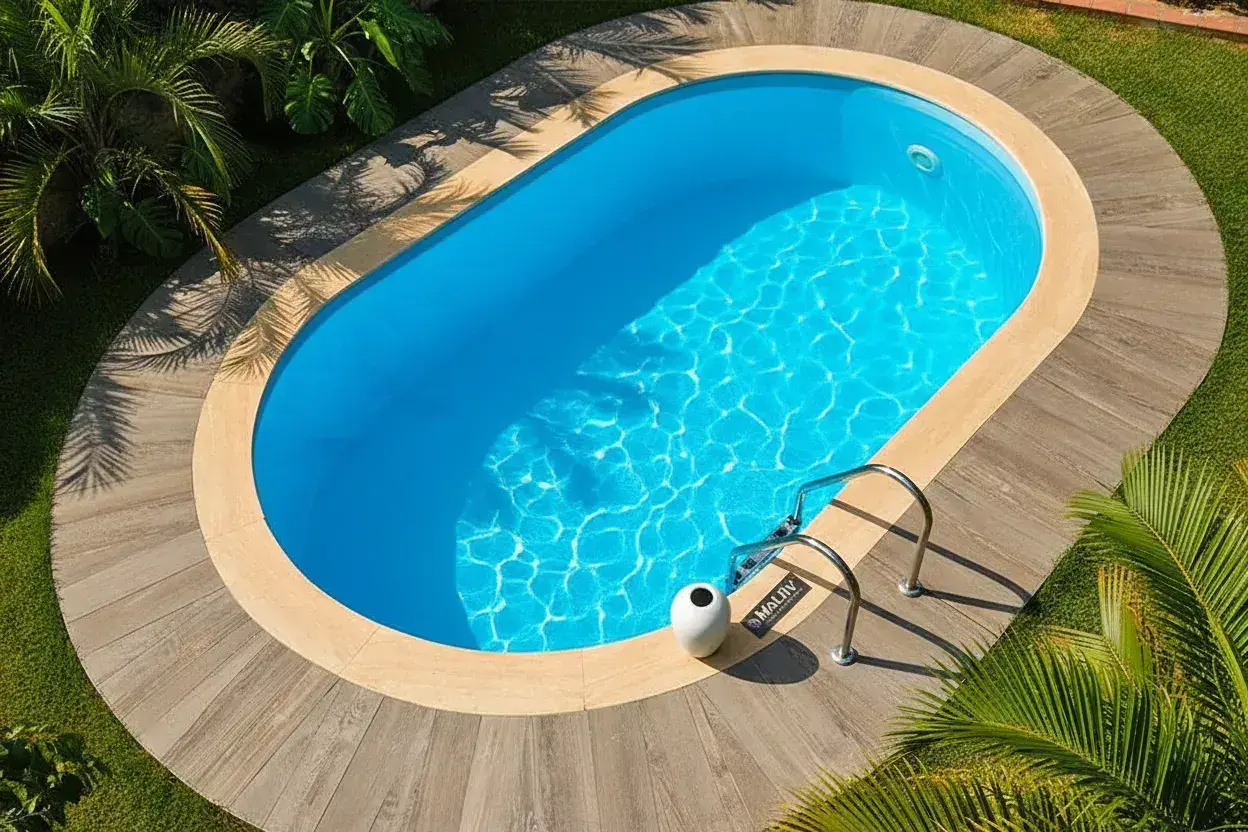 Maldiv ↗
02. 3 Different Assembly Types for the Bora Circular Frame: Above Ground, Semi-Inground, Fully Inground
The ring geometry of the Bora circular steel pool allows three different installations:
- Type 1: Above Ground Installation (Without Excavation): It is installed directly on levelled concrete or on suitably compacted prepared ground. The outer steel surface can be clad with wooden panelling or composite steps. It is a quickly installable solution for rental villas, glamping facilities or areas where excavation is not possible.
- Type 2: Semi-Inground Installation (For Sloping Ground): For example, a 50–70 cm portion of the pool is buried in the ground and the remaining upper part is left exposed. On a sloping hillside, the pool is entered at ground level from the upper side, while the lower side facing the valley can be combined with a wooden terrace. It can provide a considerable reduction in excavation and retaining costs; the rate of saving varies according to the slope of the land and the project.
- Type 3: Fully Inground Installation (Flush with the Ground): The pool is buried completely in the ground, its surroundings are filled with suitable backfill material and marble or travertine coping is laid on top; seen from the outside, the appearance of a classic inground villa pool is obtained.
- 10 Year Shell Warranty: Whatever the assembly type, a 10 year shell warranty is given for the special alloy steel casing; the scope of the warranty, the maintenance obligations and the exclusions are defined in the written warranty document.
03. Comparative Excavation and Cost Table for Bora Assembly Types
| Installation Type | Excavation Requirement | Retaining Wall Requirement | Installation Time | Budget Advantage on Sloping Ground |
|---|---|---|---|---|
| Above Ground (On the Surface) | Requires no excavation (on prepared ground) | Not required in most cases | Short (varies according to the project and the team) | Lowest site cost, no excavation |
| Semi-Inground (Terrace Integrated) | Partial excavation | Minimal or possibly not required | Short (depends on the site conditions) | Noticeable cost reduction on hillside plots |
| Fully Inground (Flush with the Ground) | Standard excavation | Retaining may be required on a slope | Longer (depends on the site conditions) | Classic inground luxury appearance |
Note: The times and cost comparisons in the table are indicative; no guaranteed installation time is given.
Result: On sloping ground, the semi-inground or above ground flexibility of the Bora pool can provide significant budget relief in the retaining and excavation items.
Frequently asked questions
Can the Bora round pool be assembled semi-inground in order to reduce retaining costs in sloping gardens?
Yes; the circular steel casing of the Bora pool can be installed semi-inground by burying 50-70 cm of it in the ground and leaving the remainder above ground. This arrangement can reduce the need for a high retaining wall; the lateral soil pressure and the drainage details at the buried part must be assessed on a project basis.
How do you get into an above ground Bora pool?
In above ground installations, an A-frame safety ladder integrated beside the pool is used, or a wooden sunbathing platform with steps is built around the pool. It is recommended that the ladder access be lockable against children and that it be planned together with a physical barrier.
Does the part of a semi-inground pool that remains below ground rust?
The casing is produced from special alloy steel, and protective insulation together with a drainage membrane is applied to the outer surface that remains below ground so that contact with ground moisture is reduced. Corrosion resistance depends on the material, the coating and the ground conditions; for long service life, the perimeter drainage must be installed correctly.
Can the Bora pool be dismantled and converted to fully inground if desired?
Thanks to its modular structure, a Bora pool installed above ground can be dismantled during a later garden renovation and reinstalled as fully inground. The dismantling and reinstallation work needs to be carried out by an authorised team, the liner and watertightness elements may need to be renewed, and this process may affect the warranty conditions.