Pool models, construction conditions and care to help you plan your project.
In this guide 4
Application note: Chemical doses, pH/chlorine targets, run times and maintenance intervals are determined according to the product label, measured water values, the usage class and local requirements. Numerical examples alone are not application instructions. Chemicals must not be mixed with one another; electrical work, pressurized equipment and pool draining operations must be carried out under expert supervision. The season lengths, occupancy figures and returns in this article are not verified local statistics but example planning assumptions.
The main constraint faced by those investing in a villa or boutique hotel on the coasts of Batumi and the Autonomous Republic of Adjara is that the comfortable usage period of an unheated outdoor swimming pool remains limited to the summer months. Even when the air temperature in the cooler transitional months seems warm enough for swimming, the water temperature can stay below the comfort band and the pool effectively becomes unusable, which in turn reduces rental demand. As Sermed Havuz, with the combination of a full-inverter pool heat pump and a bubble thermal cover that we integrate into the MyBox system, we aim to keep the water temperature within the targeted comfort band (around 28°C, for example) and so extend the usage season markedly. The actual season length that can be achieved depends on the unit capacity, cover use, wind protection, pool volume and the meteorological conditions of the year in question, and it must be calculated on a project basis.
In unheated pools, comfortable use is generally limited to the summer months. By integrating a full-inverter pool heat pump and a bubble thermal cover, the water temperature can be held within the target comfort band and the active pool season extended considerably; in an example planning scenario, a usage target running from early spring to the beginning of winter can be set. This period is not guaranteed and depends on the capacity calculation and the climate conditions. In enclosed or sheltered spaces, year-round use may be possible when heating and humidity control are designed appropriately.
A pool is not an ornamental feature but a living space and an investment. Increasing the number of usable days raises the efficiency of the investment; the return achieved, however, depends on the location, the operation and market conditions.
01. The Batumi Coastal Climate and the Water Temperature Curve: The Narrow Season Constraint
The main factors that limit the usage period of unheated pools:
- Spring and Autumn Coolness: In the transitional months, even when the daytime air temperature appears suitable for swimming, the water temperature can fall below the comfort band because of overnight cooling. Most users report a loss of comfort in water below around 26°C; this threshold varies from person to person.
- Overnight Evaporation Loss: In uncovered pools, a significant part of the heat loss occurs through evaporation from the surface; for this reason water that warms up during the day can cool considerably overnight. The scale of the loss varies with wind, humidity and the temperature difference.
- The Seasonality of Tourism Demand: In rental villas, unheated pools struggle to generate demand outside the season. The effect on occupancy is market specific; no verified local occupancy statistics are presented in this article.
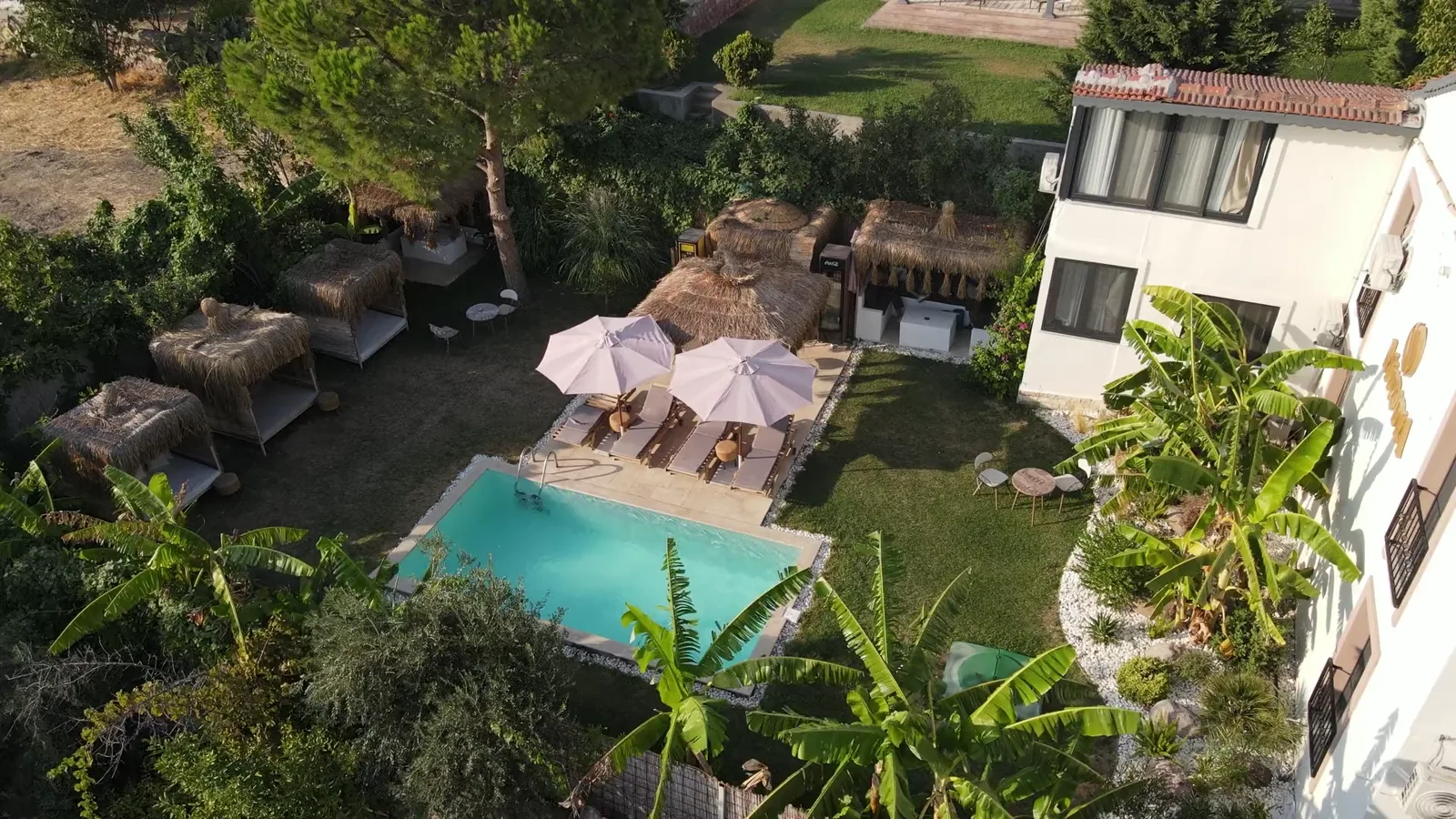 Fiplus ↗
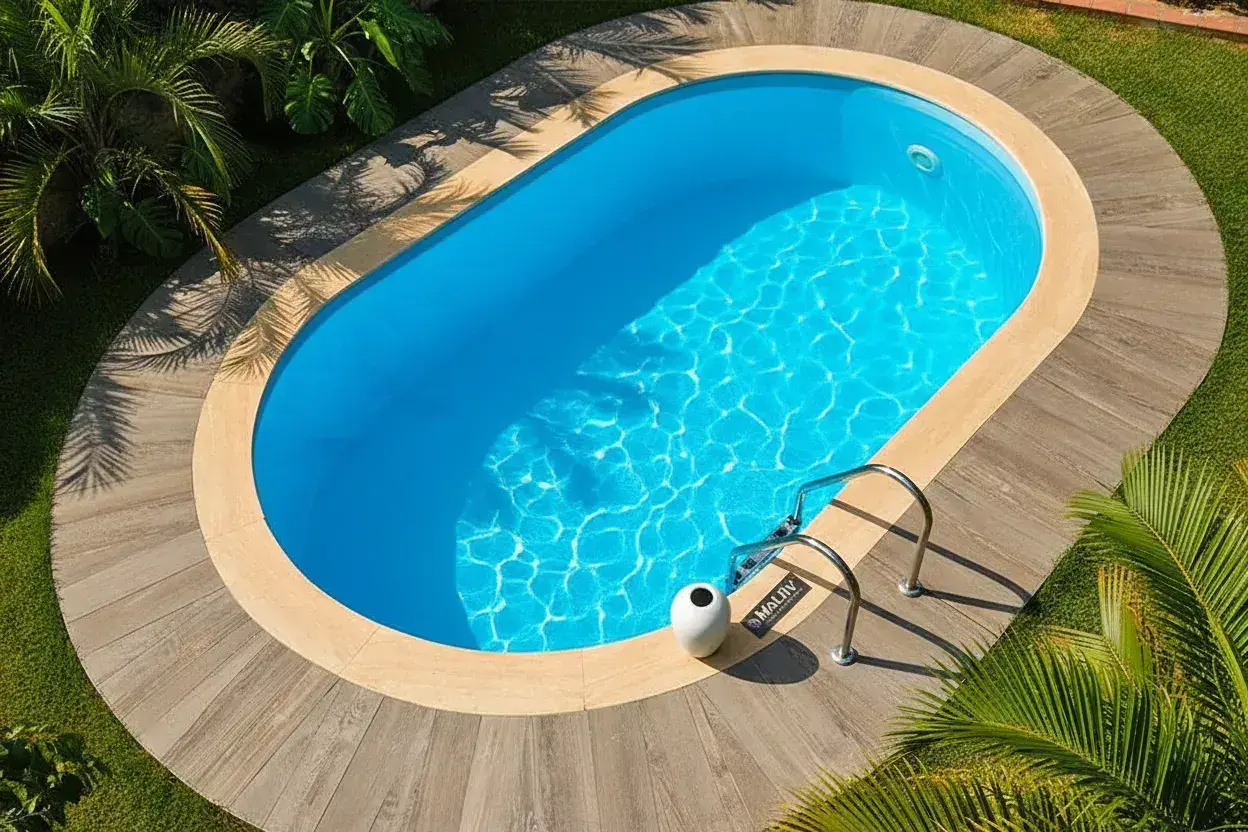 Maldiv ↗
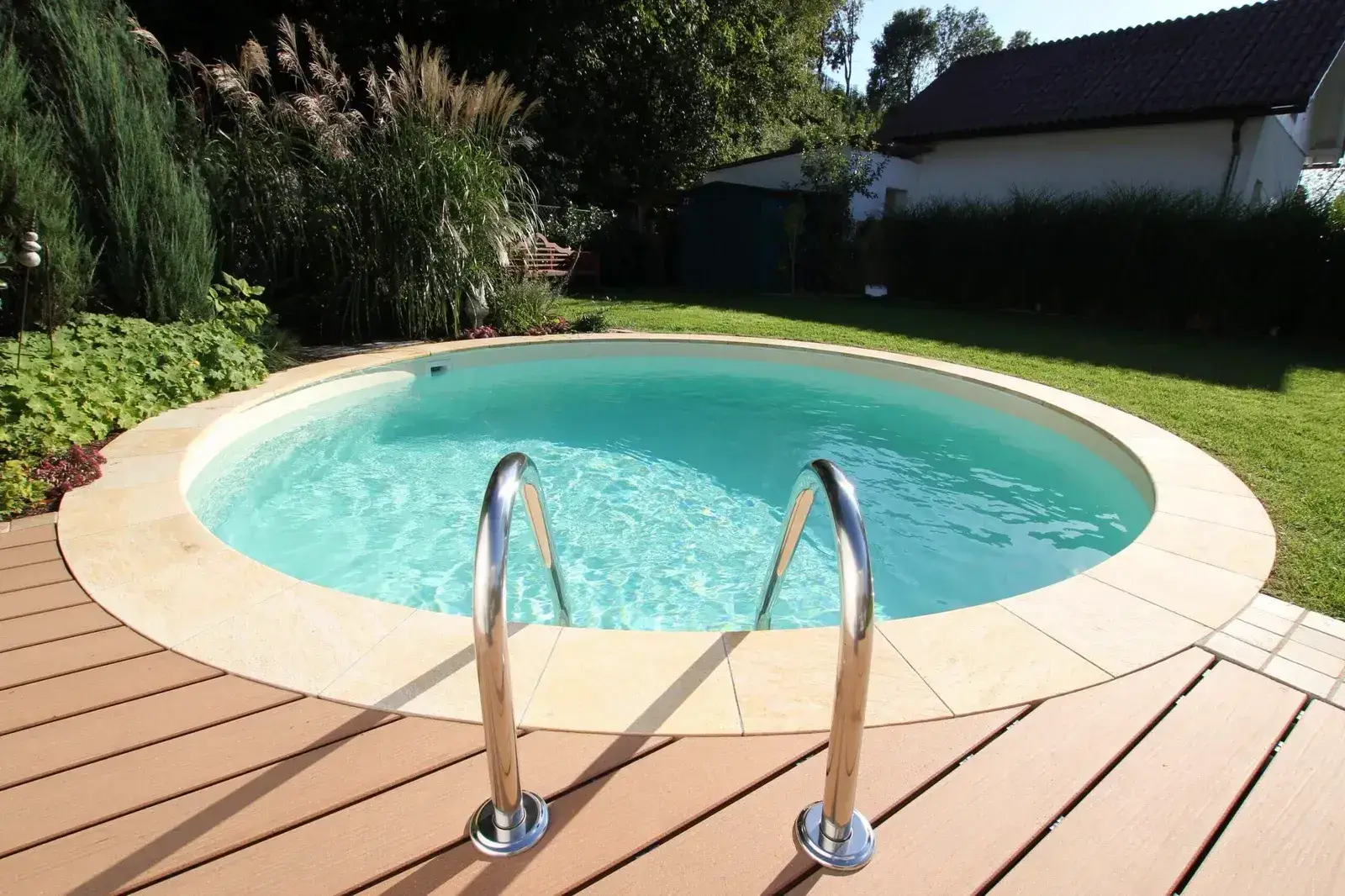 Bora ↗
02. Full-Inverter Heat Pump and Thermal Cover Integration: Efficiency Principles
The operating principles of the Sermed Havuz heating approach:
- Full-Inverter Heat Pump with a Titanium Heat Exchanger:
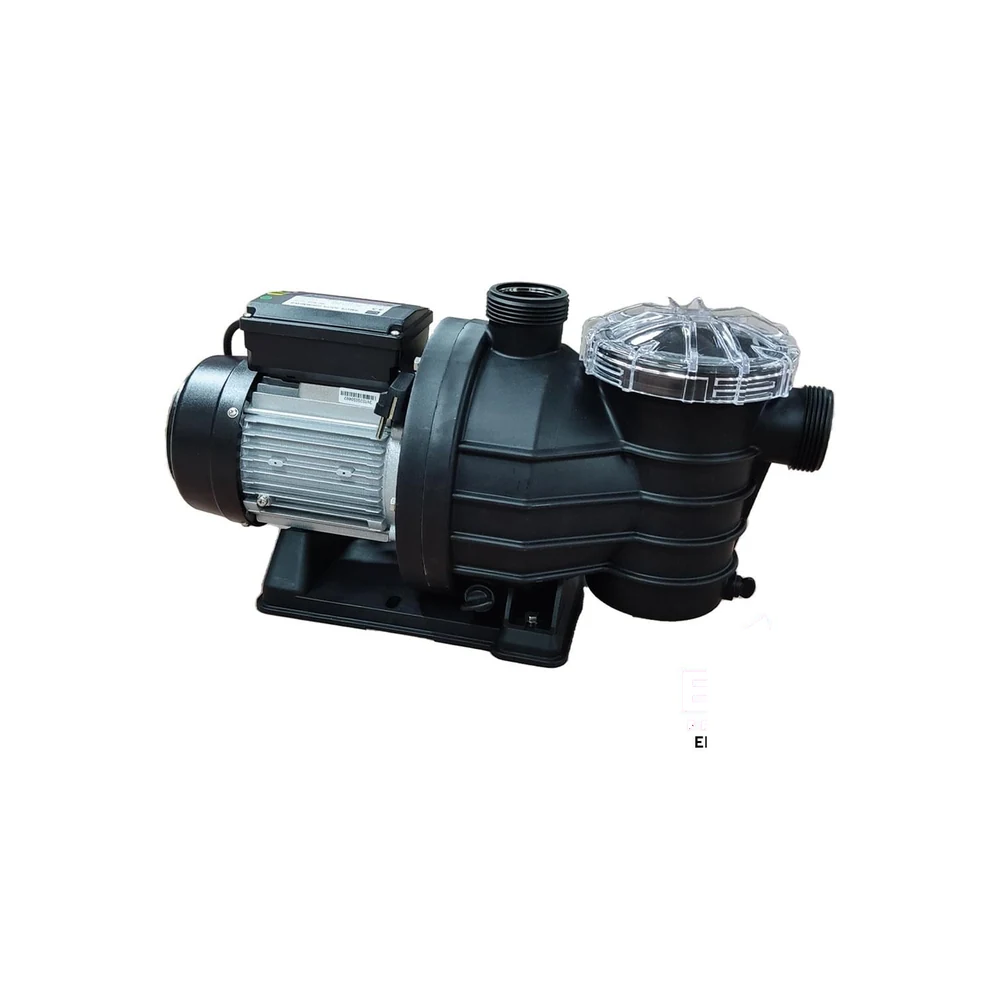
It draws thermal energy from the air and transfers it to the water. The coefficient of performance (COP) varies with the outdoor air temperature, humidity, water temperature and operating speed; manufacturers generally state COP values measured under specific test conditions. At low speed, a high COP and a low noise level are achieved. The COP and dB values to be used in the project should be taken from the technical documentation of the chosen unit; the values given in this text are examples. - Bubble Thermal Cover:
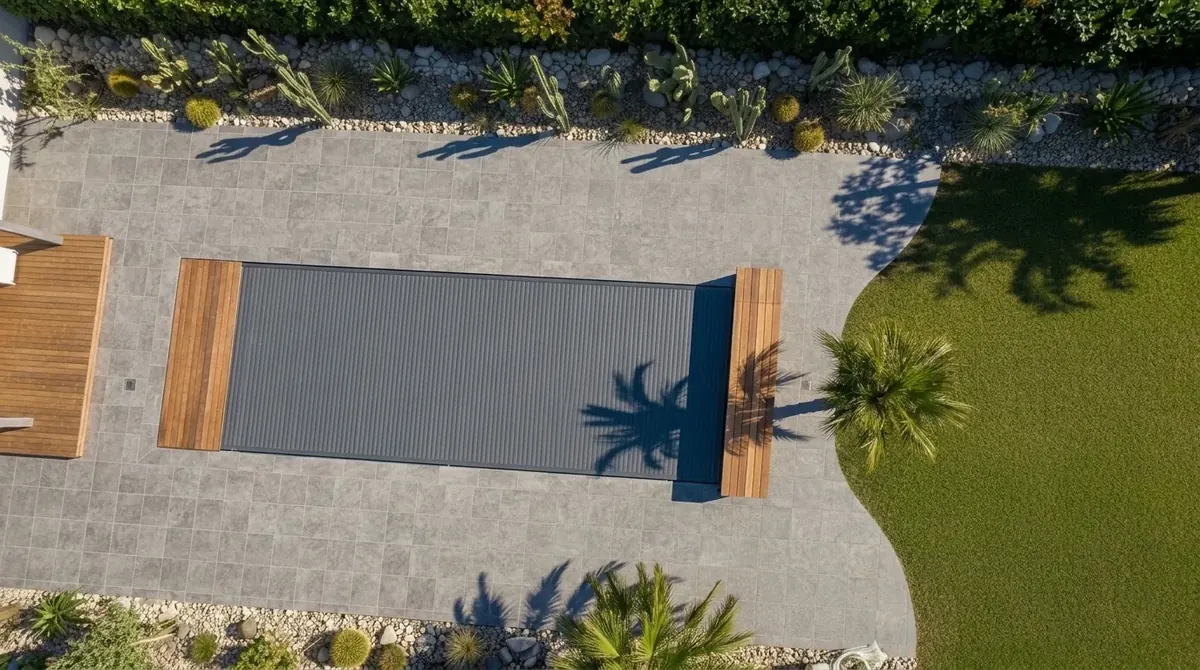
Drawn over the pool when the sun goes down, the bubble cover significantly reduces heat loss through evaporation and shortens the heat pump's run time. The scale of the reduction and the overnight temperature drop vary with the cover type, the weather conditions and the pool volume; furthermore, a cover is no substitute for a physical barrier or supervision.
03. Heated vs. Unheated Pool Season and Revenue Comparison Table
The values below are not measurement results but are given as a comparative planning scenario.
| Criterion | Standard Unheated Pool | Pool with a Full-Inverter Heat Pump |
|---|---|---|
| Active Usage Season | Limited to the summer months (example assumption: ~3.5 months) | Markedly longer (example assumption: ~8 to 9 months); depends on the capacity calculation and the climate |
| Average Water Temperature | Fluctuates with the weather conditions | More stable within the target comfort band (around 28°C, for example) |
| Rental Villa Occupancy Rate | Limited to the season | An increase can be expected thanks to the longer usage period; the amount depends on the market |
| Premium on the Nightly Rental Price | Standard season price | A heated pool can be an advantage in pricing; the premium varies by market |
| Payback on the Heating Investment | None | Calculated according to the additional usage days and the operating costs; no fixed payback period can be committed to |
Conclusion: A heat pump is an engineering investment that can increase the number of usable days and so raise the pool's functionality and rental appeal; the financial return should be assessed on a project basis.
Frequently asked questions
Will a heat pump work in winter when the air temperature is 5°C?
Many full-inverter models are designed to operate at low outdoor temperatures, and some units can be run down to sub-zero values according to the manufacturer's declaration. However, as the outdoor temperature falls, both capacity and COP decrease; maintaining the target water temperature therefore depends on selecting the unit capacity for these conditions and on using a thermal cover. The lower operating limit is stated in the unit's documentation.
Why choose a heat pump rather than an electric resistance heater?
An electric resistance heater converts almost all of the electricity it consumes into heat (COP ≈ 1.0). A heat pump, because it draws heat from the air, can provide several times as much heat from the same electricity; this multiplier varies with the outdoor conditions and the unit. Operating costs are therefore usually markedly lower, although the ratio is not fixed.
Does it make sense to run a heat pump without a thermal cover?
Operating without a cover is technically possible but inefficient; a significant part of the heat produced is lost through evaporation from the surface and energy consumption rises. If the aim is to extend the season, the use of a thermal cover is recommended.
How many kW of heat pump are needed for a 45 m³ pool?
The capacity is calculated from the pool volume, surface area, target water temperature, cover use, wind protection and the desired heat-up time. For a pool of 45 m³ (4 x 8 m), a unit in the double-digit kW range (for example 13 to 15 kW) is typically considered at the preliminary design stage; this is only a starting assumption, and the final selection must be made with a heat loss calculation.