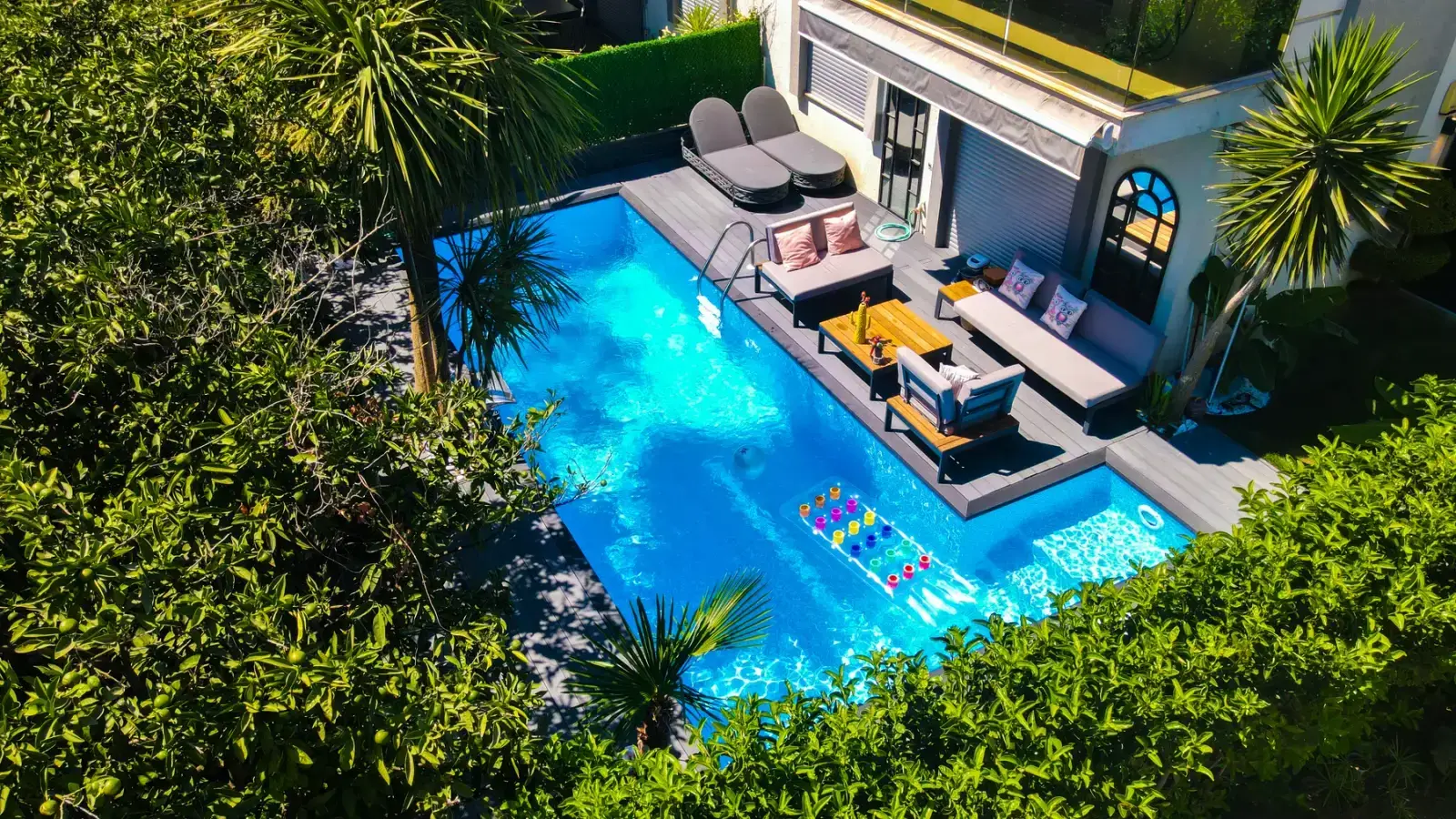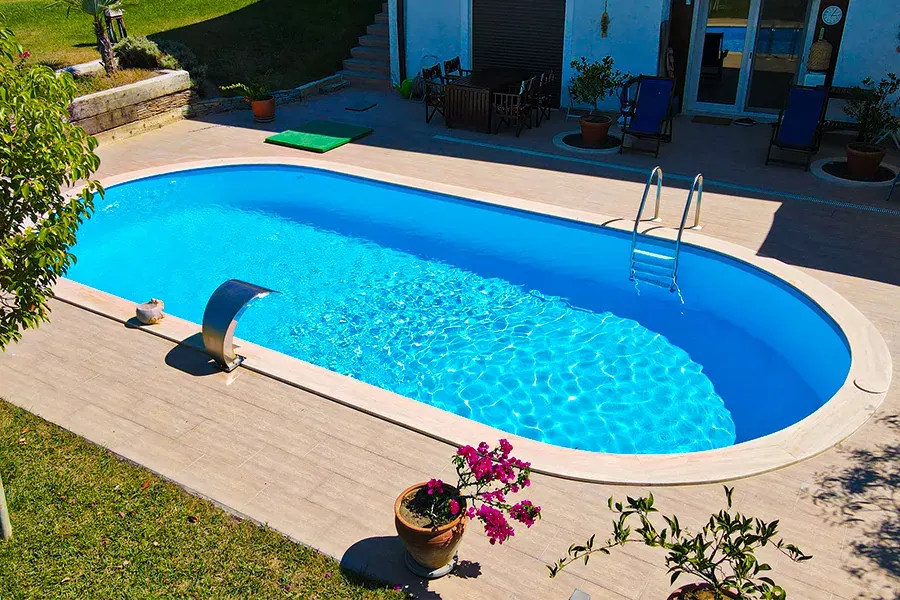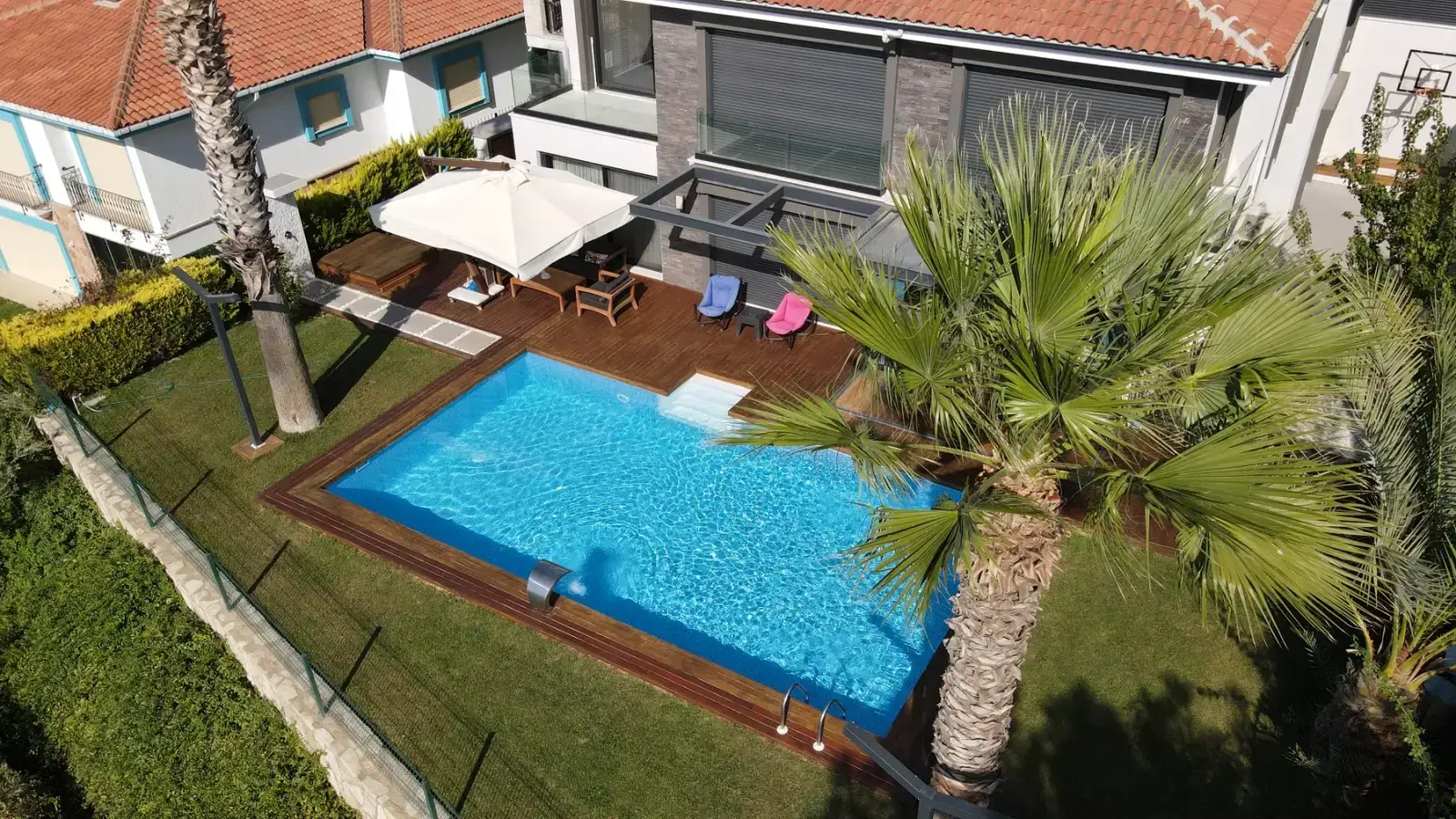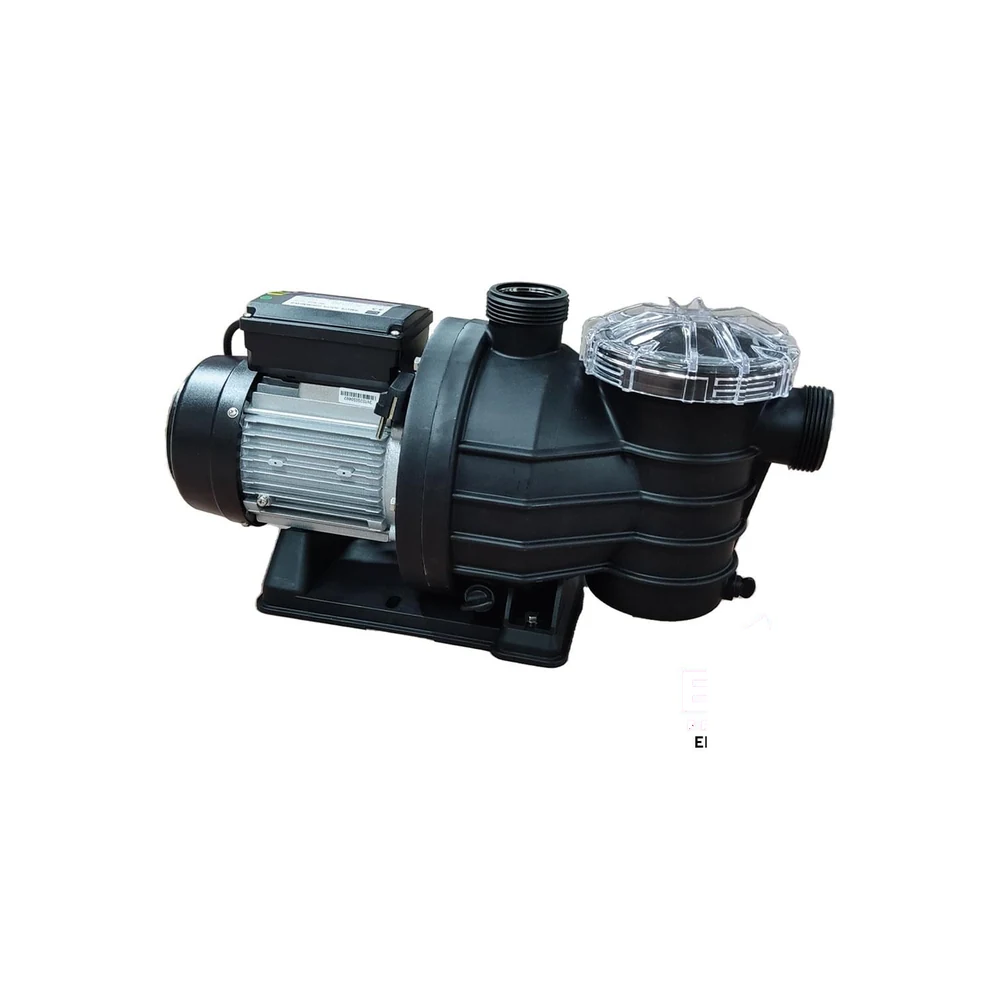
Pool models, construction conditions and care to help you plan your project.
In this guide 4
Application note: Chemical doses, pH/chlorine targets, running times and maintenance intervals are determined according to the product label, the measured water values, the usage class and local requirements. Numerical examples are not on their own application instructions. Chemicals must not be mixed with one another; electrical work, pressurized equipment and pool draining must be carried out under the supervision of a specialist familiar with the relevant local standards.
Data note: The climate, season length, COP and consumption values below are example planning assumptions; they are not verified local measurements or performance data belonging to a specific product. The actual result varies according to measured meteorological data on site, wind exposure, usage habits and the test report of the selected device.
Batumi and the coastal strip have the relatively mild winters of the Black Sea; on the other hand, because of high relative humidity and wind effects, heat loss from evaporation is pronounced in outdoor pools. The comfortable usage period of an unheated pool is generally limited to the summer months; by integrating a correctly sized inverter pool heat pump and a thermal cover, this period can be extended into spring and autumn. The actual season length that will be achieved cannot be guaranteed in advance; it depends on measured air and water temperatures. At Sermed Havuz we do not carry out the kW capacity calculation from memory, but on a project-by-project basis using the water volume and surface loss formula.
Heating a pool is not simply a matter of buying a device; keeping the heat produced in the pool is an equation of physics. A pool left uncovered at night gives a significant part of the energy produced by the heat pump during the day back to the atmosphere through evaporation; for this reason a heat pump must always be considered together with a thermal cover.
01. High Relative Humidity, Night Temperature Difference and Pool Heat Losses in Batumi
The approximate proportions widely used in the literature for the distribution of heat loss in outdoor swimming pools are as follows: the largest part of the loss occurs through evaporation at the water surface, a smaller part through radiation and convection, and the smallest part through the pool base and side walls. This distribution changes considerably with cover use, wind and humidity conditions:
- Latent Heat of Evaporation: Every 1 litre of water that evaporates takes approximately
2,260 kJof heat energy away from the pool. This is a verifiable physical value derived from the latent heat of evaporation of water. As the wind speed increases, the rate of evaporation also increases markedly. - The Spring and Autumn Water Temperature Barrier: In the transitional seasons, even if the air temperature rises during the day, the pool water generally stays below the comfort range because night temperatures drop. Mechanical support is needed to reach the 26–28°C swimming temperature that is widely considered ideal. The temperature values here are illustrative; they must be measured on site.
- High Consumption of On/Off Devices: Conventional on/off heat pumps run at full power and then stop, producing start-up currents, and their efficiency falls at low air temperatures.
- The Role of Shell Insulation: The Fiplus shell consists of 20 mm F-Stone fibre cement panels and is supported by load-bearing galvanized steel external cross braces. The panel and liner layer may reduce conduction towards the ground somewhat compared with bare concrete; however, this is not a declaration of insulation performance and its share of the total heat loss is limited. The decisive loss item is the water surface.
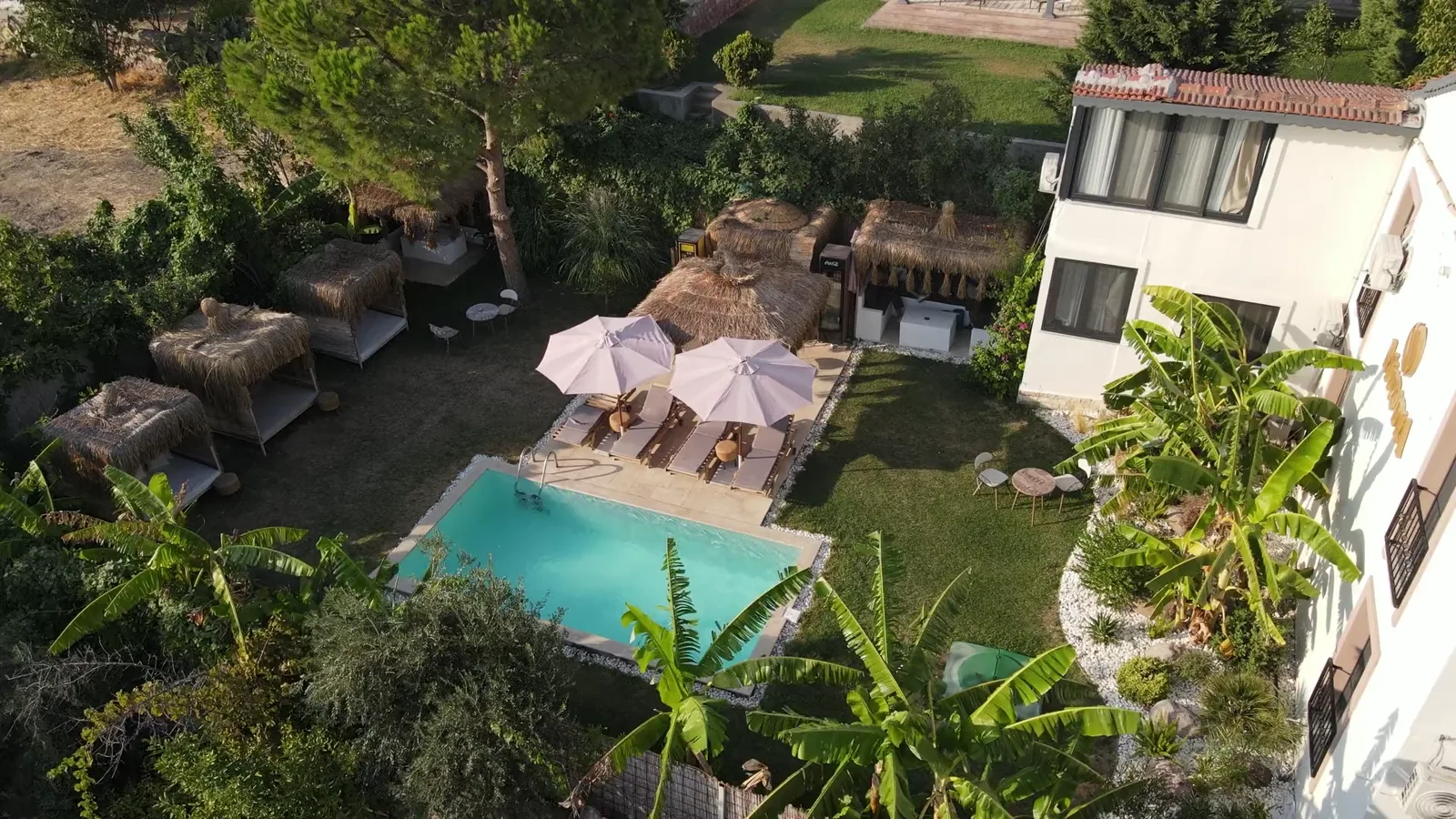 Fiplus ↗
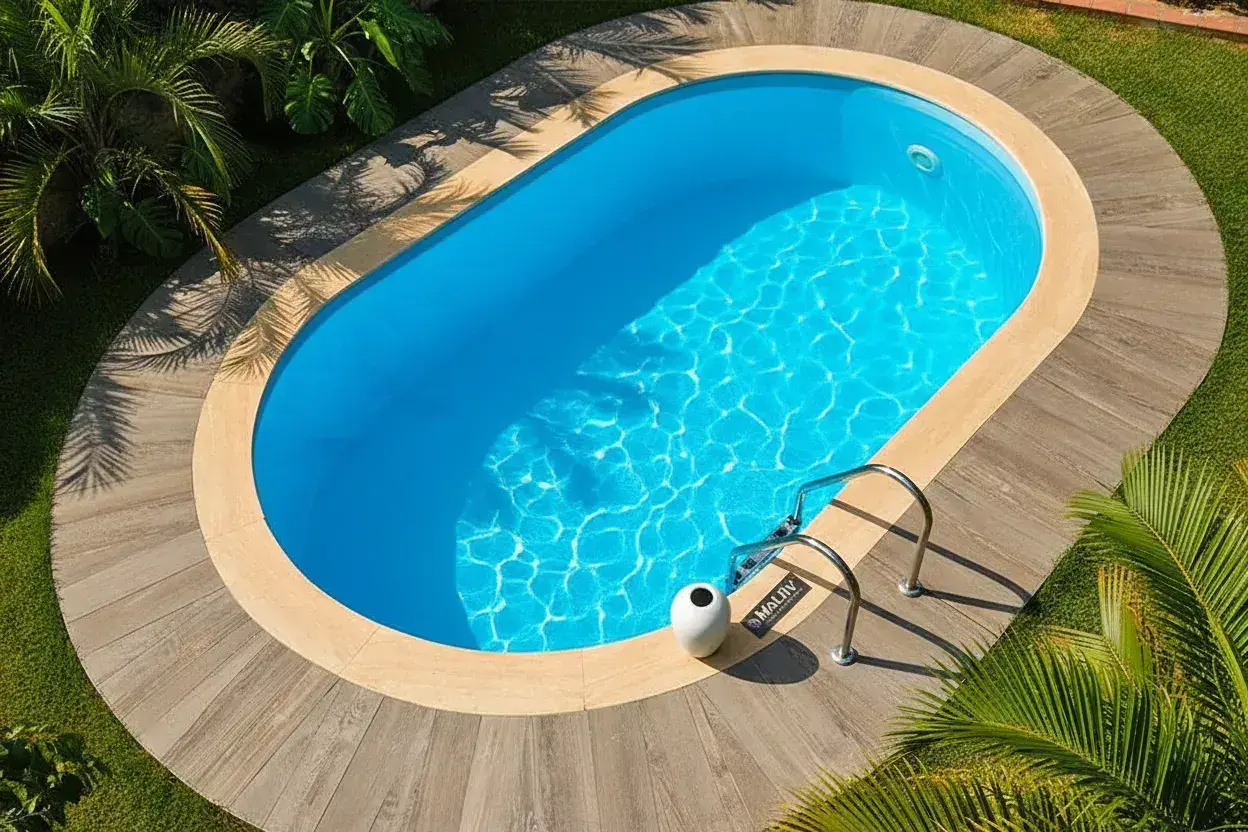 Maldiv ↗
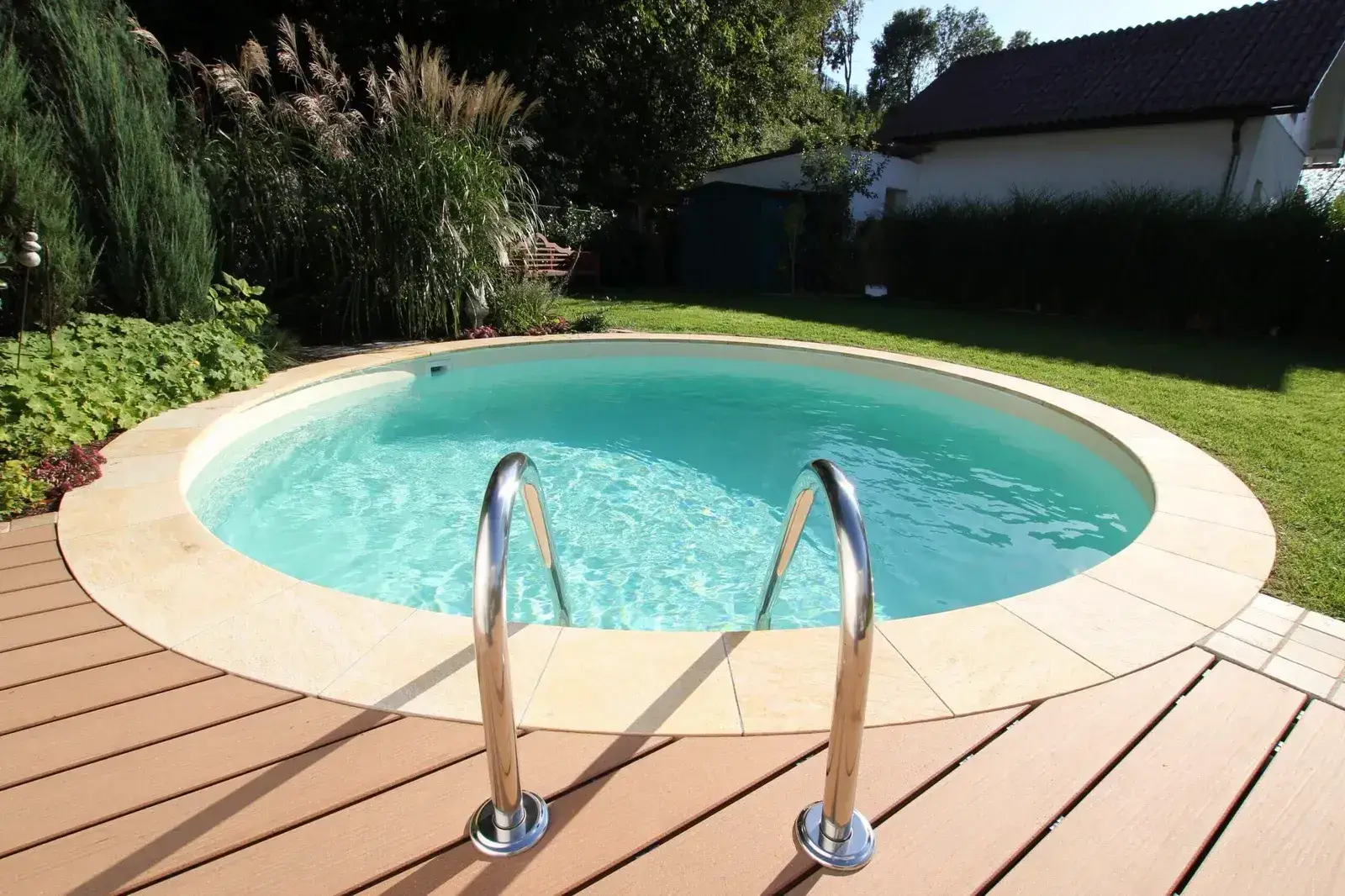 Bora ↗
02. Inverter Pool Heat Pump Selection Formula: The Balance of kW Output and COP Efficiency
The Sermed Havuz technical team designs pool heating with the following measurable parameters:
- Required Thermal Output Calculation:
P (kW) = [Pool Volume (m³) × 1.163 × (Target Temperature - Starting Temperature)] / Desired Heat-Up Time (hours) + Surface Loss Allowance
The1.163coefficient in this formula is a standard value derived from the heat capacity of water. Example calculation: the net heating work required to raise a 45 m³ pool from 18°C to 28°C in 48 hours is approximately45 × 1.163 × 10 / 48 ≈ 10.9 kW; once the surface loss allowance is added, the device selection typically goes above this. The loss allowance must be determined by engineering calculation according to the wind, humidity and cover use on site. - Full-Inverter Technology and the COP Value: Manufacturers declare high COP values for Full-Inverter devices in mild air conditions (for example 15–20°C outdoor air); catalogue values depend on a particular test standard and air/water temperature pair. COP decreases as the outdoor air temperature falls. In device selection, the basis should not be the top catalogue value but the COP line corresponding to the air conditions of the season in which the device will be used. Once the target temperature is reached, the inverter lowers the compressor speed and holds the temperature steady more quietly and with lower consumption.
- Thermal Night Cover (Solar Bubble Cover): Covering a pool with a running heat pump at night with a bubble thermal cover (common thickness range 400–500 microns) significantly reduces loss from evaporation. Although manufacturers and research sources state high savings rates, the real rate depends on the climate, the wind and how long the cover stays closed; no fixed percentage can be guaranteed. The practical effect is a reduction in the heat pump's daily running time.
- By-Pass Connection Standard: The heat pump is connected to the filtration installation not directly in series but with a three-valve group (by-pass line). In this way water filtration is not interrupted when the device is taken out for maintenance or switched off in the middle of summer. The pump must be off while valve positions are being changed.
03. Heat Pump Capacity and Season Table by Pool Volume (Illustrative)
The table below is an example for preliminary sizing. The COP column shows example ranges for preliminary comparison; it must be verified against the technical datasheet of the selected product. The season column is a hypothetical expectation depending on cover use and the target temperature; it is not a commitment.
| Pool Model and Size | Water Volume (m³) | Recommended Inverter Heat Pump | Example COP (19°C Air / 26°C Water; verify for the selected product) | Hypothetical Active Season |
|---|---|---|---|---|
| Bora Ø4.5 m (Circular) | ~22 m³ | 7 – 9 kW Inverter | 5.8 – 6.2 | Can be extended from spring to autumn with a cover |
| Maldiv 3.5×6.5 m (Oval) | ~30 m³ | 11 – 13 kW Inverter | 5.5 – 6.0 | Can be extended from spring to autumn with a cover |
| Fiplus 4×8 m (Panel) | ~45 m³ | 15 – 17 kW Inverter | 5.6 – 6.3 | Can be extended from spring to late autumn with a cover |
| Fiplus 5×10 m (Panel) | ~70 m³ | 21 – 24 kW Inverter | 5.4 – 6.0 | Can be extended from spring to late autumn with a cover |
| Commercial / Boutique Hotel 6×12 m | ~100 m³ | 30 – 35 kW Commercial Inverter | 5.2 – 5.8 | Year-round operation can be targeted with an enclosed space and suitable capacity |
Conclusion: When selecting heat pump capacity, the "let it be one size smaller" approach makes the device run for very long periods and increases consumption. The right kW output combined with a thermal cover targets the lowest kWh consumption under the given conditions.
Frequently asked questions
How is heat pump capacity calculated in order to extend the outdoor pool season in a mild but rainy coastal climate?
The calculation is made according to the pool's water volume, its open surface area, the average wind speed measured on site and the target water temperature (the common target is 26–28°C). As an example, for a 45 m³ villa pool, when the formula above and the surface loss allowance are evaluated together, a Full-Inverter device in the 15–17 kW class together with a thermal night cover is a reasonable preliminary sizing. The exact capacity must be verified with the project data.
Does a pool heat pump work in winter when the air temperature falls below 5°C?
Many modern inverter heat pumps can, according to the manufacturer's declaration, operate down to sub-zero values (typically with limits between -7°C and -10°C) with an automatic defrost feature. This limit and the performance vary from device to device and must be verified from the technical datasheet of the model to be purchased. As the air gets colder the COP falls; efficiency is higher in mild weather.
Is it suitable to place the heat pump inside the plant room?
It is not suitable. Heat pumps are devices that draw heat from the air and need plenty of air circulation. If placed in an enclosed, cramped space, the device re-draws the air it has itself cooled, efficiency falls and the device may give a fault protection warning. The device must be installed in the open air with the clearances specified in the manufacturer's installation manual.
Should the electrical supply be single phase or three phase?
Small and medium scale inverter devices can generally run on a single phase (220V) line; for higher powered heat pumps, a three phase (380V) supply is preferred in terms of network balance and cable cross-section. The threshold value varies according to the device's rated power. The supply type, cross-section, protection and earthing selection must be determined and carried out by a qualified electrical specialist familiar with local electrical standards.