Pool models, construction conditions and care to help you plan your project.
In this guide 4
Calculation note: The prices, savings rates, energy consumption figures, rental income, occupancy levels and payback periods in this article are not verified market data. They are hypothetical planning examples built to demonstrate the calculation method. They do not represent current Georgian pricing, verified operating results or any income guarantee. Your real budget and return should be calculated using local quotations, your own listing history, current tariffs, actual usage intensity and a written scope of work. Timelines depend on site preparation, weather, permits and logistics conditions.
For local and foreign investors buying property along the Batumi and Gonio coastline, the most frequently debated question is how long it takes for a private swimming pool added to a villa to pay for itself. It is generally accepted that in the accommodation market a pool is a feature expected to have a positive effect on both nightly rates and occupancy. The size of that effect, however, varies considerably from property to property depending on location, capacity, visual presentation, pricing strategy and the intensity of local competition. If you do not have verified platform data in hand, the sound way to decide is to build scenarios on the historical occupancy and pricing data of your own listing. The multipliers used in this article are example assumptions chosen to illustrate the logic of the calculation.
The key point from an investment standpoint is this: a pool is a feature that affects the villa's capacity to generate nightly revenue, and for that reason it should be modelled not as a pure expense but as an investment item whose return can be measured. That said, the payback period can never be guaranteed in advance on any project.
01. The Pool Filter in the Batumi Tourism Market: Search Ranking and Booking Demand
The purchasing behaviour of tourists renting short-term villas in Batumi, Kvariati and Gonio is shaped by the following dynamics:
- Platform Filtering Habits: On the major booking platforms, users make heavy use of amenity filters, and a pool is one of the filters most often ticked in holiday villa searches. If a listing does not meet the filter the user has selected, it does not appear in that set of search results. We do not have verified platform statistics for the exact share of users who apply the pool filter, so the most reliable approach is to test the effect against the impression data of your own listing.
- An Alternative Amenity When the Sea Is Rough: On stormy Black Sea days, swimming in the sea may be restricted or unsafe. On such days, villas with pools can offer guests an alternative and may gain an advantage in terms of demand. No occupancy guarantee can be given under these conditions; the effect depends on the general trend in demand.
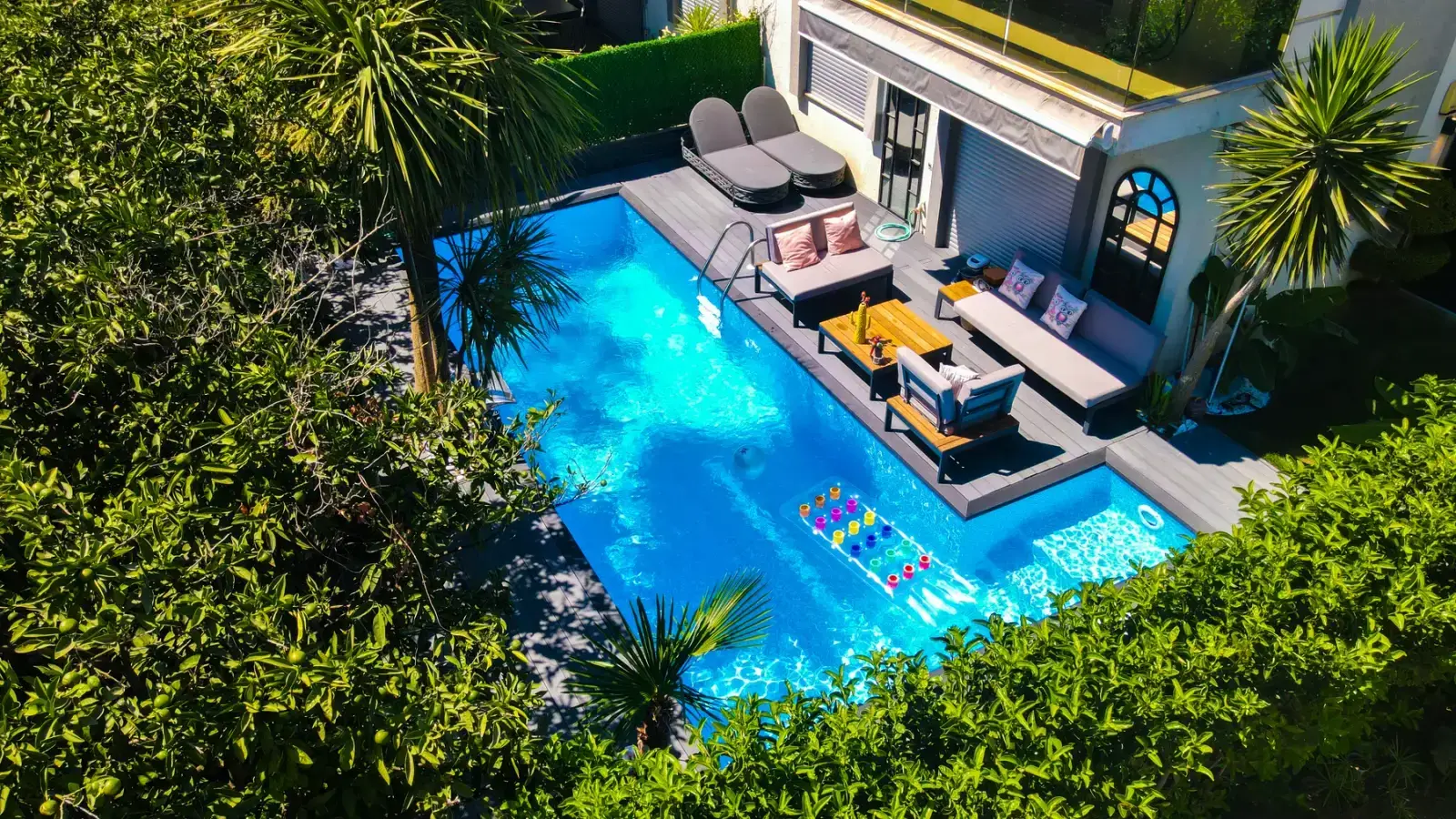
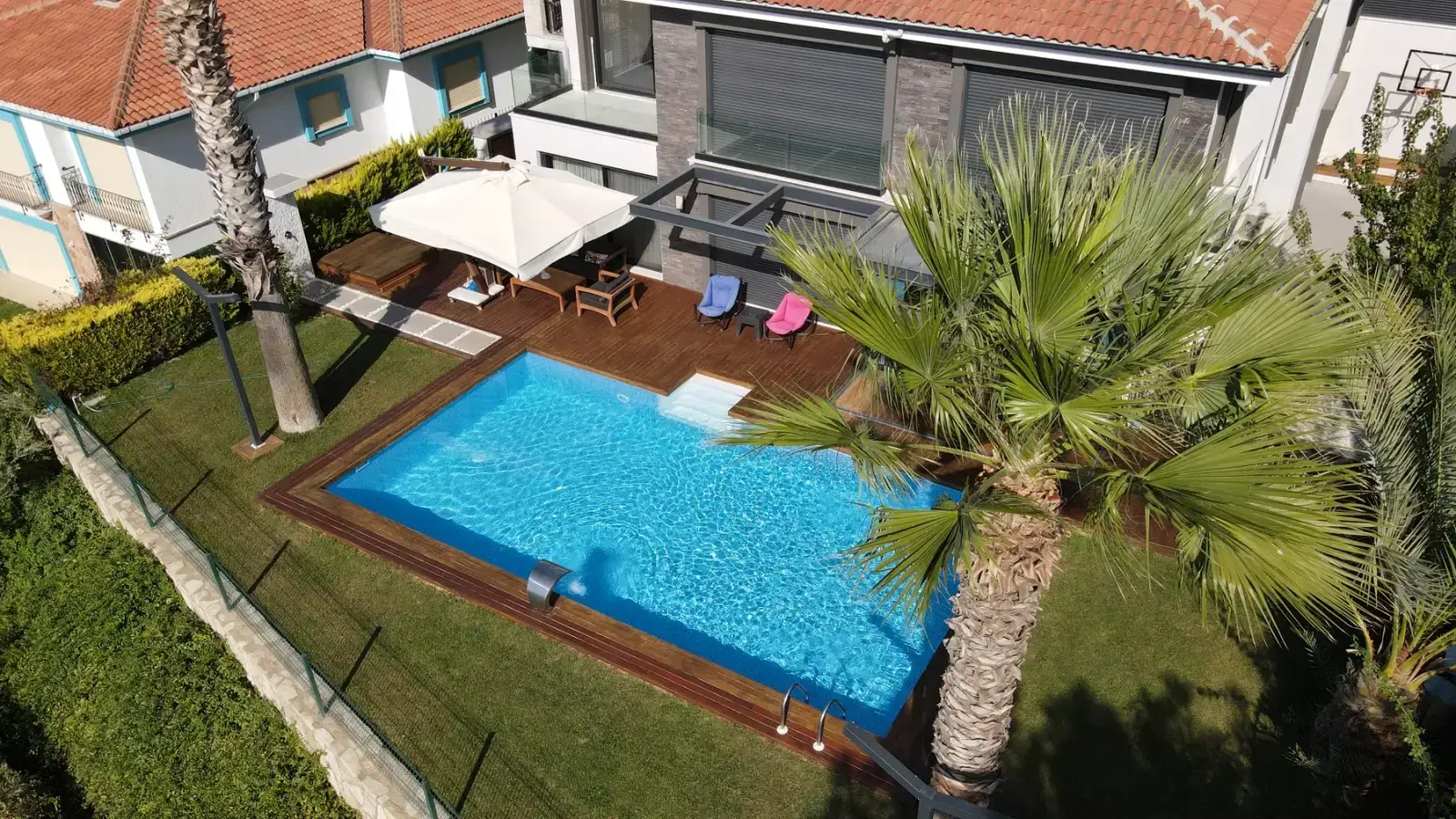
- The Impact of Visual Presentation: The influence of a listing's cover photograph on click-through rate is a well-known factor in accommodation marketing. An image of a turquoise pool with evening lighting can be an eye-catching element as a cover photo. Since the degree of improvement varies with the property and the competition, it would be wrong to quote a fixed multiplier; the most dependable method is to test two different cover photographs against each other.
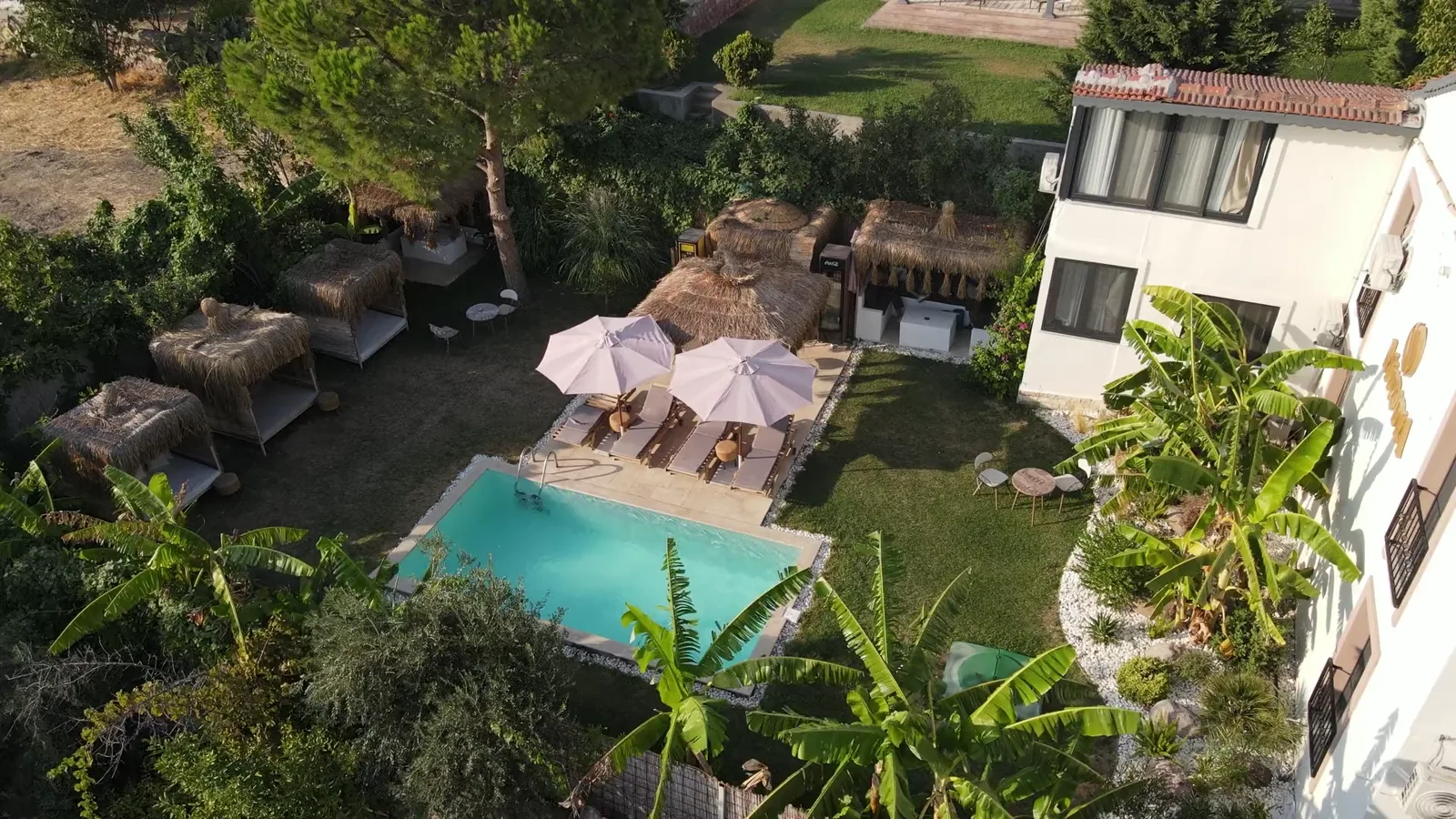 Fiplus ↗
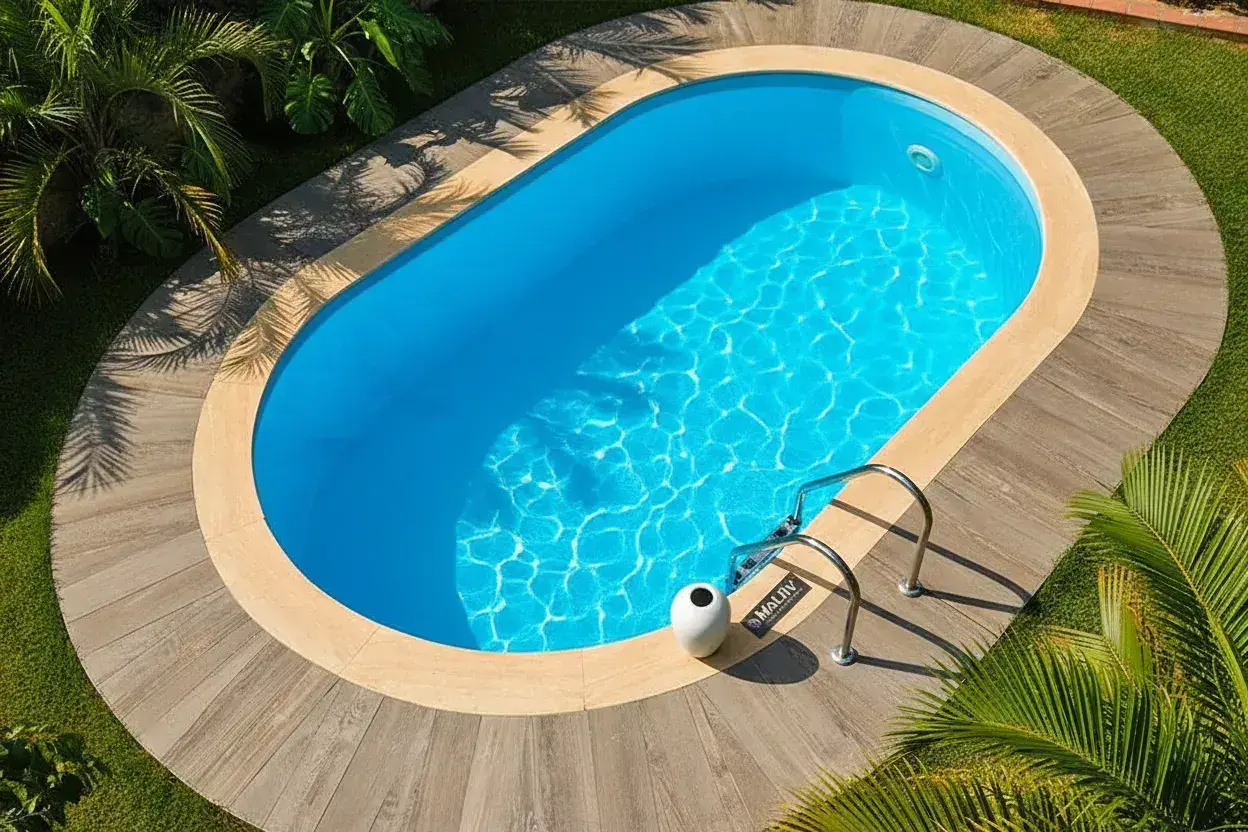 Maldiv ↗
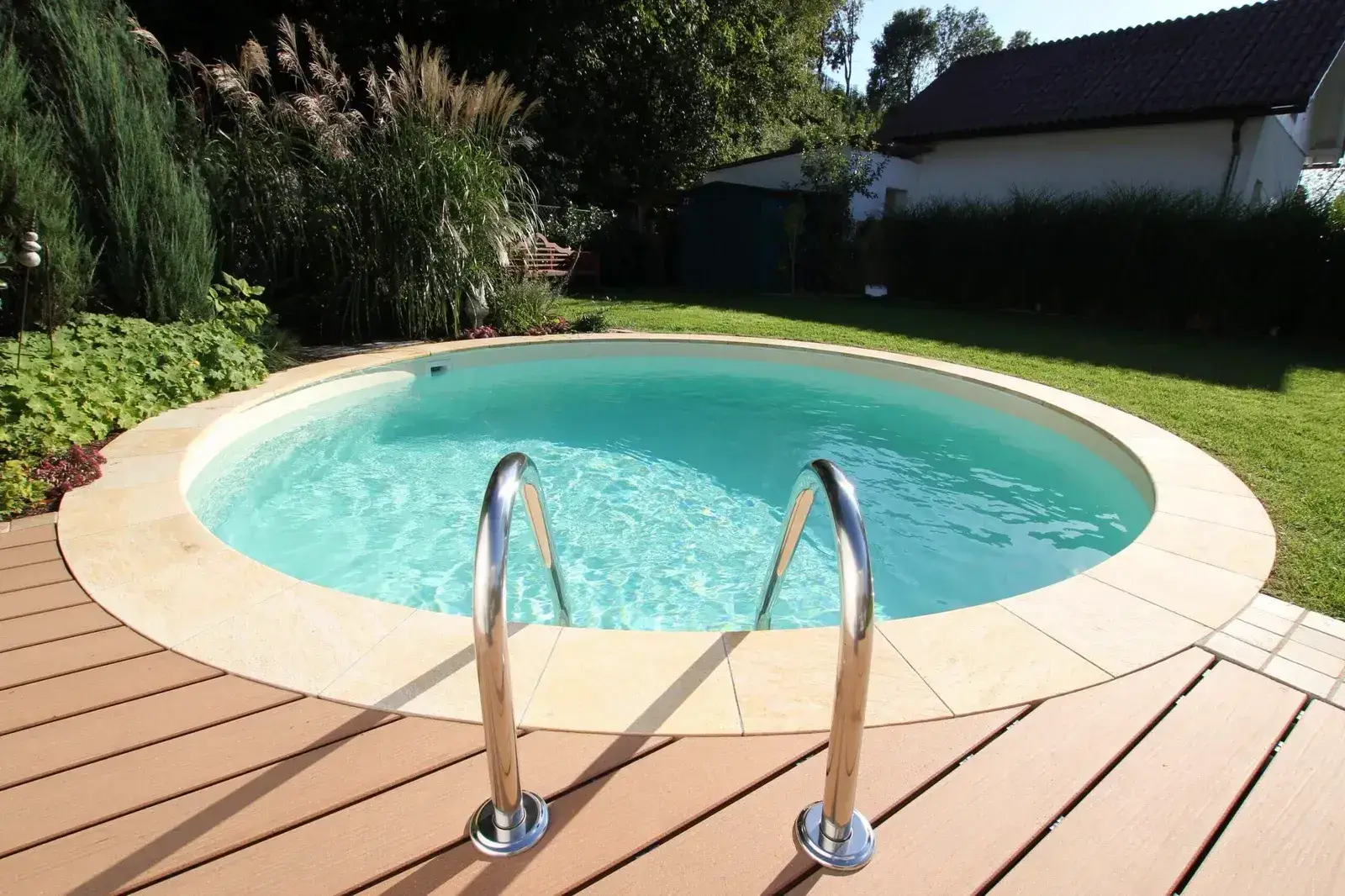 Bora ↗
02. A Measurable Return on Investment (ROI) Formula: Calculating the Payback on a Pool Investment
A pool investment can be analysed with the following formula, which you fill in with your own data:
Annual Additional Pool Revenue = [(Nightly Rate With Pool - Nightly Rate Without Pool) × Number of Occupied Nights] + [Additional Occupied Nights × Rate With Pool] - Annual Operating Cost
The formula is sound and can be used on any project; the reliability of the result depends on how realistic the inputs are. On the operating cost side you should include energy, chemicals, water, maintenance labour, winterization and an allowance for equipment replacement.
- Nightly Rate Difference: If the average nightly yield of a villa without a pool is taken as
Xunits, it is advisable to build the scenario for an equivalent villa with a pool using several different assumptions, for example1.3X,1.8Xand2.2X. These multipliers are hypothetical planning values and should be verified against the current rates of comparable listings in your own market. - Extending the Season: A pool with heating can push the usable period beyond the summer months and create weekend rental potential in the shoulder season. The number of additional nights you gain depends on the climate, heating capacity, insulation, cover usage and energy costs; the extra energy expense that heating brings must always be included in the calculation.
- Payback Period: A notable strength of prefabricated panel systems is that, where site conditions allow, installation time is short compared with cast-in-place applications, which can provide the flexibility to come on line during the season. The payback period itself depends on the investment amount, the rate difference actually achieved and occupancy, and cannot be guaranteed in advance.
03. Seasonal Revenue and Occupancy Comparison Table: Villas With and Without a Pool
The table below is not a verified market measurement but a hypothetical scenario built to illustrate the calculation logic. The figures should be replaced with your own data before use.
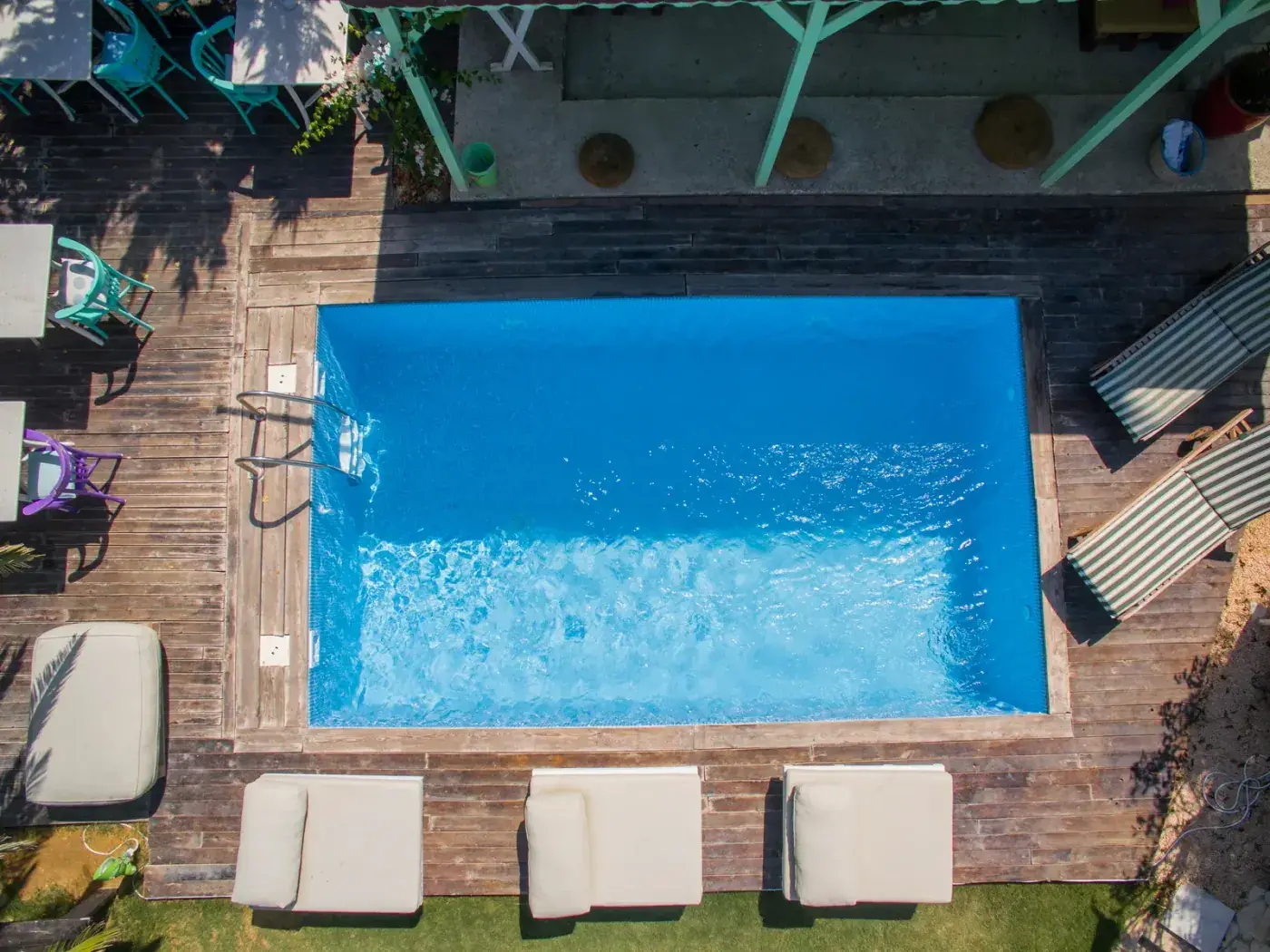
| Metric and Criterion | Villa Without Pool (hypothetical baseline) | Villa With Pool (hypothetical scenario, Fiplus 4×8 m) | Financial Effect in the Scenario |
|---|---|---|---|
| Summer Season Occupancy Rate | Example assumption: 45% to 55% | Example assumption: 70% to 85% | A marked increase on the occupancy side in the scenario; the actual outcome depends on pricing and competition |
| Average Nightly Rate | 100 units (hypothetical base rate) | Example assumption: 130 to 220 units | An increase in nightly cash flow in the scenario; not a verified premium rate |
| Active Rental Season | Example assumption: 90 days | A longer period in the heated scenario | The net contribution of the additional nights is assessed after deducting heating energy costs |
| Payback (Amortization) | Out of scope | Calculated from the scenario inputs | No fixed payback period is committed to |
| Appraised Property Value | Standard comparable | A pool is a feature that stands out at resale | The effect on value is determined by local appraisal and comparable analysis; no fixed premium rate can be quoted |
Conclusion: In the Batumi market, a pool is a strong feature that supports rental performance when it is properly designed. When making the decision, filling in the formula above with your own listing data gives a sounder result than relying on off-the-shelf multipliers.
Frequently asked questions
What is the nightly rate and occupancy multiplier for a villa with a pool compared with villas without one on the Batumi Airbnb/Booking market?
We have no verified platform data to share on this question, and quoting a precise multiplier for the region would be misleading. In practice a pool is a feature expected to have a positive effect on both nightly rates and occupancy, but the size of that effect varies with location, capacity, visual presentation and pricing strategy. The best approach is to compare the current rates of similar listings with and without pools in your own area and to build the scenario using several different multiplier assumptions.
How do annual chemical and electricity costs affect rental yield?
Operating costs depend on your energy tariff, pool volume, pump and filtration selection, daily running hours, heating usage and season length. An efficient circulation pump, correctly sized filtration and the use of a cover all help reduce these costs. You need to calculate the ratio of costs to revenue using your own tariff and actual running hours; it would be wrong to assume in advance that it is negligible.
Does heating the pool in winter increase rental income?
A heated pool can make your listing more attractive for weekend and holiday-period demand in winter and the shoulder season. On the other hand, heating energy costs rise markedly in that period, so the net contribution depends on whether the additional income gained exceeds the additional energy cost. Uninterrupted year-round occupancy cannot be guaranteed for any property.
How much does building a pool increase a villa's resale value?
A pool is a feature that stands out at resale on detached villas and can increase buyer interest. However, we cannot offer verified premium rate or time-to-sale data for the Georgian market; the effect on value varies with location, plot size, the quality of the pool and current demand. The real effect should be measured through a local appraisal and a comparison of comparable properties.