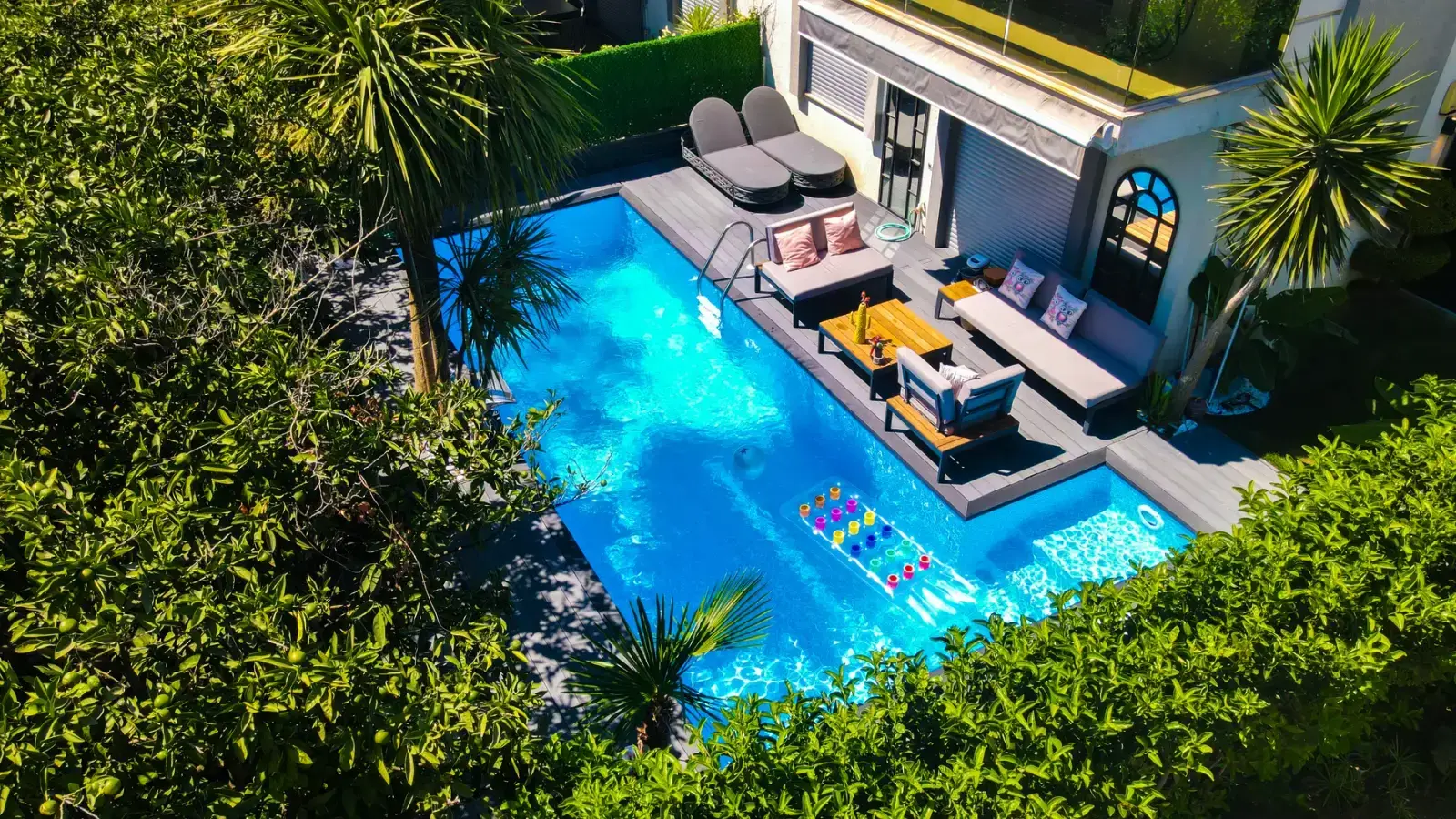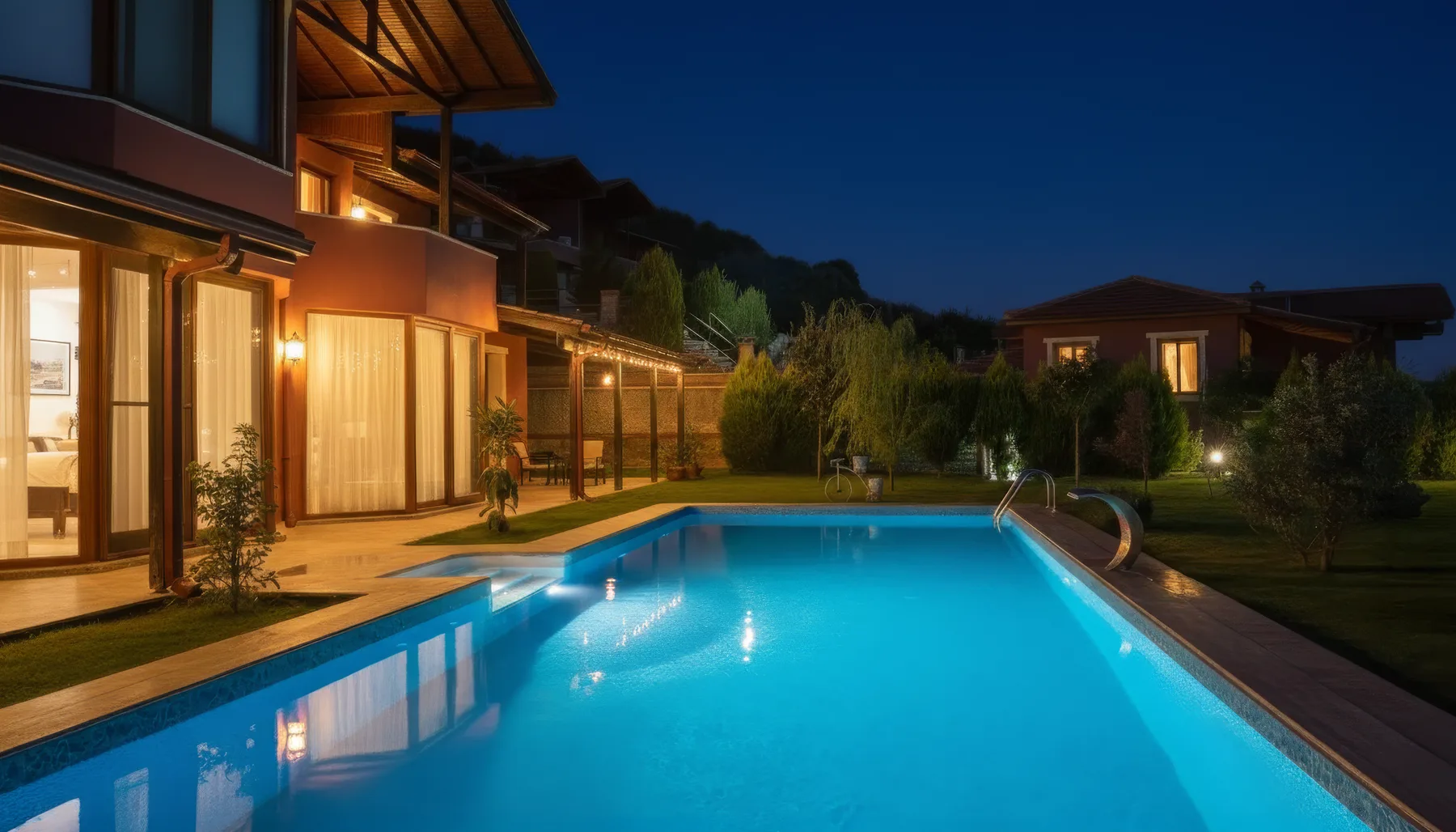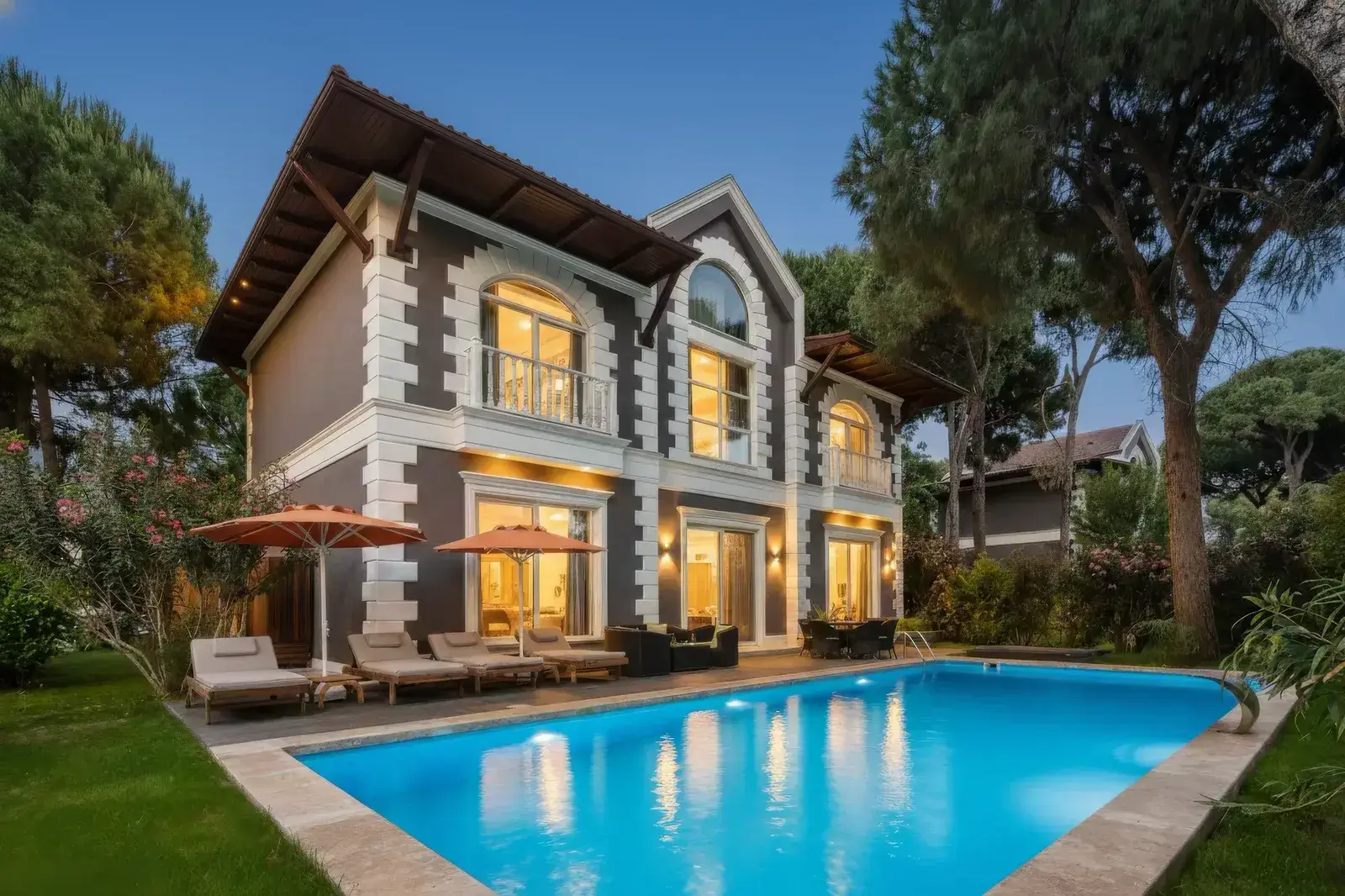
Pool models, construction conditions and care to help you plan your project.
In this guide 4
Selection note: The Fiplus shell is a 20 mm F-Stone fibre cement panel; the galvanized steel external cross brace is a separate component from the shell. Maldiv and Bora have special alloy steel casings. Shell warranty periods are 25 years for Fiplus and 10 years for Maldiv/Bora; scope, exclusions and conditions are governed by the written warranty document, and the warranty does not constitute an undertaking against hydrostatic or seismic damage. Dimensions, performance and documentary compliance must be verified separately for the selected product and project. The dimensions and periods given here are example planning assumptions; the final solution is determined by the results of the geotechnical investigation and the structural design.
The basic principle of a sound engineering approach is this: no single product can suit every project and every need. Although prefabricated panel pools are a suitable technology for detached villas, boutique hotels and gardens, in certain architectural and usage scenarios a prefabricated pool is not an appropriate choice and a traditional reinforced concrete pool should be preferred. The success of your project begins with knowing the limits of the system.
Prefabricated pools are not suitable for: 1) professional diving board pools deeper than 2.20 metres, 2) public or Olympic scale sports facilities longer than 20 metres, 3) free-form amorphous lagoon designs incorporating natural rock, and 4) cantilevered suspended balcony terraces; in these 4 scenarios a traditional reinforced concrete pool is preferred. In standard detached villa gardens at 1.50 m depth, however, a prefabricated panel pool offers a practical and economical solution.
Being able to say on a project that "a prefabricated pool is not suitable for this need, reinforced concrete is the better answer" is part of honest engineering communication.
01. The Limits of the Panel Pool: Which Requirements Run Counter to Prefabricated Architecture?
The structural limits of prefabricated panel pools:
- Standard Height Limit: Factory-made panels are commonly produced at heights of 1.20 m or 1.50 m; for projects calling for depths of 2.5 to 3.0 metres, standard modular panel solutions are not suitable, and these depths require a cast-in-place reinforced concrete structural design.
- Very Large Public Facilities: In 25 x 12.5 m semi-Olympic sports pools, high overflow rates and balance volumes generally call for reinforced concrete wall solutions.
- Artistic Amorphous Curves: Sculptural organic forms such as interlocking rocks and cave entrances cannot be built with modular panels; shotcrete is used for these forms.
 Fiplus ↗
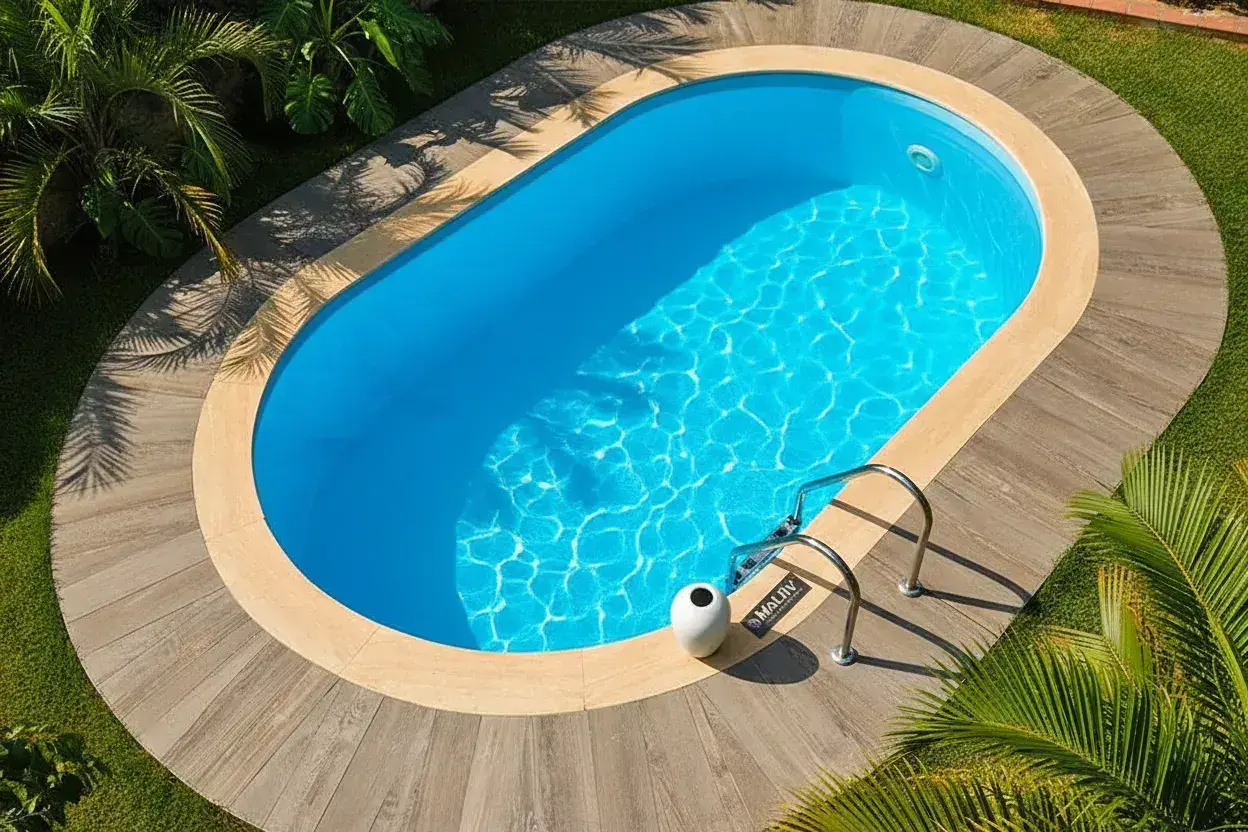 Maldiv ↗
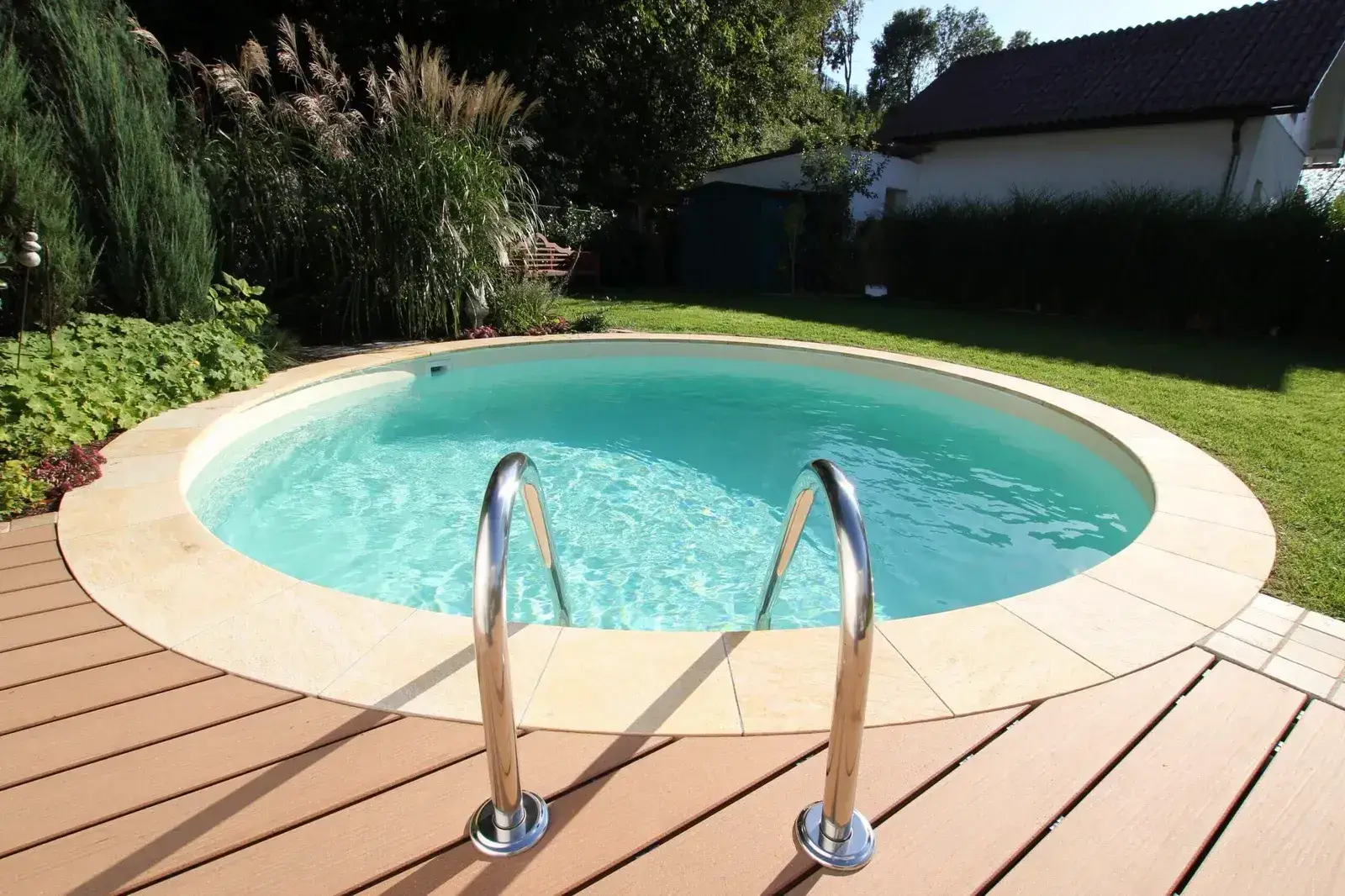 Bora ↗
02. Technical Review of the 4 Special Scenarios Where Reinforced Concrete Comes Out Ahead
Reinforced concrete should be preferred for the following 4 project types:
- Diving Board Pools (Depth > 2.20 m): When the water depth rises to 2.50 metres, the lateral pressure near the floor increases markedly; at these depths a project-specific, calculated and reinforced concrete wall solution is applied.
- Semi-Olympic and Olympic Facilities (Length > 20 m): Public facilities with high daily user numbers require wide weir channels and balance tanks; these volumes are resolved with cast-in-place reinforced concrete.
- Sculptural Free-Form Lagoon Pools: Artistic designs embedded within custom landscaping rocks must be cast in place using formwork.
- Cantilevered Suspended Balcony Pools: Pools cantilevering out from a building's load-bearing slab must be designed together with the building structure and verified structurally; in addition to the pool shell, this calculation also includes the water load, the user load and live loads.
03. System Selection Guide Table by Intended Use
| Intended Use and Project Type | Recommended Correct System | Reason for Preference |
|---|---|---|
| Detached Villa Garden (1.50 m Depth) | Sermed Fiplus Panel Pool | Fast installation, seamless interior surface, economical; 25-year written conditional warranty on the shell |
| Boutique Hotel for Rent (50 to 100 People) | Sermed Fiplus / Maldiv (1.50 mm Membrane) | Reinforced membrane that stands up to intensive use; short installation time under suitable conditions |
| 2.50 m Diving Board Pool | REINFORCED CONCRETE IS PREFERRED | High hydrostatic depth pressure |
| 25 Metre Semi-Olympic Public Facility | REINFORCED CONCRETE IS PREFERRED | High weir overflow and hydraulic flow requirement |
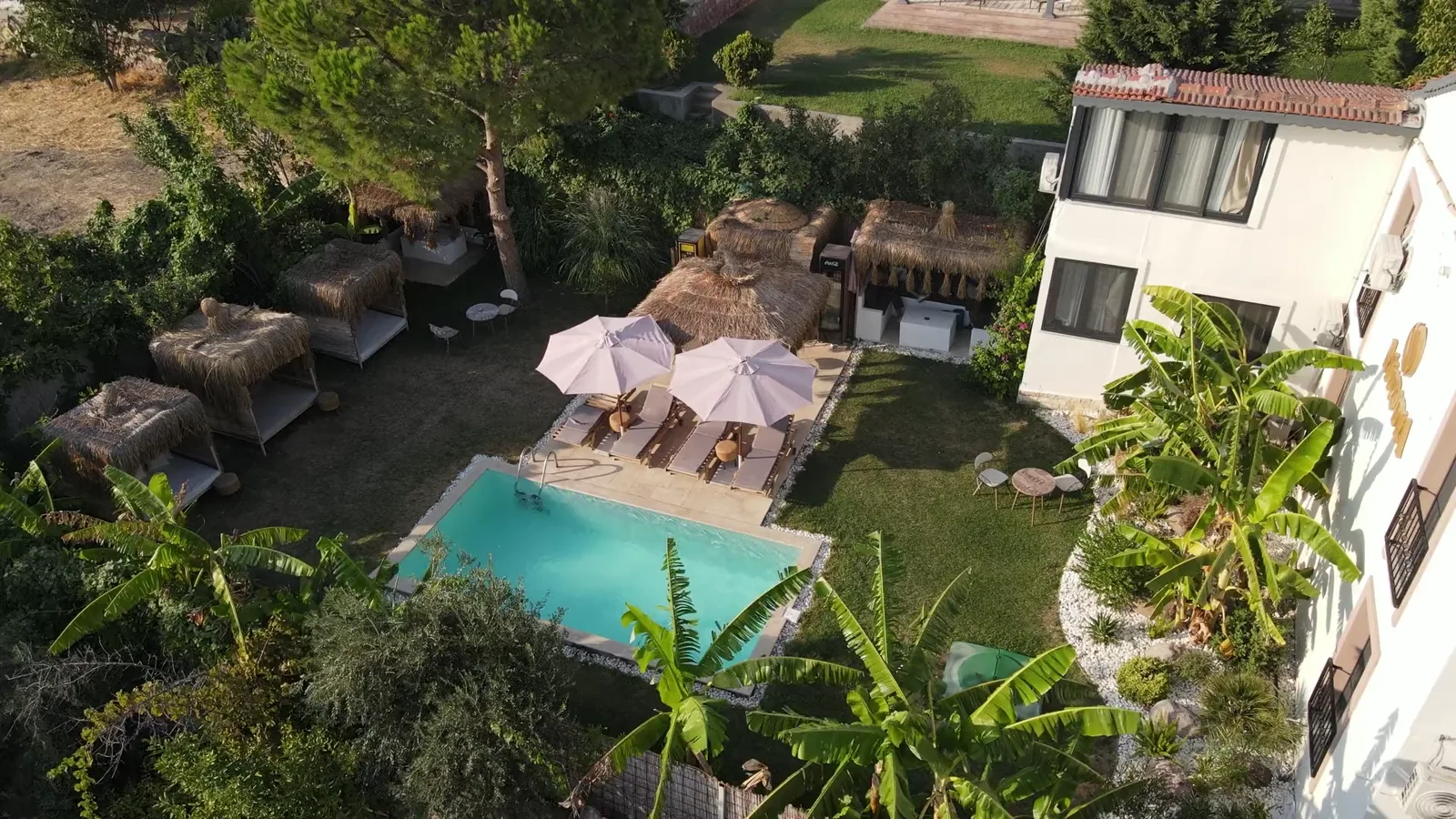
| Glamping / Dome Tent Terrace | Sermed Bora Round Pool | Fast assembly, compatible with timber decking |
Conclusion: for a 1.50 m deep pool at a detached villa, panel systems are usually installed in a shorter time; however, for deep or large scale special projects the structural possibilities offered by reinforced concrete are necessary. In both cases the installation time depends on site, weather and permit conditions.
Frequently asked questions
Is a depth of 1.50 metres enough for swimming in a villa pool?
It is sufficient for general use; a net water height of around 1.40 m is considered suitable for adults to swim comfortably without touching the bottom while taking strokes. For competition facilities, the depth rules of the relevant federation must be checked separately.
Can you dive head first into a panel pool?
No pool with a depth of 1.40 to 1.50 m (including reinforced concrete ones) should be dived into head first; it carries a risk of head and neck trauma. In pools designed for diving, the depth is engineered according to the height of the diving board, and depths of 2.20 m and above are generally required.
Can prefabricated pools be used in boutique hotels?
Yes; in projects on a boutique hotel scale, commercial use can be planned with Fiplus panels in sizes such as 6 x 12 m or 5 x 10 m together with a 1.50 mm reinforced membrane. Capacity, filtration flow rate and local operating permits are verified on a project by project basis.
Which is safer on a roof terrace, reinforced concrete or prefabricated?
A panel pool shell is markedly lighter than reinforced concrete, and this is an advantage in terrace applications. However, safety is not determined by shell weight alone: it is essential that the existing load-bearing structure be verified by calculation by a civil engineer, including the water load, the user load and live loads.