Pool models, construction conditions and care to help you plan your project.
In this guide 4
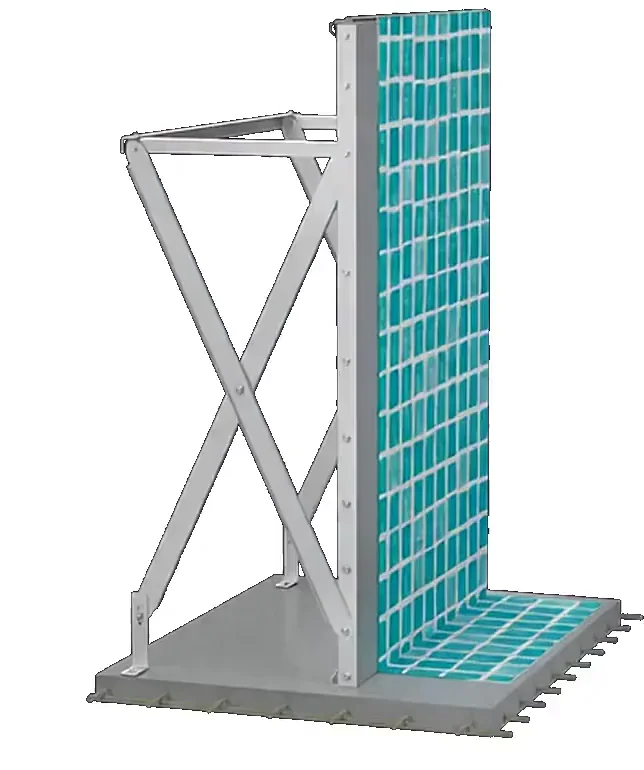
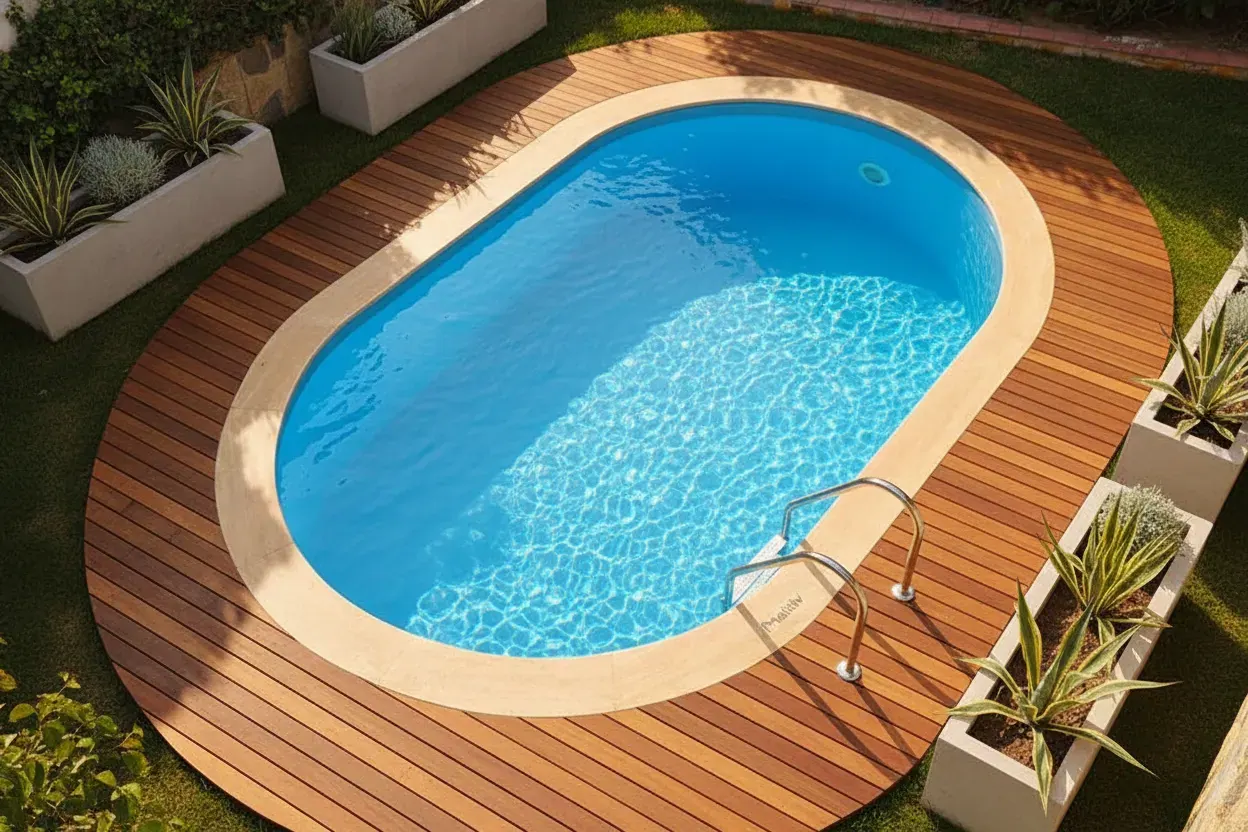
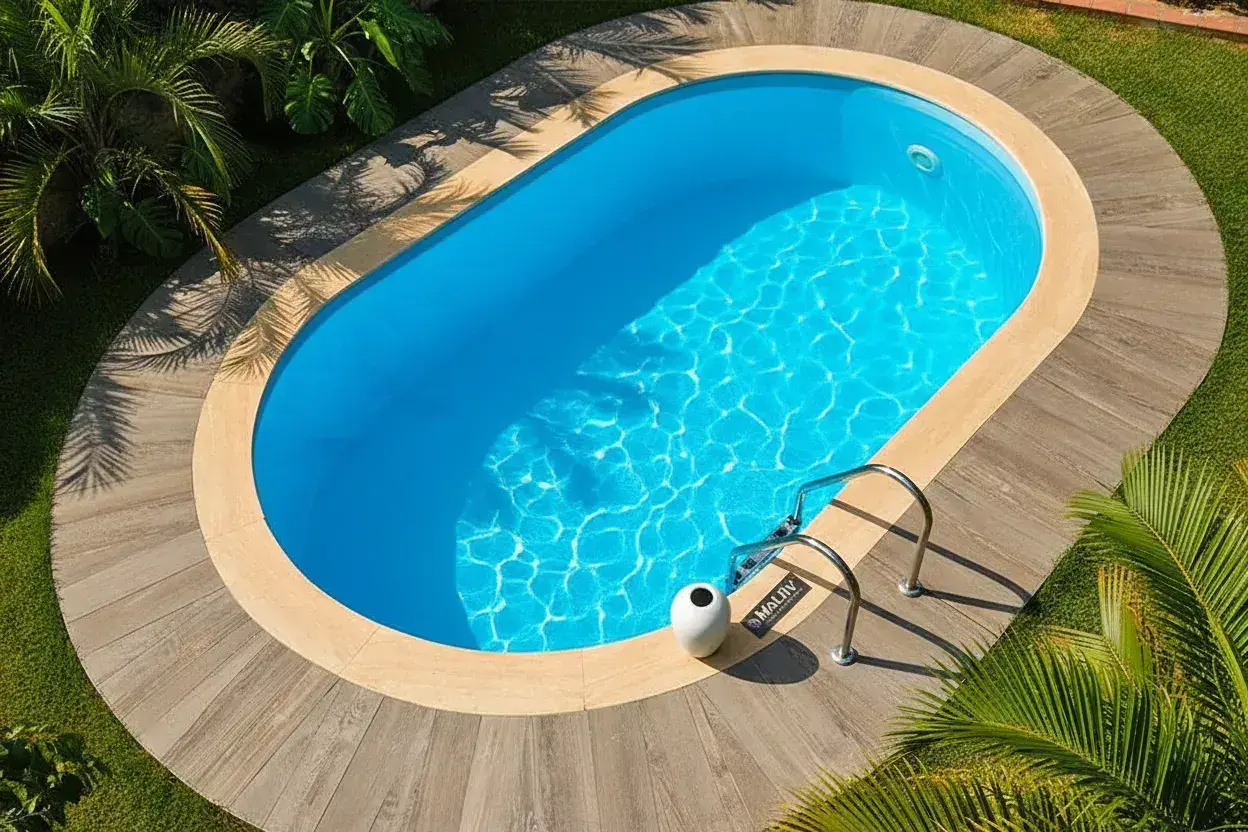
Selection note: The Fiplus shell is made of 20 mm F-Stone fibre cement panel; the galvanized steel external cross legs are a component separate from the shell. The Maldiv (oval) and Bora (round) models have special alloy steel casings; they are not described as stainless, inox or fibreglass casings. The shell warranty period is 25 years for Fiplus and 10 years for Maldiv and Bora; scope, exclusions and maintenance conditions are governed by the written warranty document and do not constitute an unconditional undertaking against any specific type of failure. Dimensions, performance and document compliance must be verified separately for the selected product and project. The numerical comparisons in this article are illustrative planning assumptions.
For property owners operating a villa or boutique hotel pool in Batumi, the question that causes the most hesitation about cleaning is this: "Should I buy a dedicated robot for pool cleaning, or should I call in a weekly rental service?" Wrestling with manual vacuum hoses takes time; when the filter valve is used in the "Waste" position during vacuuming, the water drawn in goes to the drain, so every season brings a certain loss of heated and chemically treated water. Rented robots brought in from outside, meanwhile, carry the risk of transferring algae spores or micro-organisms from other pools if the equipment is not cleaned and disinfected thoroughly enough. At Sermed Havuz, we use the worked example below to show that owning your own fixed smart pool robot can pay for itself within a few seasons at most villa scales thanks to the savings in water, chemicals and labour. The actual payback period varies with pool volume, local water and electricity tariffs, frequency of use and the purchase price of the robot.
For a villa pool of 40 to 50 m², buying your own smart pool robot is generally the more economical solution in a pool that is cleaned regularly. When the valve is used in the "Waste" position during manual vacuuming, chlorinated and heated water goes to the drain; the robot, by contrast, filters the water through its own fine-pore basket and returns it to the pool, so this drain-related water loss disappears. In a calculation based on an example tariff and usage assumption, the payback period comes out in the order of a few seasons; the exact period should be calculated using your own bills.
Dragging a hose around instead of relaxing by the pool at the weekend is not comfortable use. A smart robot cleans the floor and walls of your pool autonomously while you drink your coffee; monitoring water chemistry, checking the skimmer basket and maintaining the filter nonetheless remain the user's responsibility.
01. The Water Waste of Manual Vacuuming and the Risk of Transmitted Algae With a Rented Robot
The hidden burdens that come with old-fashioned cleaning methods:
- Appreciable Water Loss With Every Vacuuming: During manual vacuuming, water is sent to the drain line via the "Waste" position so that sediment does not clog the filter; cold mains water is pumped in to replace the lost water, and the heater spends energy again. The amount of loss depends on the vacuuming time, the pump flow rate and the valve position; as an example, 10 minutes of waste vacuuming with a pump rated at 15 m³/hour means roughly 2.5 m³ of water. This is not an average, it is a calculation example.
- The Cross-Contamination Hazard of a Rented Robot: Organic residue and spores left on the wheels, brushes and basket of a robot used in another pool can be carried into your pool if the equipment is not cleaned and disinfected in between.
- Lost Time: Bleeding the air out of the hose, connecting it to the skimmer and vacuuming slowly typically takes 1 to 2 hours of your time at every cleaning.
Important warning: The filter valve position must only be changed when the pump is completely switched off; turning the valve while the pump is running can damage the valve seals and the system.
 Fiplus ↗
 Maldiv ↗
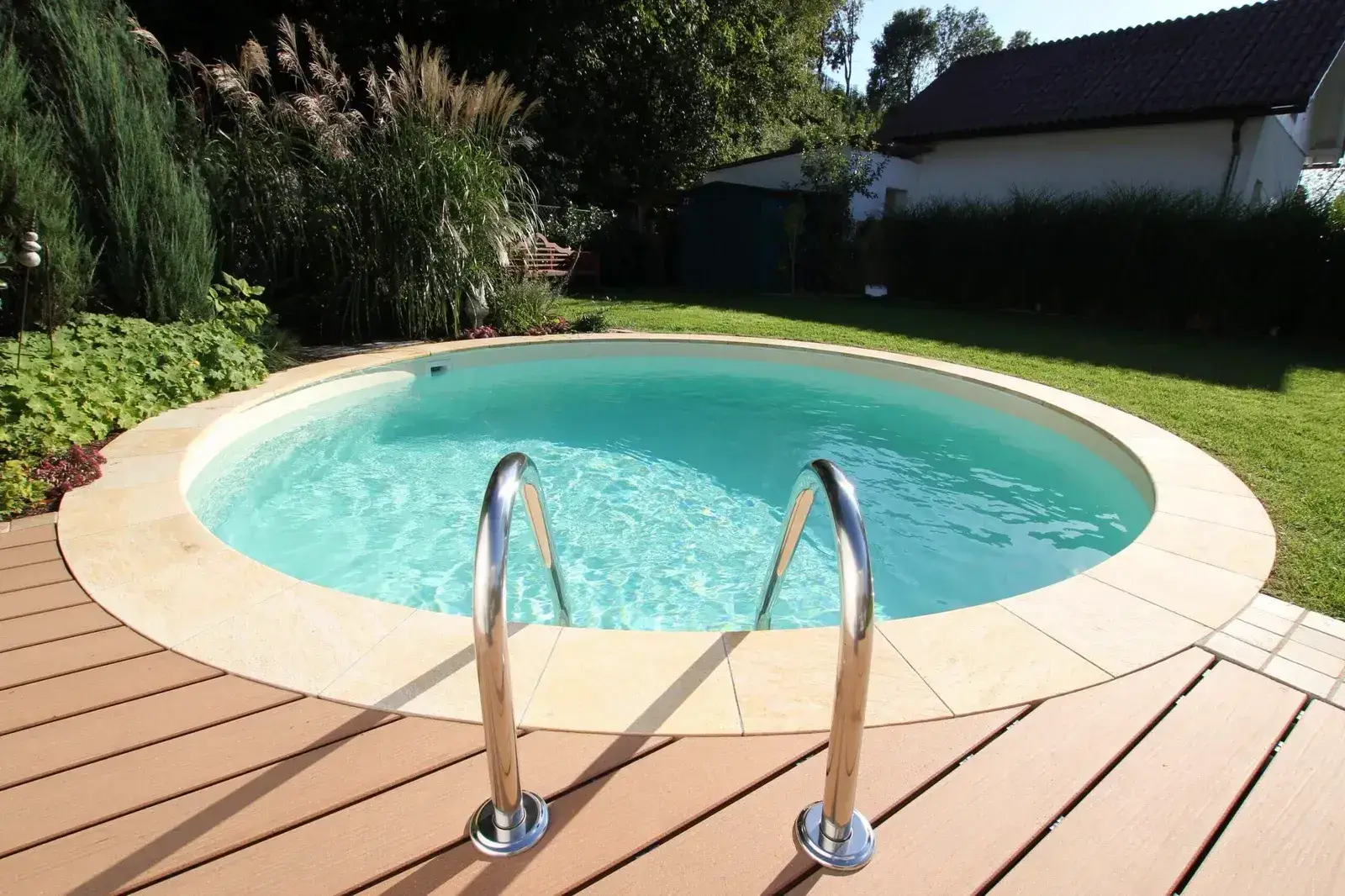 Bora ↗
02. The Savings Mechanism of a Fixed Smart Pool Robot: Drain-Free Cleaning and Autonomous Operation
The 4 fundamental advantages offered by a fixed pool robot:
- Cleaning Without Sending Water to the Drain: The robot does not discharge water to the sewer; it draws water from the floor, passes it through its own internal fine filter and blows it back into the pool. This means there is no vacuuming-related loss of water or chemicals. Normal water loss from evaporation, splashing and backwashing does, however, continue.
- Wall and Waterline Cleaning: Depending on the model, it can climb onto steps and up to the waterline with soft PVA or foam brushes and scrub away grease and film residue. Wall and waterline capability is not present in every model; model specifications should be checked before purchase.
- Smartphone Control: On app-enabled models, cleaning can be started remotely and a programme selected; a typical cycle lasts 1.5 to 3 hours.
- Return Within a Few Seasons: The water, chemicals, energy and service costs saved generally cover the price of the robot within a few seasons when calculated with your own tariffs. This is not a guarantee of return but a calculable planning assumption.
The pore opening of the filter basket varies by model; an extra-fine basket may be needed for fine dust and pollen.
03. Manual Vacuum vs. Rental Service vs. Fixed Robot Amortization Table
The table below is an illustrative comparison for an example villa pool; the figures are not measured field results.
| Cleaning Approach | Time Spent Per Season | Seasonal Drain-Related Water Loss (example assumption) | Risk of Algae Contamination | Amortization and Economic Value |
|---|---|---|---|---|
| Manual Hose Vacuum | ~50 – 60 Hours of Hard Labour | Tens of m³, assuming weekly waste vacuuming | Low | Continuous water and chemical bills |
| External Rental Service | Time spent waiting for the service | Depends on the method applied, generally low | High if the equipment is not disinfected | Continuous service bills |
| Fixed Smart Pool Robot | Roughly 0 hours apart from supervision | No drain-related loss | Low (the equipment is used only in your own pool) | Payback within a few seasons in the example calculation |
Conclusion: A pool robot of your own can be regarded as a rational operating investment aimed at reducing water, time and chemical use; we recommend verifying the payback period with your own bills.
Frequently asked questions
For a villa pool of 40-50 m², does it make more sense to buy your own cleaning robot or to use a manual vacuum?
In a pool that is used regularly, buying your own robot generally makes more sense; because it works without sending water to the drain, it eliminates vacuuming-related water and chemical loss and reduces the weekly workload of 1 to 2 hours. The payback period should be calculated according to pool volume, local water, chemical and energy prices and the price of the device.
Will the robot scratch or tear the liner?
Robots made for liner pools have soft rubber tracks and brushes of PVA or foam material, and are designed not to damage the liner surface in normal use. Even so, the manufacturer's statement of liner compatibility should be checked, and stones or hard particles caught in the tracks and brushes should be removed.
Can the robot clean the ladder steps?
Models with wall and step climbing capability can largely vacuum the surface of wide-stepped Baja shelves or built-in ladder platforms. Manual assistance may be needed on narrow, steep or overhanging steps; this capability depends on the model.
How is the robot's filter cleaned?
When cleaning is finished, the robot is disconnected from the power supply and taken out of the pool, its lid is opened and the filter basket is rinsed with a garden hose and refitted. On most models this operation takes a few minutes; the user manual should be taken as the basis for basket and cartridge maintenance intervals.