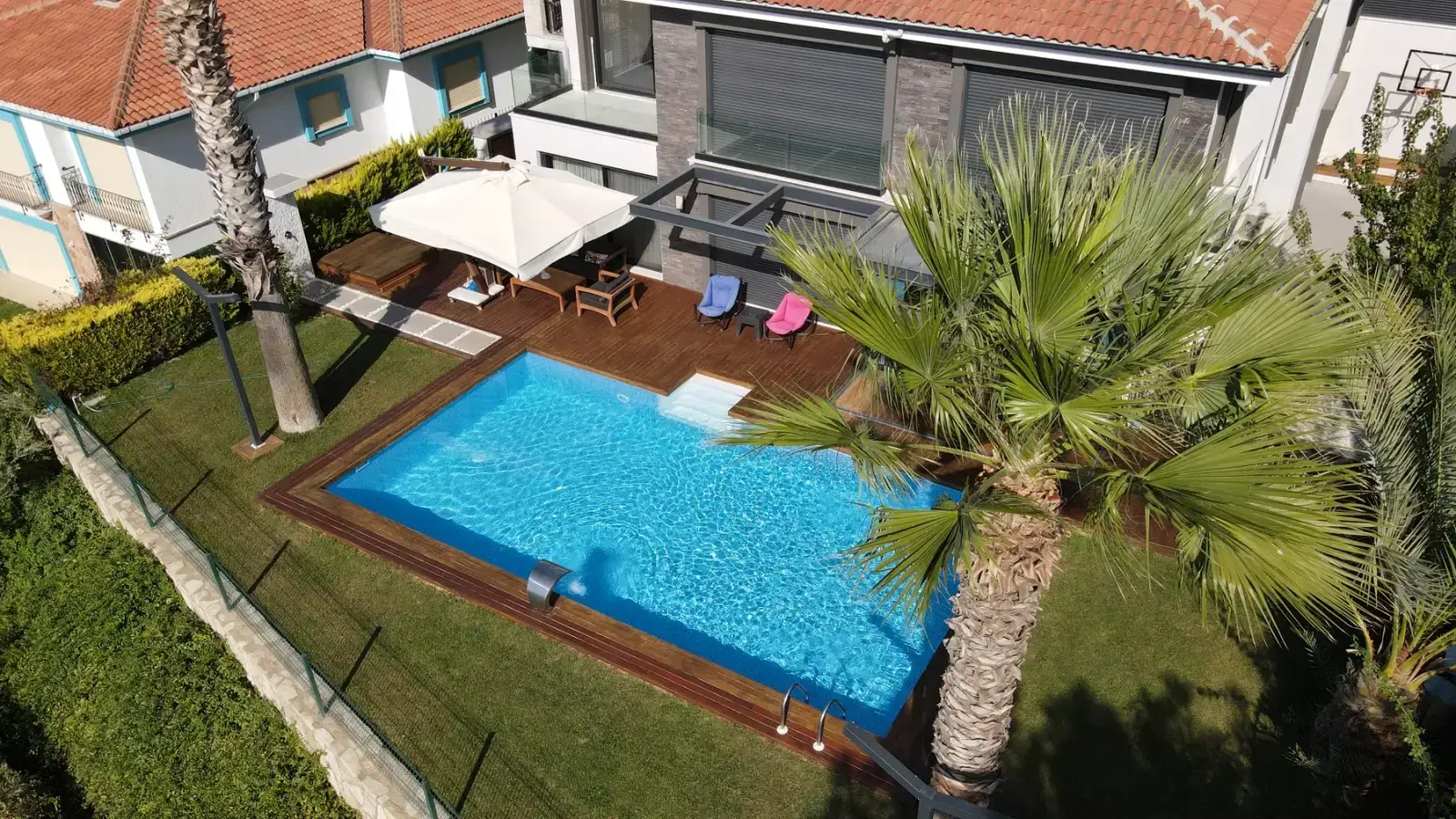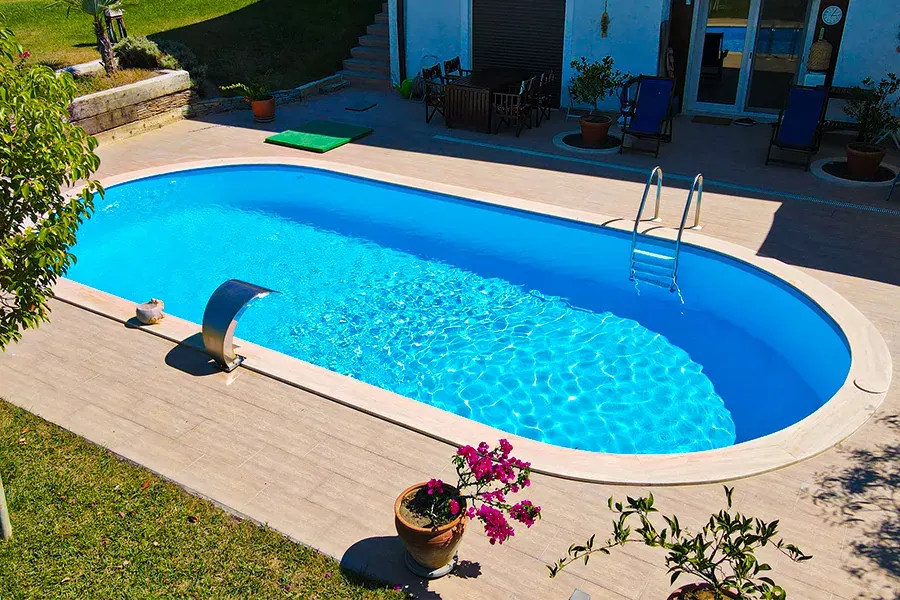
Pool models, construction conditions and care to help you plan your project.
In this guide 4
Application note: Chemical dosages, pH/chlorine targets, operating times and maintenance intervals are determined according to the product label, the measured water values, the usage class and local requirements. Numerical examples on their own are not application instructions. Chemicals must never be mixed with one another, and work involving electricity, pressurized equipment or draining the pool must be carried out under expert supervision.
Although the smooth, velvety surface of a liner-finished pool makes cleaning much easier thanks to its seamless structure, mechanical damage that is difficult to repair can occur if the material composition of the cleaning equipment used is not considered. Using the stainless steel wire brushes or sharp-tipped metal vacuum heads employed in ceramic-tiled pools to scrape off limescale and algae carries a serious risk of damage in a liner pool; they can scratch the protective lacquer layer and puncture the membrane. At Sermed Pools we recommend the following rules as a user standard for liner surfaces: pool robots with soft PVA or sponge brushes, curved plastic vacuum heads, and no use of wire brushes.
Cleaning your liner pool is not a sanding job but a gentle sweeping operation. Choosing the right brush and robot is the most practical way to preserve the gloss and service life of the finish.
01. Micro-Scratches and Membrane Damage Caused by the Wrong Cleaning Equipment
The most common cleaning mistakes made in liner pools are the following:
- Using a Steel Wire Brush (Must Not Be Used): Metal bristles can scratch the acrylic protective lacquer on the liner. Dirt and algae fill the scratched channels, grey stains that are hard to clean form, and under heavy use the membrane can be punctured.
- Robots with Hard Plastic Tracks Slipping: Robots with hard PVC tracks can spin their tracks while climbing a smooth, wet liner wall; this friction can leave dull marks on the liner.
- Manual Vacuum Heads with Sharp Corners: When the hard corner plastics of the vacuum head strike the curves of the floor, they can damage the liner.
- Excessively Strong Acidic Gel Cleaners: Concentrated acids poured directly on to remove waterline stains can harm the pigment of the liner. Chemicals must never be mixed with one another and must only be applied in accordance with the intended use stated on the label.
 Fiplus ↗
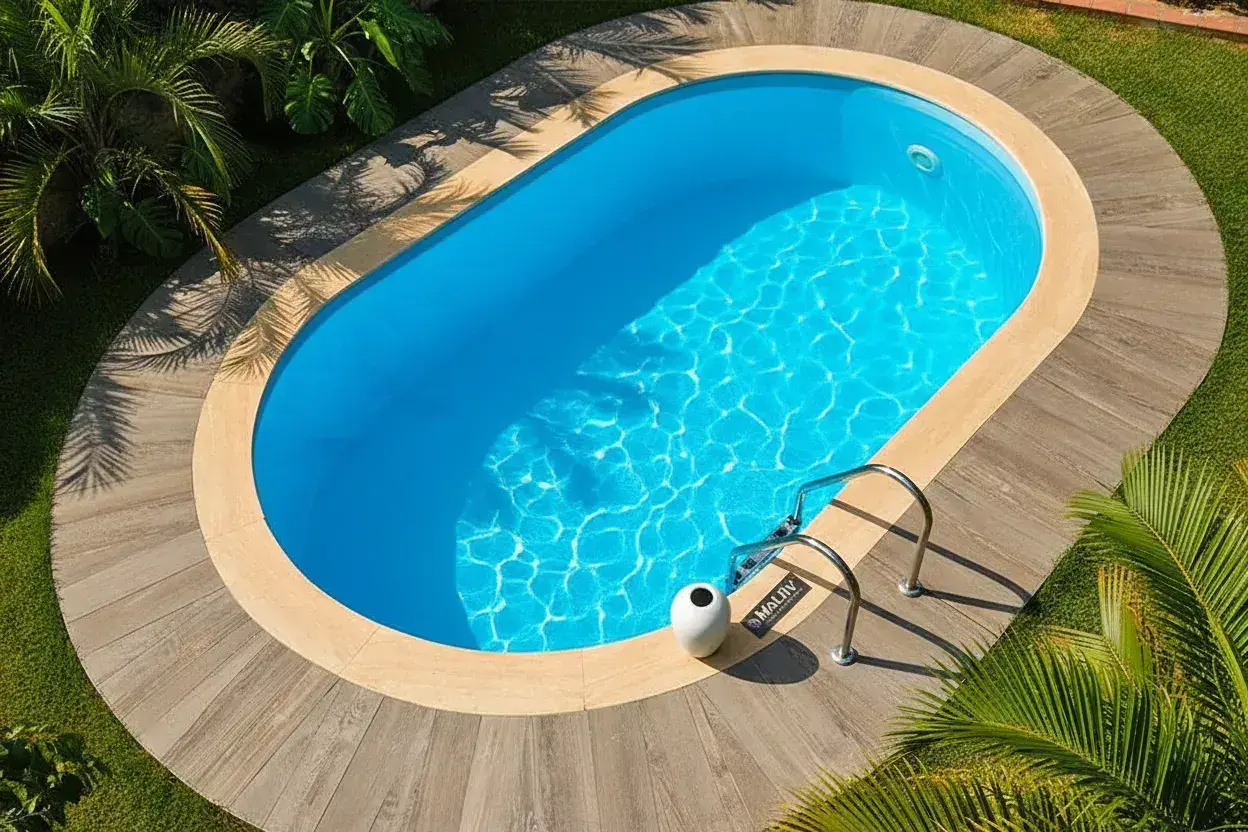 Maldiv ↗
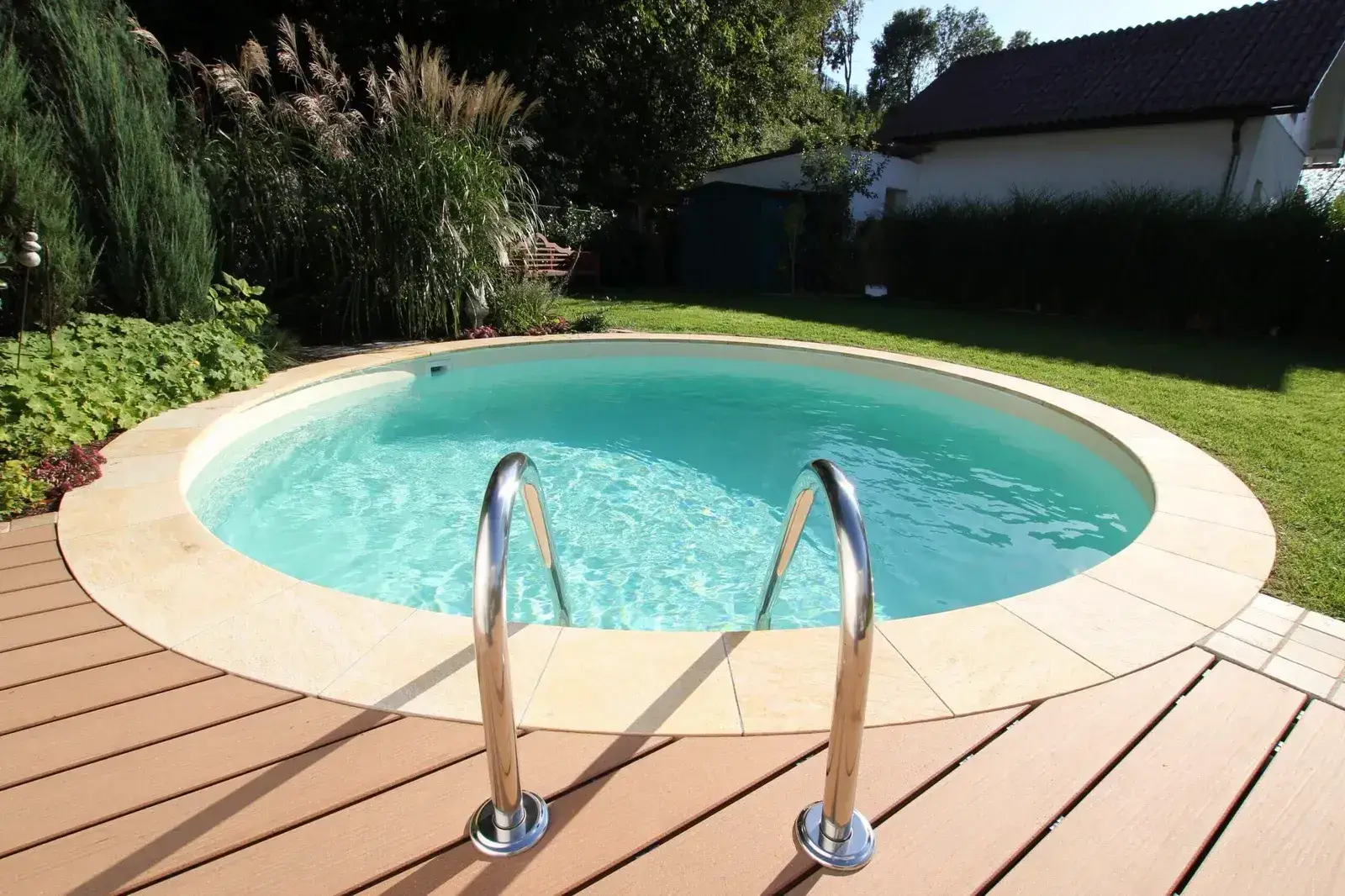 Bora ↗
02. The Sermed Pools Equipment Standard: PVA Sponge Brushes, Rotating Tracks and Vacuum Adjustment
The following equipment standards are recommended for liner pool cleaning:
- Automatic Robots with PVA Sponge Brushes: The climbing rollers of liner pool robots should be made of soft PVA foam material. PVA sponge softens when wet, grips the wall well and has a low risk of scratching the liner surface.
- Curved Manual Vacuum Head with Side Brushes: The vacuum head used for manual cleaning should have rubber-protected corners and a base made up of soft polypropylene bristle brushes.
- Smart Wall-Climbing Sensor: Driving software with position/inclination detection should be preferred, as it reduces unnecessary track slippage at the waterline when the robot climbs the wall.
- Alkaline Waterline Cleaning Sponges: For waterline cleaning, instead of acid, use a cleaning gel whose label states that it is suitable for liner surfaces, together with melamine foam sponges.
03. Liner Pool Cleaning Equipment Compatibility Table
| Cleaning Equipment | Status of Use in a Liner Pool | Risk and Effect | Safe Alternative |
|---|---|---|---|
| Steel Wire Pool Brush | MUST NOT BE USED | Scratches the protective lacquer, can puncture the membrane | Brush with soft polypropylene bristles |
| Robot with Hard Plastic Tracks | Not Recommended | Tracks can slip on the wall and leave marks | Robot with soft PVA sponge rollers |
| Vacuum Head with Sharp Metal Tip | Must not be used | Can tear the liner by striking corners | Vacuum head with curved rubber bumpers |
| Melamine Foam Cleaning Sponge | Recommended | Cleans the waterline without abrading it | Safe and practical cleaning |
| Concentrated Acid / Spirit of Salt | MUST NOT BE USED | Damages the colour and surface of the liner | Neutral pH, liner-compatible pool chemicals |
Conclusion: When liner pool cleaning is carried out with the right equipment, the seamless surface makes it markedly more practical than finishes with grout joints. An exact percentage difference cannot be reduced to a single figure, because it depends on the pool volume, the intensity of use and the maintenance routine. A pool robot with soft PVA brushes helps preserve the service life and clarity of the membrane.
Frequently asked questions
What brush and suction parameters do pool robots that clean the liner surface without scratching or puncturing it have?
When choosing a robot for liner pools, it is important that the brushes are of soft PVA sponge construction, that the robot climbs the wall in a controlled way with driving software featuring inclination/position detection, and that the filtration has a pore range capable of capturing fine particles. The figure of around 50 microns that is often cited as an example is a comparison reference; for the actual value, consult the product's own technical documentation.
Can a pool robot climb the walls of a liner pool?
Yes. Pool robots with PVA sponge rollers that are specified as having a wall-climbing feature can grip the liner surface and climb the walls, and in most cases the steps as well. Performance varies with the pool geometry, the cleanliness of the surface and the robot model.
What is the easiest way to clean yellow stains at the waterline?
A cleaning liquid produced for the waterline whose label states that it is liner-compatible is poured onto a melamine or soft sponge and rubbed gently; this method helps dissolve suntan oil and limescale residues without abrading the surface. Test the product first on a less visible area.
How should the skimmer suction be adjusted while vacuuming the pool floor?
When the manual vacuum hose is connected to the skimmer opening, the main drain suction valve is partially throttled so that the vacuum power is directed to the vacuum head; the appropriate degree of throttling varies with the hydraulics of the installation. Before any valve position is changed, the pump must always be stopped, and care must be taken that the pump does not run dry.