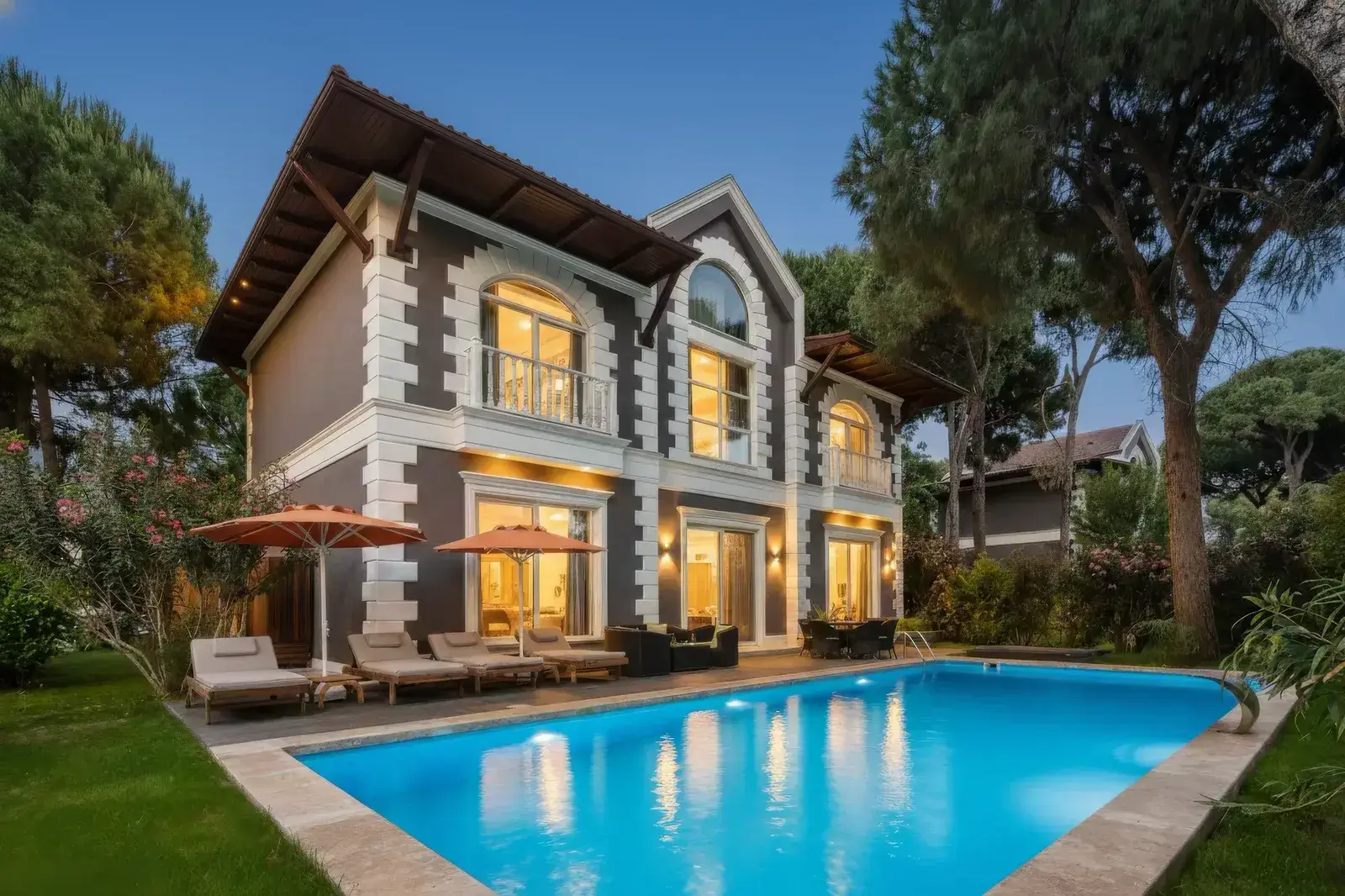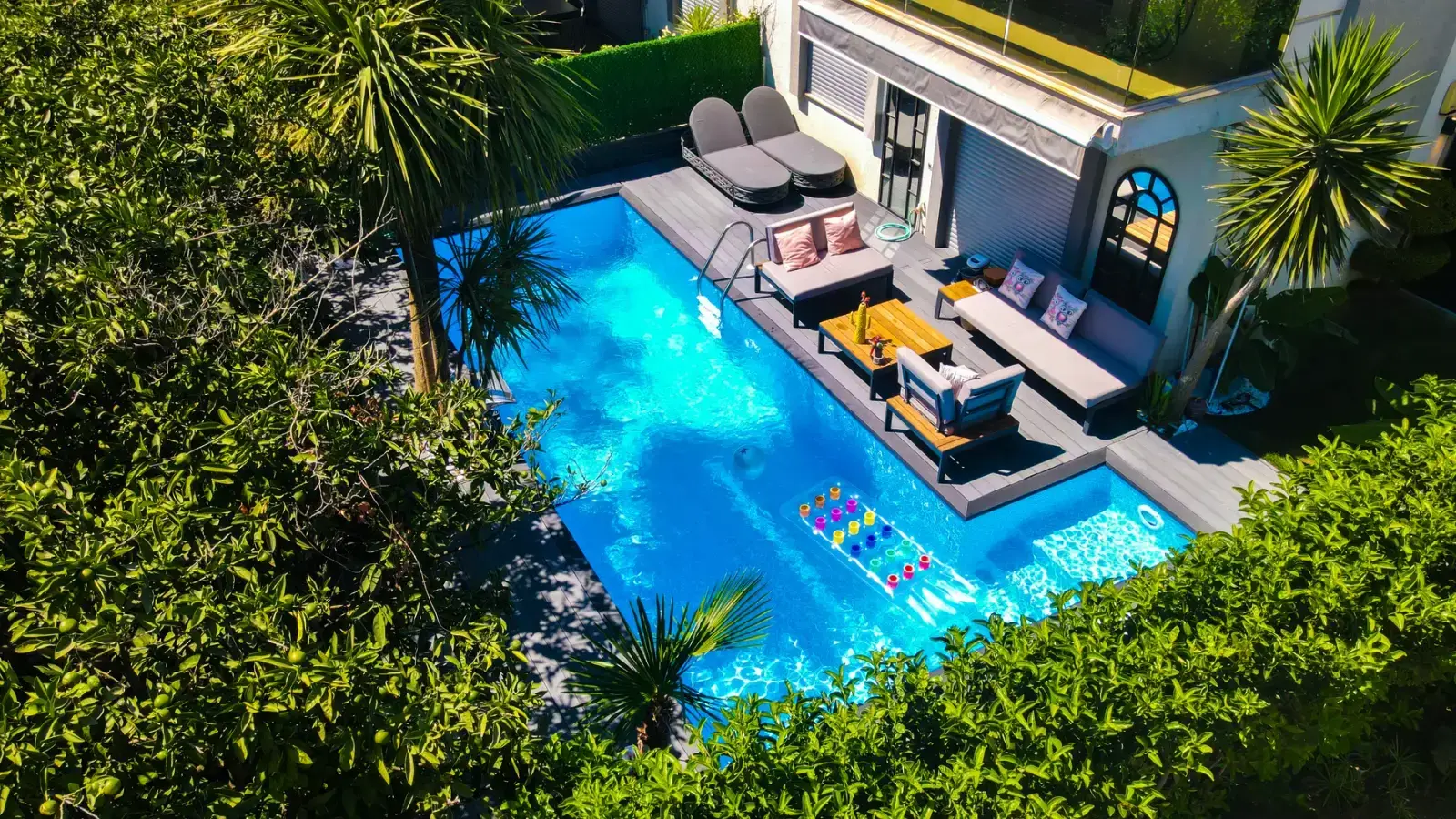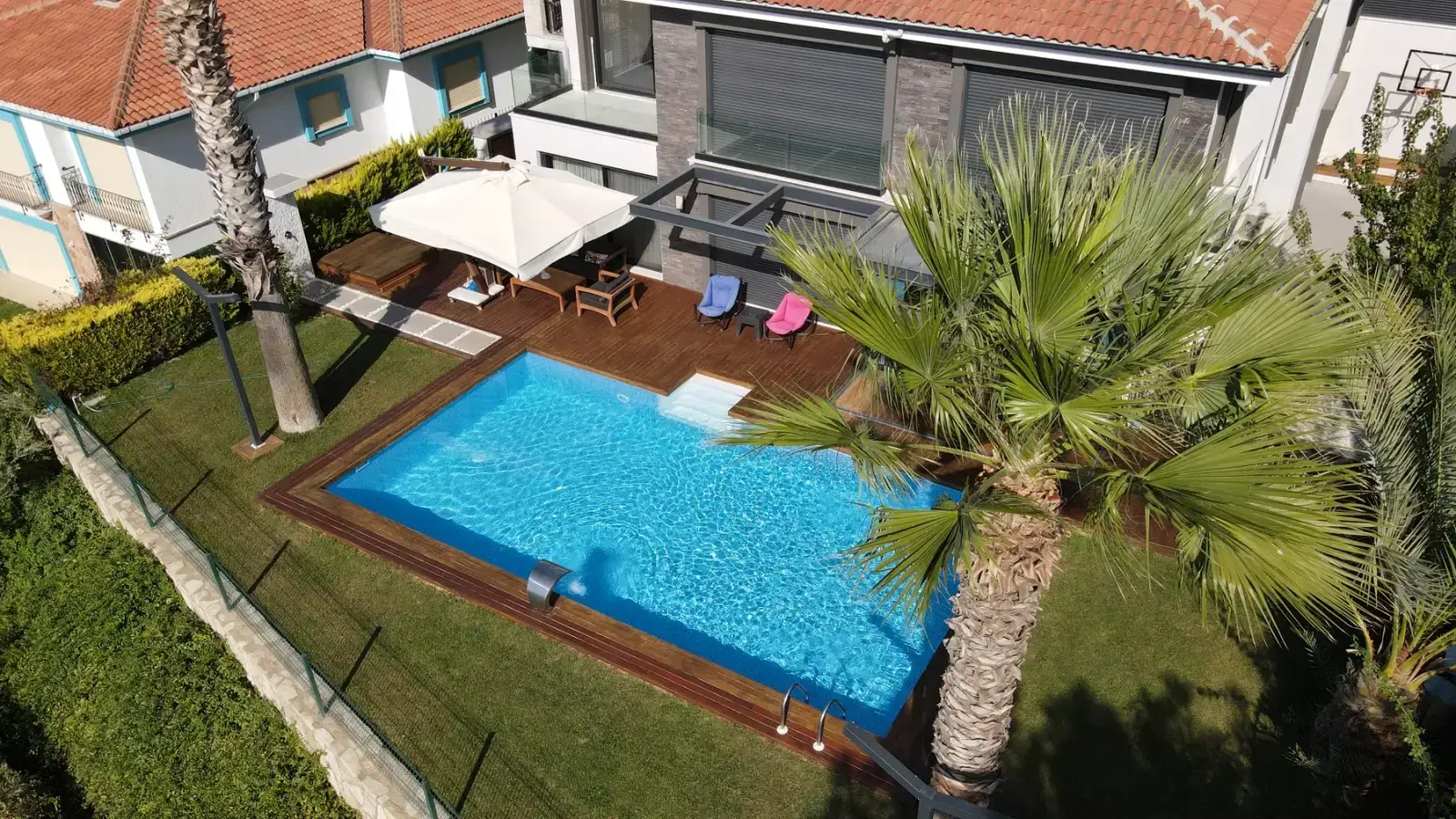
Pool models, construction conditions and care to help you plan your project.
In this guide 4
Project note: The base thickness, concrete class, reinforcement, excavation allowance, pipe diameter and quantities given in this guide are preliminary planning examples; they do not constitute a structural design applicable to every site. The design must be prepared by a qualified engineer after evaluating the geotechnical investigation, groundwater, loads and local regulations. A filled pool can also be affected by external hydrostatic pressure; draining, drainage and electrical work require expert supervision.
Permit disclaimer: The permit and classification explanations in this text form a general framework of approach; they are not a commitment regarding any specific article, time frame, fee or class number. Zoning legislation and municipal practice in Georgia may vary by plot, district and period. Binding information should be obtained in writing only from the zoning department of the relevant municipality and from a lawyer or qualified engineer familiar with local legislation.
For investors who own a villa or detached house in Georgia (particularly within the boundaries of Batumi, Khelvachauri and Kobuleti), the legal question that causes the most hesitation is whether a building permit is required to have a pool built in the garden. Georgian zoning and spatial planning legislation divides construction works into classes according to their level of risk and permanence. As a general tendency, permanent reinforced concrete structures with deep foundations are assessed in the higher classes and made subject to a permit process, whereas for prefabricated and panel pool systems that are demountable, removable and involve limited foundation excavation, assessment in a simpler building or equipment category may be requested. However, which category such a classification will fall into is not a fixed rule: the final decision rests with the discretion of the municipal unit reviewing the project and should be confirmed in writing before applying.
Researching the legal position correctly determines the construction schedule. Demountable prefabricated pool technology may allow for a lighter permit process compared with a permanent reinforced concrete structure; however, this does not amount to an automatic exemption.
01. Building Classes in Georgian Zoning Law and the Legal Position of the Pool
The distinctions that stand out in practice under zoning legislation are as follows:
- Permanent Reinforced Concrete Structures: Reinforced concrete pools with deep diaphragm walls and integrated into a building are typically subject to the building permit process; structural calculations, architectural approval and a geotechnical investigation file can be expected to be requested. The time frame varies according to the municipality's workload and the completeness of the file.
- Simple Structure / Equipment Category: For lightweight structures and landscape fittings that do not have the character of a permanent building, that can be dismantled and that do not require a deep foundation, a simpler notification procedure may apply. Whether this will apply to your pool must be asked on a plot by plot basis.
- Setback Distance from Neighbours: The distance to be left from the neighbouring plot boundary is defined in the local zoning plan. Do not finalise the project layout before confirming the distance figure against the legislation; for site safety and excavation allowance it is advisable in practice to plan a working corridor of around at least 1 metre.
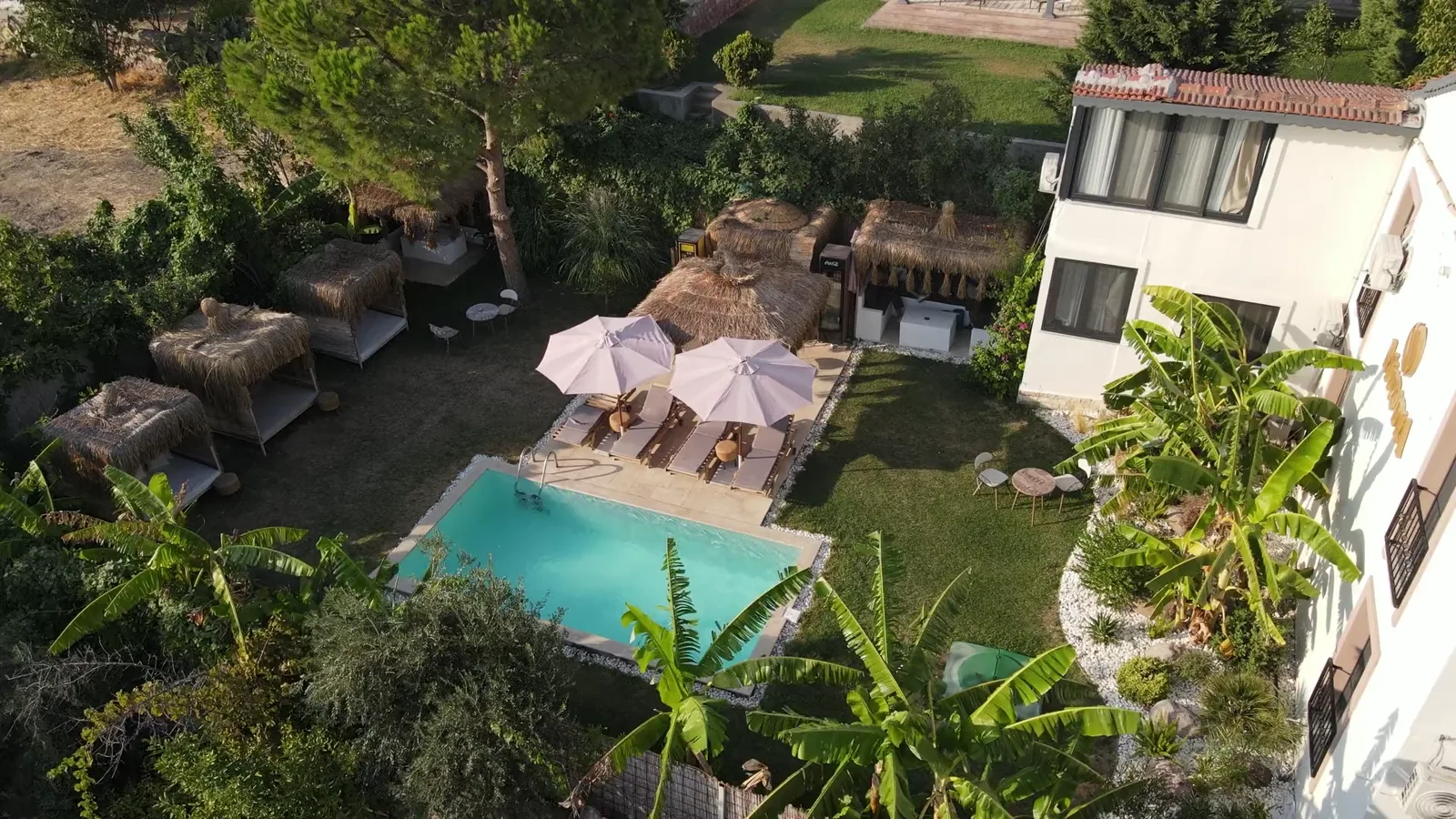 Fiplus ↗
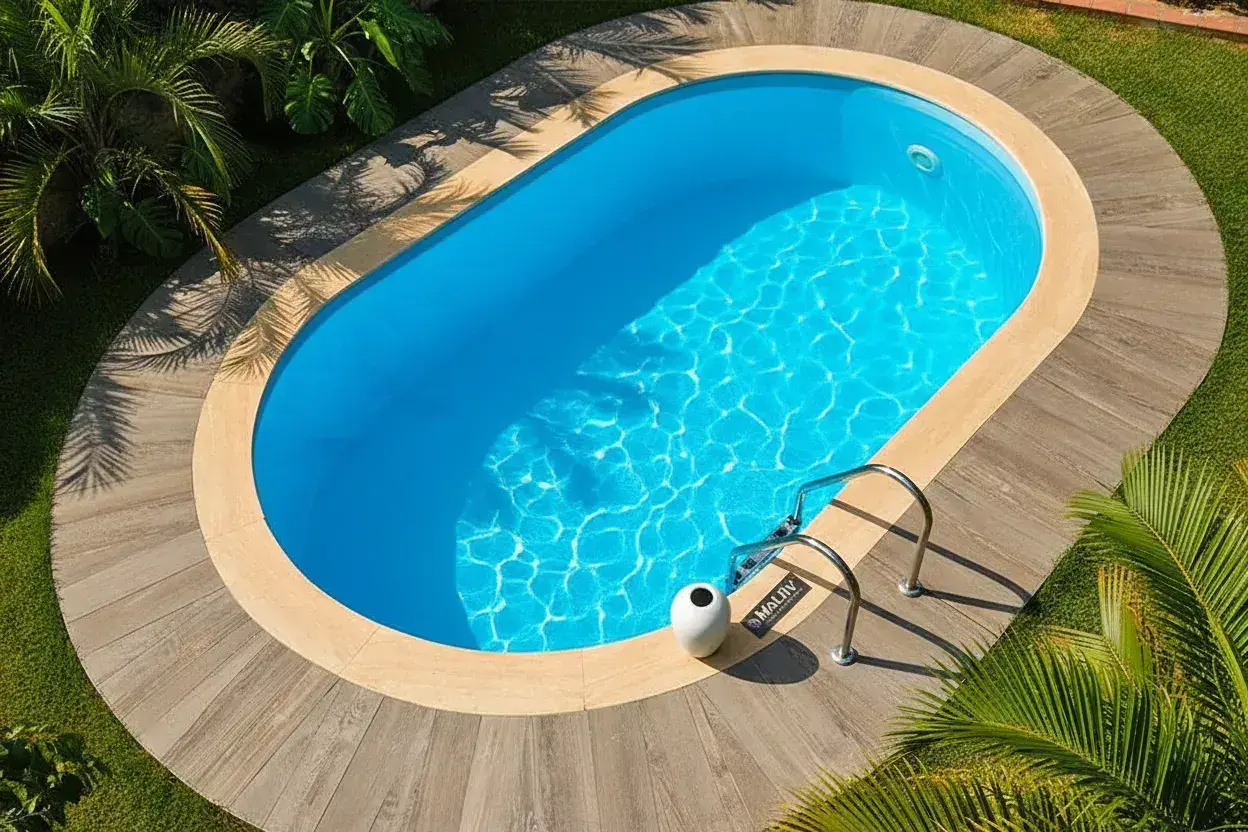 Maldiv ↗
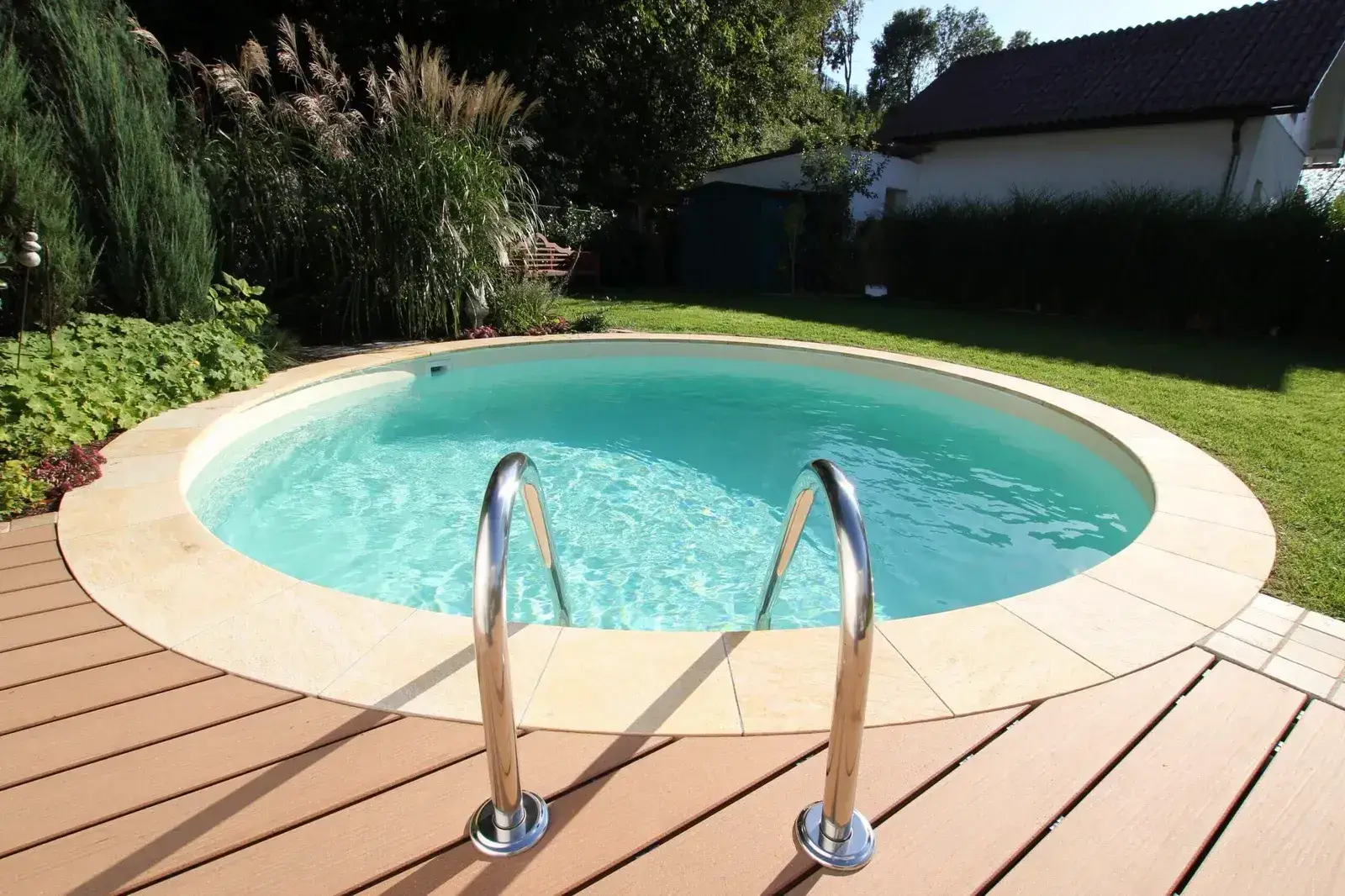 Bora ↗
02. Assessment of the Prefabricated Demountable Frame as a Simple Structure and the Notification Procedure
Aspects of Sermed Pool systems that may facilitate the permit process:
- Demountable / Removable Nature: Because Bora, Maldiv and Fiplus pools are assembled with bolted and screwed connections, they are technically capable of being dismantled and relocated. This characteristic helps in explaining in the application that the structure is not permanent; its legal class is assessed by the municipality.
- Application Documents for the Municipality: In some cases a simple notification together with a site plan sketch showing the plot boundaries and the pool layout may be sufficient; in other cases additional project documents may be requested. Which documents will be required should be asked in writing before applying.
- Compliance in Heritage and Conservation Areas: In areas within conservation zones where restrictions are placed on permanent concrete pouring, above ground or semi recessed demountable pools are an alternative that may be taken into consideration. Conservation area rules are specific to each area and must be confirmed with the relevant authority.
03. Reinforced Concrete Pool Permit vs. Prefabricated Pool Permit Process Table
The table below is a comparative planning framework showing the typical differences between the two construction methods in the permit process; the time frames and categories are hypothetical examples and subject to municipal confirmation.
| Legal Criterion | Classic Permanent Reinforced Concrete Pool | Sermed Prefabricated / Panel Pool | Expected Difference from the Investor's Perspective |
|---|---|---|---|
| Zoning Building Class | Expected to be assessed in the permanent structure category | Assessment in the simple structure / movable equipment category may be requested | Possibility of a lighter procedure; the classification decision belongs to the municipality |
| Required Documents | Structural design, architectural approval, geotechnical investigation | Site plan sketch; the municipality may request additional documents | Possible reduction in project drawing and engineering costs |
| Approval Waiting Period | Varies from weeks to months depending on the municipal review | May shorten appreciably if the notification procedure is accepted | The schedule advantage is not guaranteed; it depends on the outcome of the application |
| Risk of Unauthorised Construction Sanctions | There is a risk of sanctions for unpermitted works | Although the demountable nature provides an advantage, unpermitted works are not exempt from sanctions | The only way to eliminate the risk is to obtain the required permit |
Conclusion: Before becoming a pool owner in Georgia, clarify your permit position in writing. Demountable prefabricated engineering is an option that can help simplify the process.
Frequently asked questions
Is a building permit or a municipal notification required when building a pool in your own villa garden within the boundaries of Batumi?
For demountable prefabricated and panel pools built on your own detached property, in some cases a simpler notification procedure may apply instead of a full building permit. Whether this is valid for your plot depends on the size and depth of the pool, the amount of excavation and the zoning district in which the plot is located; written confirmation should be obtained from the zoning department of the relevant municipality before construction begins.
How far should the pool be from the neighbour's wall?
The minimum distance that must be left from the neighbouring plot boundary is set by the local zoning plan and, because it can vary by district, no fixed figure can be given here. Confirm the binding distance with the municipality. It should also be noted technically that, for excavation safety, brace installation and perimeter drainage, leaving a working corridor of roughly 1 metre between the pool edge and the boundary makes the works easier.
Is the municipal permit different for commercial hotels?
In commercial facilities open to the public the process is typically more extensive: the pool's suitability in terms of public health, water quality, life safety and evacuation safety becomes subject to inspection by the relevant authorities, and the technical designs may be required to be added to the facility's permit file. Because the list of required permits and inspections varies by facility type, it should be obtained from the competent authority.
Does the pool need to be registered on the title deed?
When demountable prefabricated pools are assessed as movable equipment, registration as an independent real estate addition may not be required; however, any registration obligation depends on the assessment of the structure's permanence and on cadastral legislation. To avoid problems during sale or mortgage processes, it is advisable to confirm the position with the title deed and cadastre office.